Wing 03༣
Symbols & Sacred Arts
རྟགས
The visual language of Tibet: auspicious emblems, ritual implements, mandalas, painting schools, music and craft.
48symbols and art forms
Eight Auspicious Symbols
09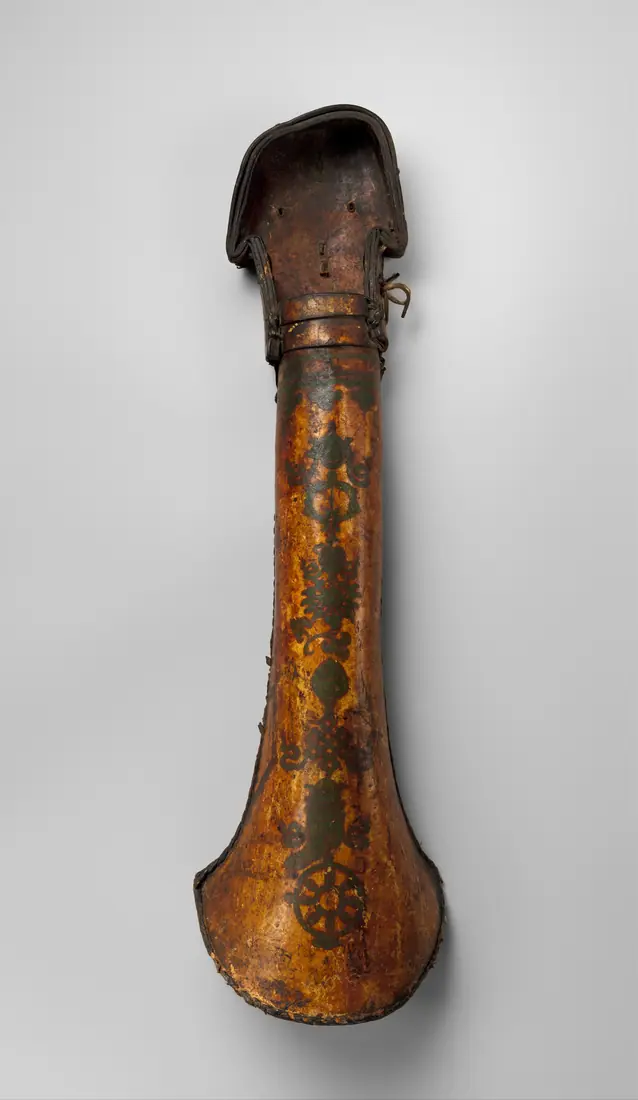
Eight Auspicious Symbols
Eight Auspicious Symbols
བཀྲ་ཤིས་རྟགས་བརྒྱད
A set of eight emblems of good fortune, inherited from Indian royal ceremony, that forms the most widely used decorative and devotional motif in Tibetan culture.
FT·SYM·001
Eight Auspicious Symbols
Parasol
གདུགས
The jewelled parasol, an Indian emblem of royalty, signifies protection from suffering and the honour due to the Buddha and to those who teach in his name.
FT·SYM·002
Eight Auspicious Symbols
Golden Fishes
གསེར་ཉ
Two golden fishes shown facing each other stand for happiness, abundance and the fearless freedom of beings released from the ocean of cyclic existence.
FT·SYM·003
Eight Auspicious Symbols
Treasure Vase
གཏེར་ཆེན་པོའི་བུམ་པ
A round-bellied jewelled vase that stays full however much is taken from it, representing inexhaustible wealth, long life and the riches of the teaching.
FT·SYM·004
Eight Auspicious Symbols
Lotus
པདྨ
The lotus, which rises clean from muddy water, is the principal Buddhist emblem of purity and the seat on which every buddha and deity is shown.
FT·SYM·005
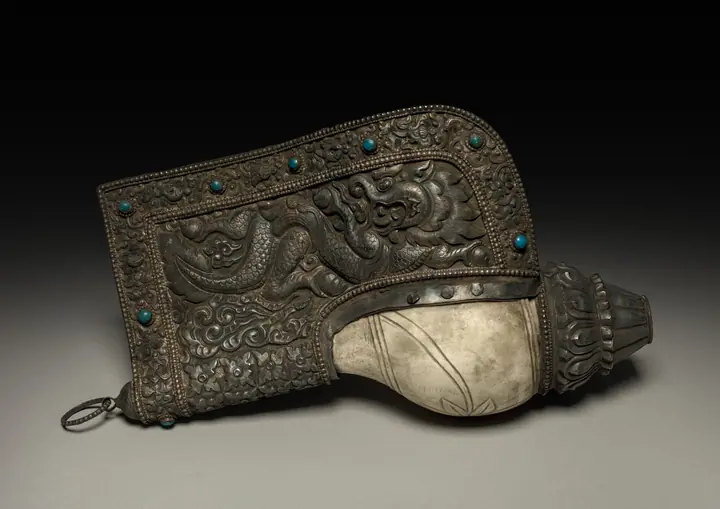
Eight Auspicious Symbols
Conch Shell
དུང་དཀར་གཡས་འཁྱིལ
A white conch whose spiral turns to the right, used as a horn and as an emblem of the far-reaching sound of the Buddha’s teaching.
FT·SYM·006
Eight Auspicious Symbols
Endless Knot
དཔལ་བེའུ
A closed pattern of interlaced lines with no beginning or end, representing interdependence and the union of wisdom and compassion.
FT·SYM·007
Eight Auspicious Symbols
Victory Banner
རྒྱལ་མཚན
A cylindrical banner derived from an Indian military standard, signifying the Buddha’s victory over the forces that obstruct awakening.
FT·SYM·008
Eight Auspicious Symbols
Dharma Wheel
ཆོས་ཀྱི་འཁོར་ལོ
The eight-spoked golden wheel is the oldest emblem of the Buddha’s teaching, recalling his first sermon, known as the turning of the wheel of Dharma.
FT·SYM·009
Emblems & Offerings
10Emblems & Offerings
Seven Royal Emblems
རྒྱལ་སྲིད་སྣ་བདུན
Seven possessions of the ideal universal monarch: wheel, jewel, queen, minister, elephant, horse and general, offered symbolically to the Buddha.
FT·SYM·010
Emblems & Offerings
Eight Auspicious Substances
བཀྲ་ཤིས་རྫས་བརྒྱད
Eight articles of good omen linked to events in the Buddha’s life: mirror, medicine, curd, durva grass, bilva fruit, conch, vermilion and mustard seed.
FT·SYM·011
Emblems & Offerings
Wish-Fulfilling Jewel
ཡིད་བཞིན་ནོར་བུ
A legendary gem that grants whatever is wished, used in Tibetan Buddhism as an image of the awakened mind and of the teacher who reveals it.
FT·SYM·012
Emblems & Offerings
Seven Offering Bowls
ཡོན་ཆབ
A row of seven bowls of fresh water set before a shrine each morning, representing the hospitality offered to an honoured guest in ancient India.
FT·SYM·013
Emblems & Offerings
Mandala Offering
མཎྜལ
A ritual in which heaps of grain on a round plate represent Mount Meru, the continents and all wealth, offered as the entire universe to the buddhas.
FT·SYM·014
Emblems & Offerings
Butter Lamp
མར་མེ
A chalice-shaped lamp burning clarified butter, offered before images as the light of wisdom that removes the darkness of ignorance.
FT·SYM·015
Emblems & Offerings
Torma
གཏོར་མ
A sculpted cake of roasted barley flour and butter that serves in ritual as an offering, as the temporary body of a deity, or as a weapon against obstacles.
FT·SYM·016
Emblems & Offerings
Khata
ཁ་བཏགས
A long scarf of white silk presented in greeting, farewell, congratulation and worship, expressing the sincerity and good wishes of the giver.
FT·SYM·017
Emblems & Offerings
Six Symbols of Longevity
ཚེ་རིང་དྲུག་སྐོར
A landscape group of old man, tree, rock, water, cranes and deer, adapted from Chinese imagery of the immortals as a Tibetan emblem of long life.
FT·SYM·018
Emblems & Offeringsadopted 1916
Snow Lion Flag
བོད་ཀྱི་རྒྱལ་དར
The Tibetan national flag, standardised under the Thirteenth Dalai Lama in 1916, shows two snow lions on a white mountain beneath a sun with red and blue rays.
FT·SYM·019
Ritual Implement
14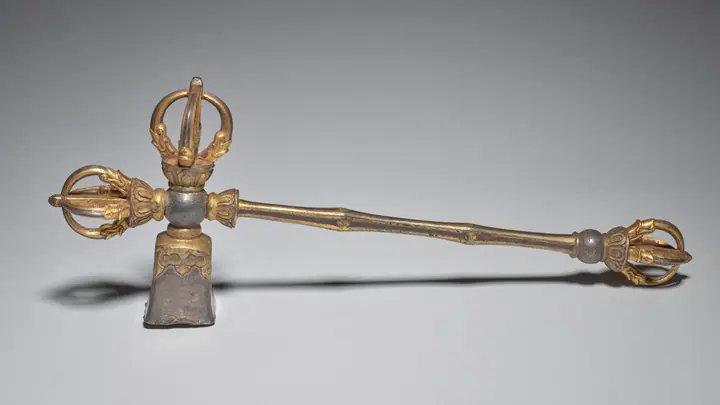
Ritual Implement
Vajra
རྡོ་རྗེ
A short metal sceptre with a central sphere and symmetrical prongs, the chief emblem of Vajrayana, standing for indestructible reality and skilful method.
FT·SYM·020
Ritual Implement
Bell
དྲིལ་བུ
A bronze hand bell with a half-vajra handle, held in the left hand as the emblem of wisdom, the understanding of emptiness, and paired with the vajra.
FT·SYM·021
Ritual Implement
Double Vajra
རྡོ་རྗེ་རྒྱ་གྲམ
Two vajras crossed at right angles to form a four-armed emblem of absolute stability, the foundation of the universe and of every mandala.
FT·SYM·022
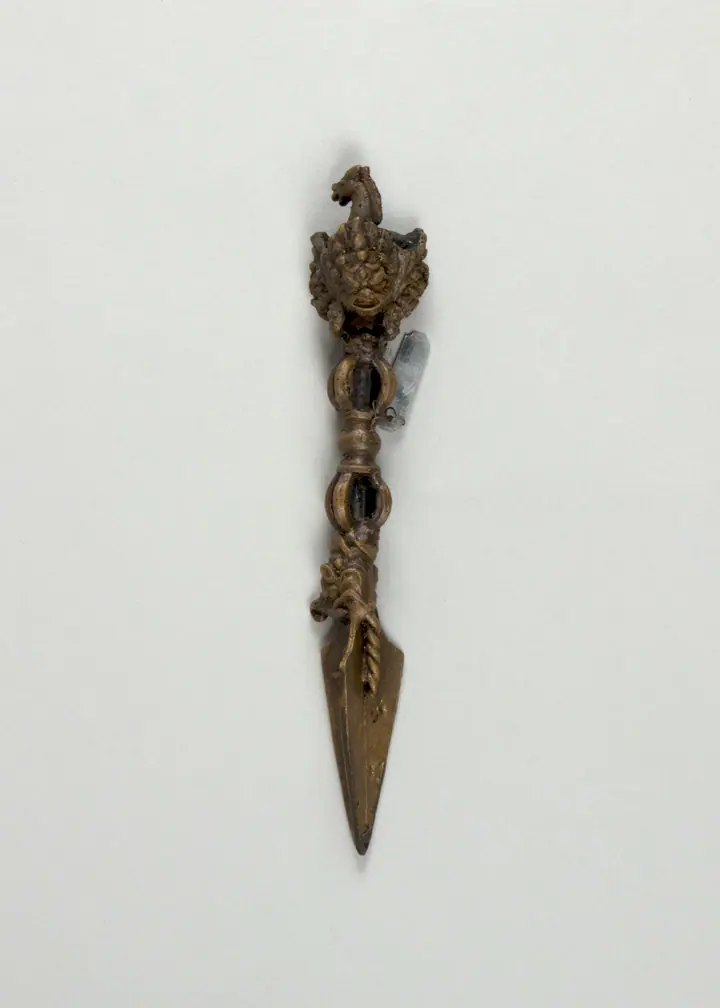
Ritual Implement
Phurba
ཕུར་པ
A three-edged ritual peg used to pin down and transform obstructing forces, and the emblem of the wrathful deity Vajrakilaya.
FT·SYM·023
Ritual Implement
Kapala
ཐོད་པ
A cup made from the top of a human skull, held by tantric deities and used in ritual as a vessel for offerings that signify transformed perception.
FT·SYM·024
Ritual Implement
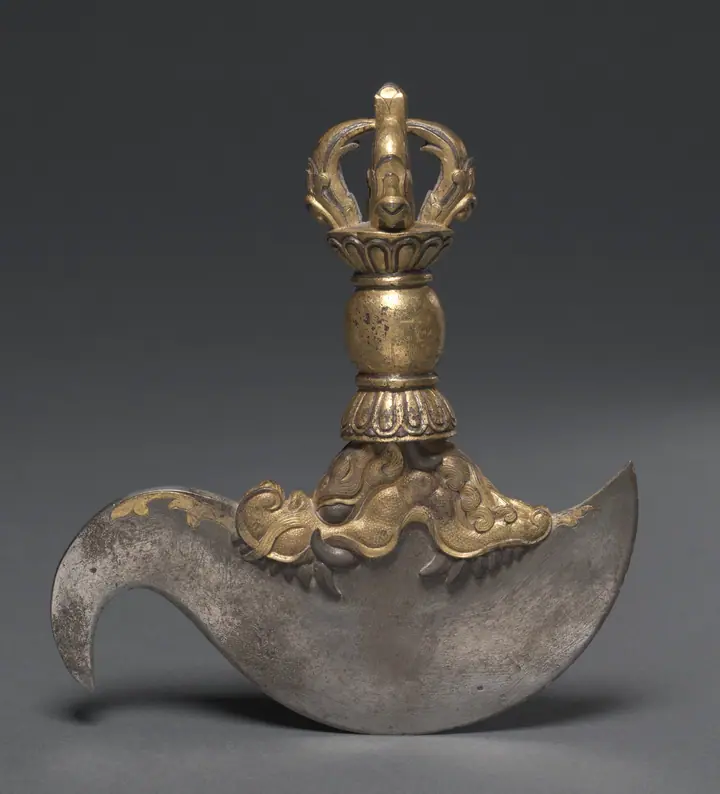
Kartika
གྲི་གུག
A crescent-bladed knife with a vajra handle, carried by dakinis and wrathful deities to signify the cutting of ignorance and self-clinging.
FT·SYM·025
Ritual Implement
Khatvanga
ཁ་ཊྭཱཾ་ག
A long staff topped with a vase, three heads and a trident or vajra, carried by tantric adepts and deities as the sign of their hidden consort.
FT·SYM·026
Ritual Implement
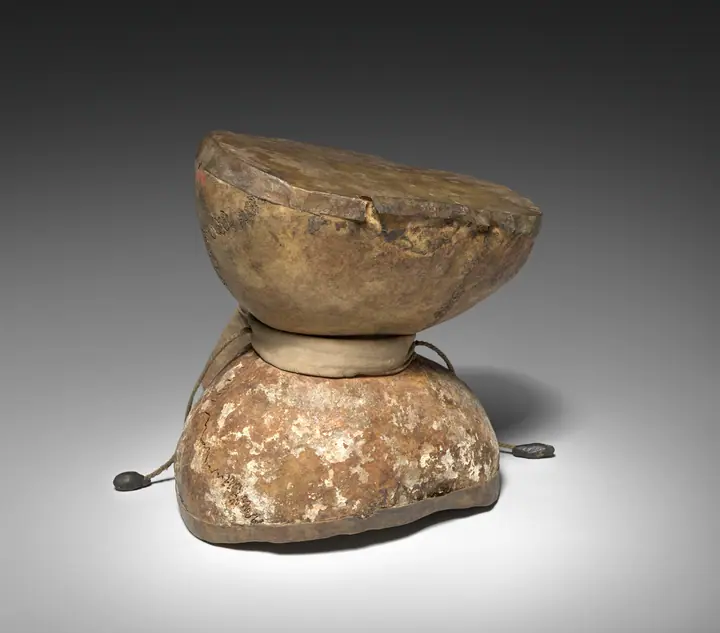
Damaru
ཌཱ་མ་རུ
A small double-headed hourglass drum sounded by swinging pellets, played in the right hand with the bell to mark the rhythm of tantric liturgy.
FT·SYM·027
Ritual Implement
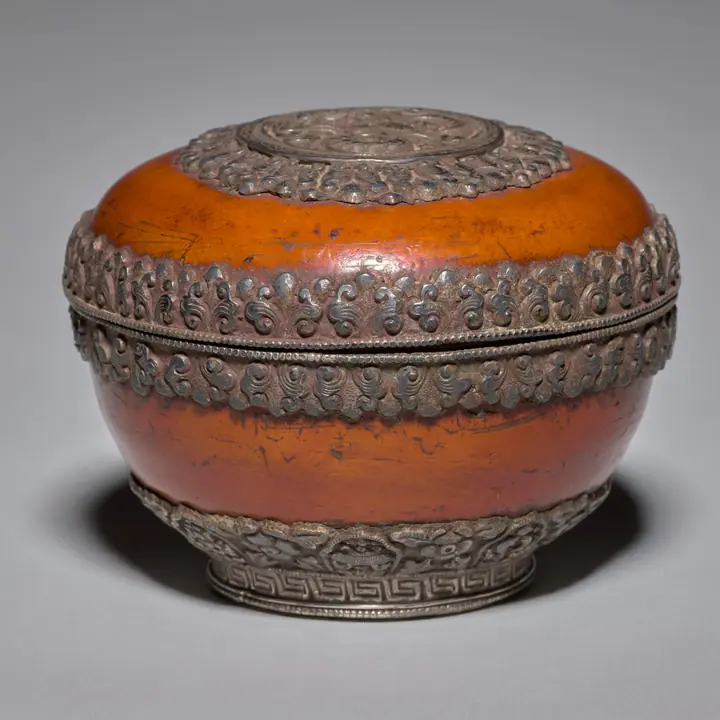
Mala
ཕྲེང་བ
A string of 108 beads used to count recitations of mantras and prayers, carried by almost every Tibetan Buddhist as a constant aid to practice.
FT·SYM·028
Ritual Implement
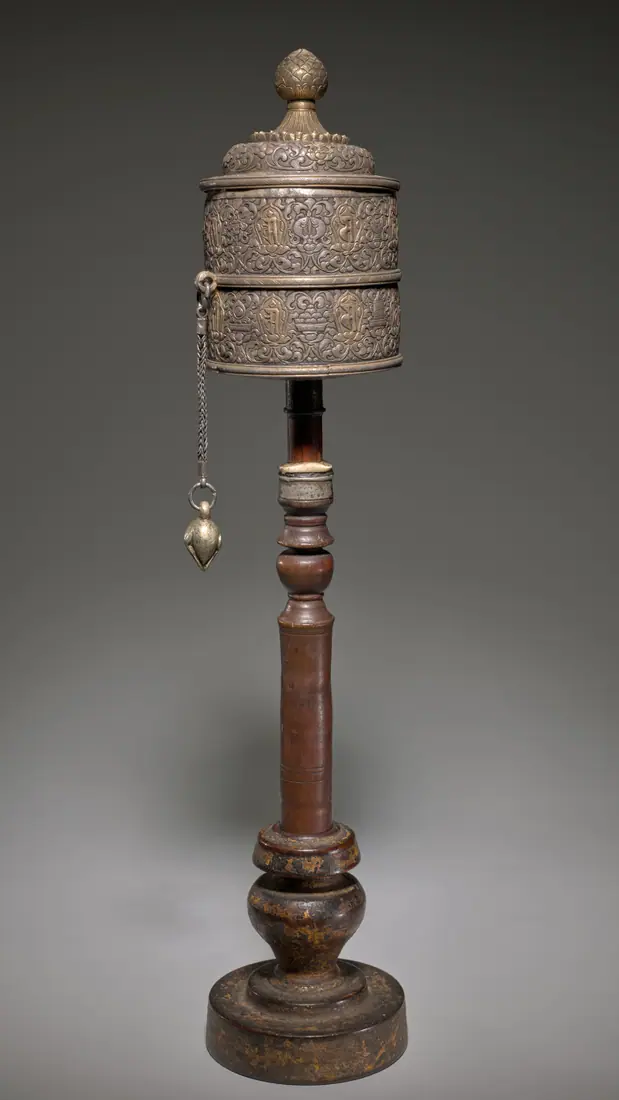
Prayer Wheel
མ་ཎི་འཁོར་ལོ
A cylinder packed with written mantras and turned clockwise on its axis, each revolution counted as a recitation of everything it contains.
FT·SYM·029
Ritual Implement
Bumpa
བུམ་པ
A ritual vase holding consecrated water, used to purify offerings and participants and to confer the first stage of tantric empowerment.
FT·SYM·030
Ritual Implement
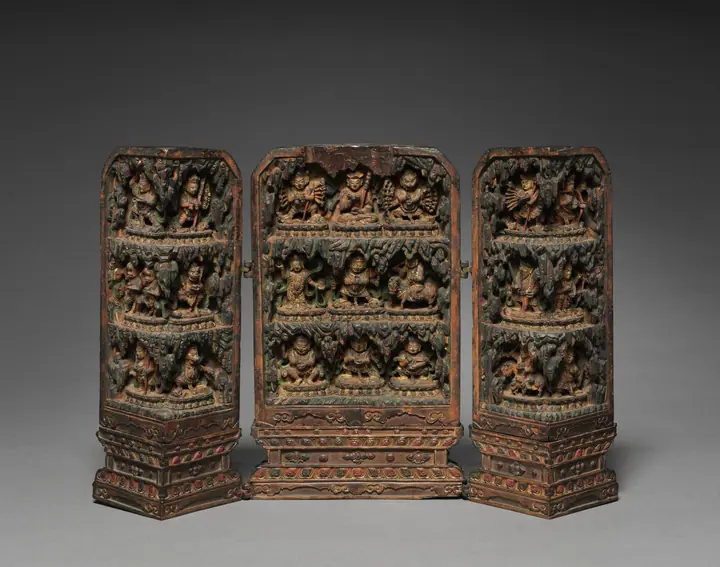
Gau
གའུ
A metal amulet case worn on the body or carried on journeys, holding images, relics, blessed substances and written charms for protection.
FT·SYM·031
Ritual Implement
Tsa-tsa
ཚ་ཚ
Small images of buddhas, deities and stupas pressed from clay in a mould, made in large numbers to gain merit and to fill stupas and shrines.
FT·SYM·032
Ritual Implement
Incense and Sang
བསང
The burning of juniper and aromatic plants as a purifying smoke offering to buddhas, protectors and local gods, alongside stick incense on shrines.
FT·SYM·033
Sacred Diagram & Mantra
09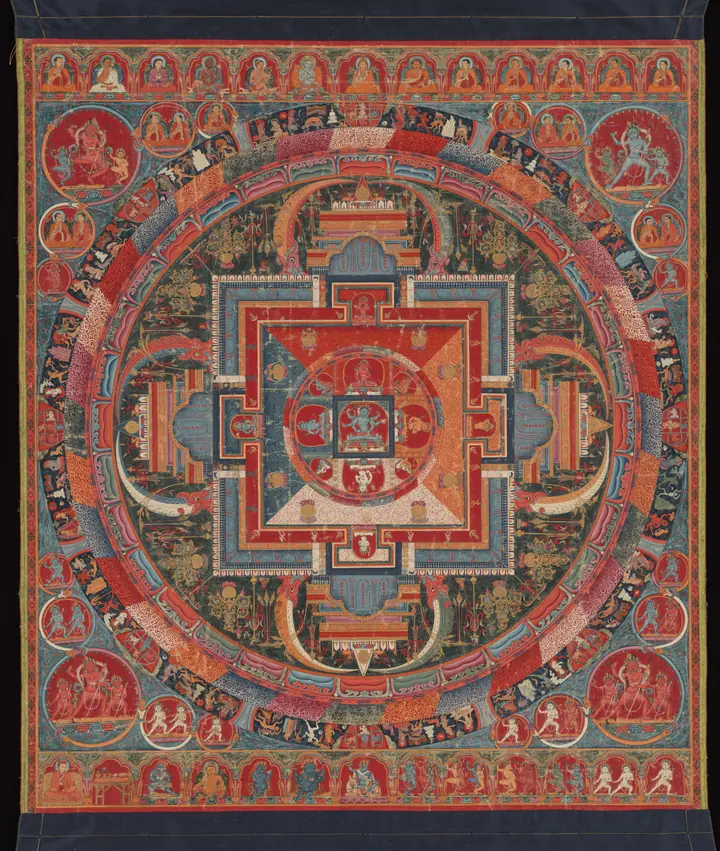
Sacred Diagram & Mantra
Mandala
དཀྱིལ་འཁོར
A symmetrical diagram of a deity’s palace and its surrounding realm, used as the plan for tantric visualisation, initiation and consecration.
FT·SYM·034
Sacred Diagram & Mantra
Sand Mandala
རྡུལ་ཚོན་གྱི་དཀྱིལ་འཁོར
A mandala laid out grain by grain in coloured sand for an empowerment or blessing, then swept up and dispersed in water at the ceremony’s end.
FT·SYM·035
Sacred Diagram & Mantraoldest surviving example 5th century
Wheel of Life
སྲིད་པའི་འཁོར་ལོ
A teaching painting at monastery entrances that maps the causes of suffering, the realms of rebirth and the twelve links of dependent arising in a wheel held by Death.
FT·SYM·036
Sacred Diagram & Mantraattested from the 4th–5th century
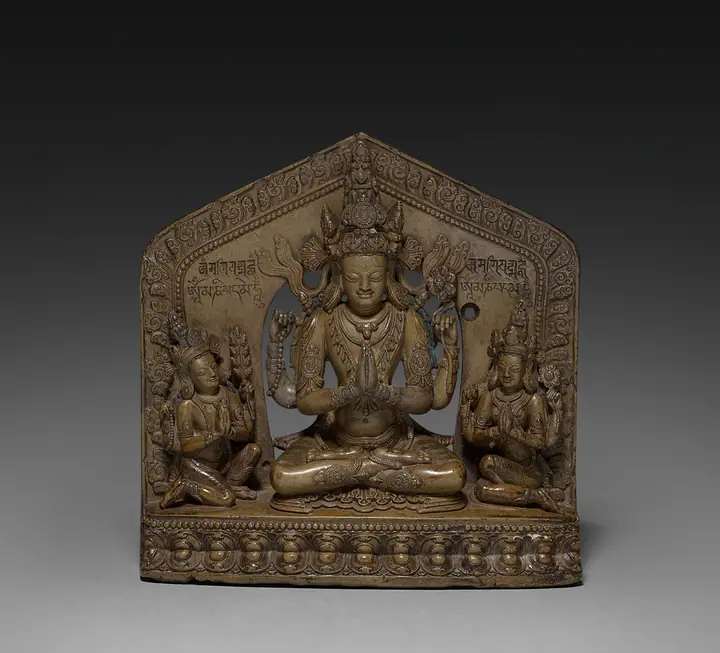
Om Mani Padme Hum
ཨོཾ་མ་ཎི་པདྨེ་ཧཱུྃ
The six-syllable mantra of Avalokiteshvara, bodhisattva of compassion, recited, carved, printed and spun more than any other formula in the Tibetan world.
FT·SYM·037
Sacred Diagram & Mantrain Tibet from the 11th century
Tenfold Powerful One
རྣམ་བཅུ་དབང་ལྡན
A monogram of seven interlaced syllables and three signs that condenses the Kalachakra system, displayed as a powerful emblem of protection.
FT·SYM·038
Sacred Diagram & Mantra
Seed Syllables
ས་བོན
Single written syllables that stand for a deity, an element or a quality, and from which the forms of tantric visualisation are generated.
FT·SYM·039
Sacred Diagram & Mantrapaintings mainly from the 18th century
Refuge Tree
ཚོགས་ཞིང
A visualised assembly of teachers, buddhas, deities and protectors, often arranged on a tree, before which practitioners take refuge and gather merit.
FT·SYM·040
Sacred Diagram & Mantra
Yungdrung
གཡུང་དྲུང
The swastika, an ancient Asian sign of good fortune, which in Tibet means the eternal and unchanging and is the chief emblem of the Bön religion.
FT·SYM·041
Sacred Diagram & Mantra
Sipaho
སྲིད་པ་ཧོ
A protective chart combining the cosmic tortoise, eight trigrams, nine number squares and twelve year animals, hung to guard against astrological harm.
FT·SYM·042
Painting & Sculpture
06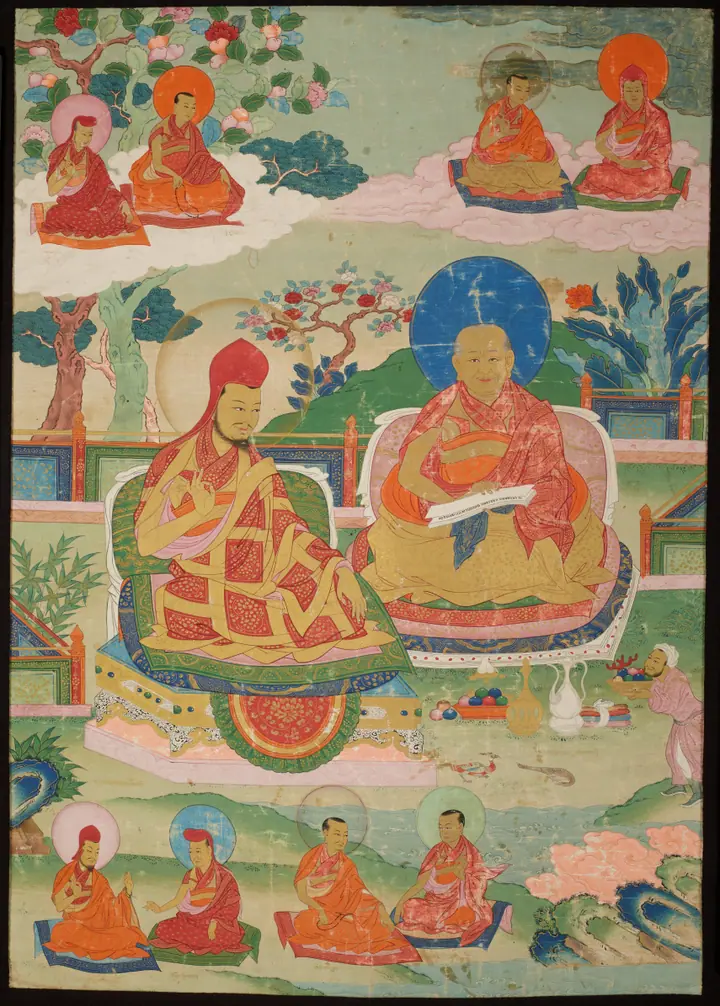
Painting & Sculpturefrom the 11th century
Thangka
ཐང་ཀ
A portable painting on cloth, mounted in silk and rolled for storage, that serves as a support for meditation, teaching and devotion.
FT·SYM·043
Painting & Sculpture
Iconometry
ཐིག་ཚད
The system of fixed proportions and grids by which Tibetan artists draw and sculpt buddhas and deities, so that each image is a valid support for practice.
FT·SYM·044
Painting & Sculpture15th century onward
Menri Style
སྨན་རིས
The painting tradition founded in the fifteenth century by Menla Döndrub, which set Indian-proportioned figures in Chinese-inspired landscape and became the mainstream…
FT·SYM·045
Painting & Sculpture16th century onward
Karma Gadri Style
ཀརྨ་སྒར་བྲིས
The painting tradition of the Karmapas’ travelling court, noted for airy Chinese-inspired landscapes, pale colour washes and small, finely drawn figures.
FT·SYM·046
Painting & Sculpture15th century onward
Khyenri Style
མཁྱེན་རིས
The painting tradition founded by Khyentse Chenmo of Gongkar in the fifteenth century, admired for lifelike portraits, strong colour and powerful wrathful deities.
FT·SYM·047
Painting & Sculpture13th–16th century
Newar (Beri) Style
བལ་རིས
The Nepalese-derived painting style that led Tibetan art from the thirteenth to the fifteenth century, marked by red grounds, dense scrollwork and ordered rows of…
FT·SYM·048
No records match that filter.