06Sowa Rigpa
The science of healing
Three humours, twelve pulses, and a seventeenth-century atlas of the body painted in seventy-nine scrolls. One of the world’s oldest continuously practised medical systems, set out as a system.
Enter 48 recordsDigital museumResearch databaseOpen archive
གངས་ཅན་ལྗོངས།
Fourteen centuries of art, dharma, medicine and science from the Land of Snows, gathered into one connected archive and mapped record by record.
00The idea
A museum without walls. Forever Tibet gathers the paintings, deities, symbols, medicine, science, masters and sacred places of the Tibetan world into a single archive, and connects every record to every other, so that a civilisation can be studied whole.
Every record cites its references. Every artwork carries its museum, accession number and licence. Tradition and documented history are kept distinct.
A deity leads to the thangkas that depict it, the masters who taught its practice, the places it is honoured and the ideas it embodies.
Built with AI and open scholarship, published as open data, and free to read. A foundation meant to keep growing, record by record.
01The wings of the museum
Each wing is a catalogue in its own right. Together they form a map of Tibetan civilisation.
02From the collection
All 244 worksThangkas, bronzes and manuscripts from the open-access collections of the Metropolitan Museum of Art, the Cleveland Museum of Art, the Minneapolis Institute of Art and the Smithsonian.
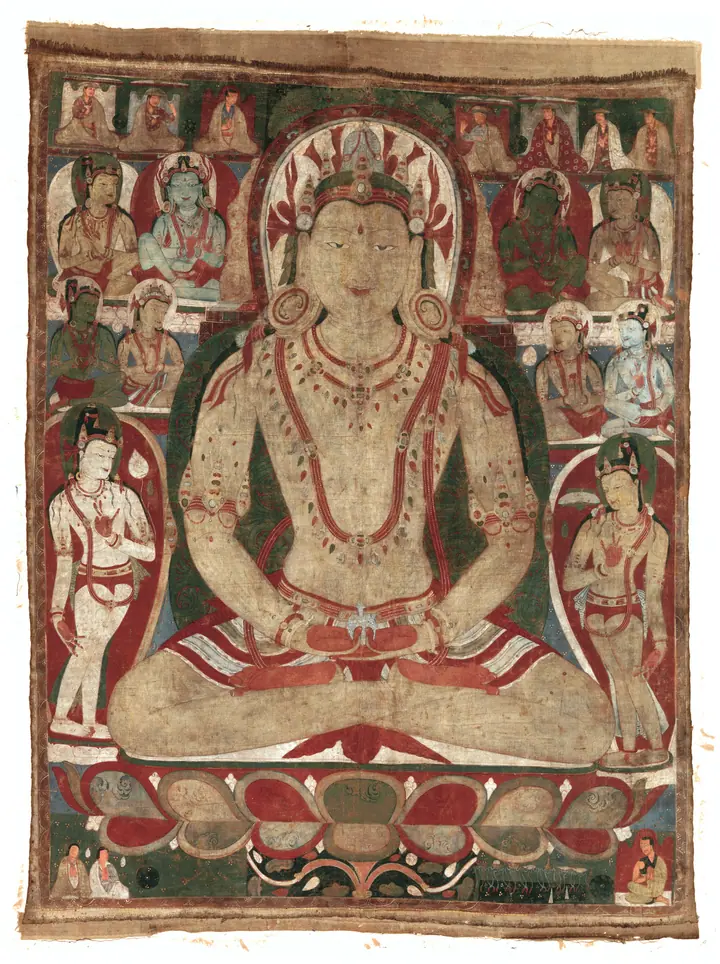
01
11th or early 12th century · Metropolitan Museum of Art
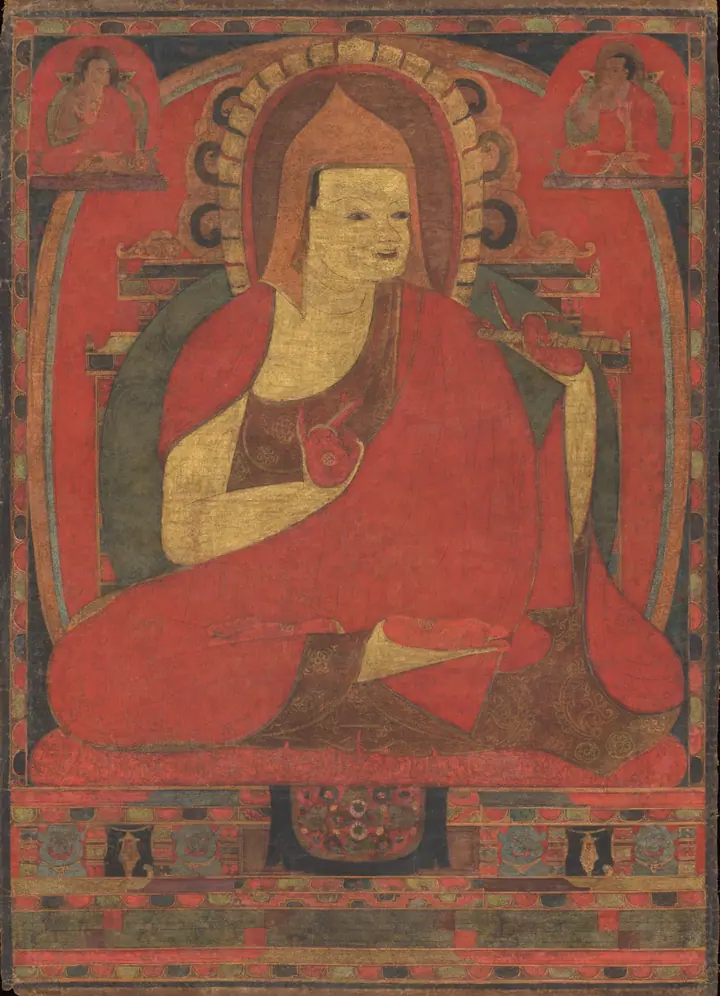
02
early to mid-12th century · Metropolitan Museum of Art
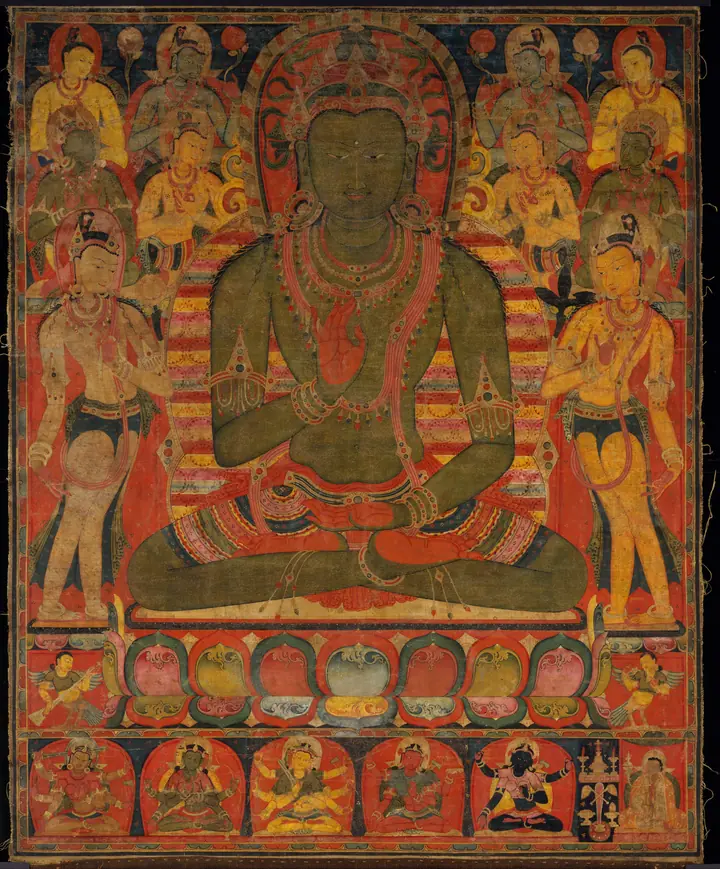
03
ca. 1200–50 · Metropolitan Museum of Art
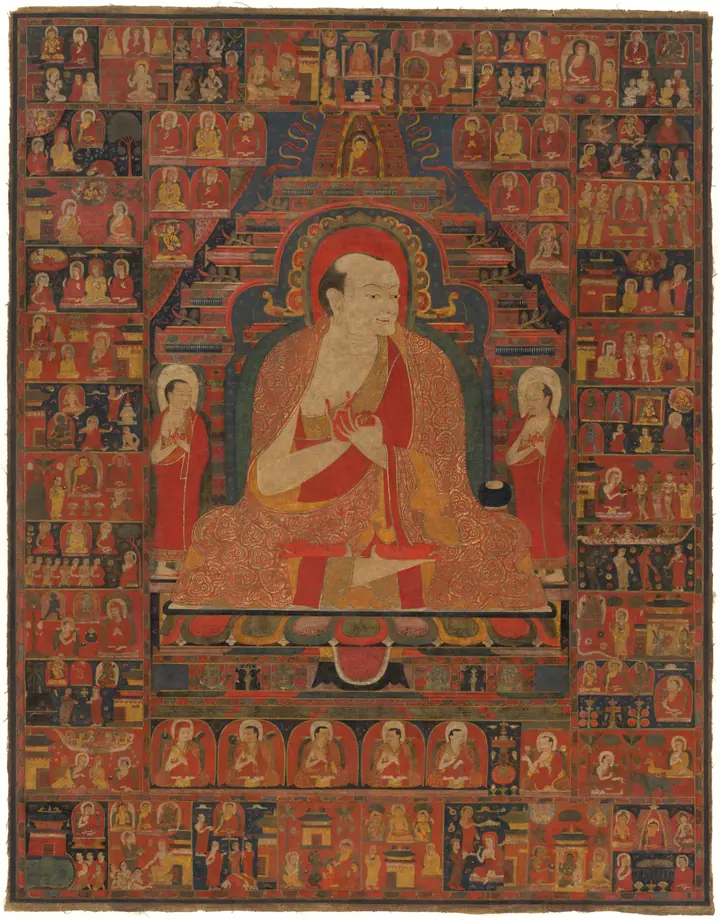
04
early to mid-14th century · Metropolitan Museum of Art
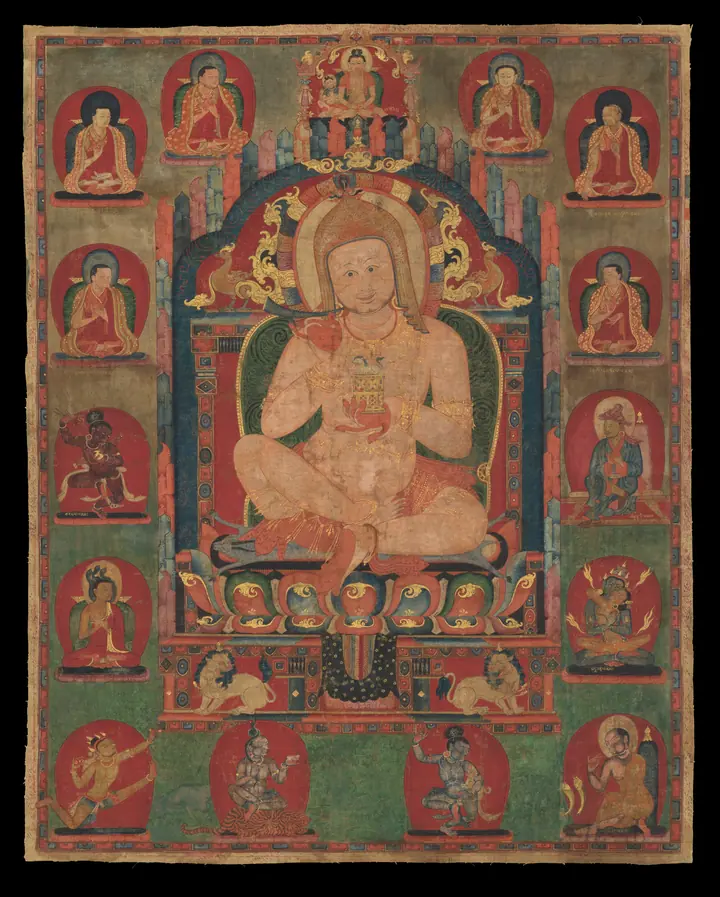
05
ca. 1350 · Metropolitan Museum of Art
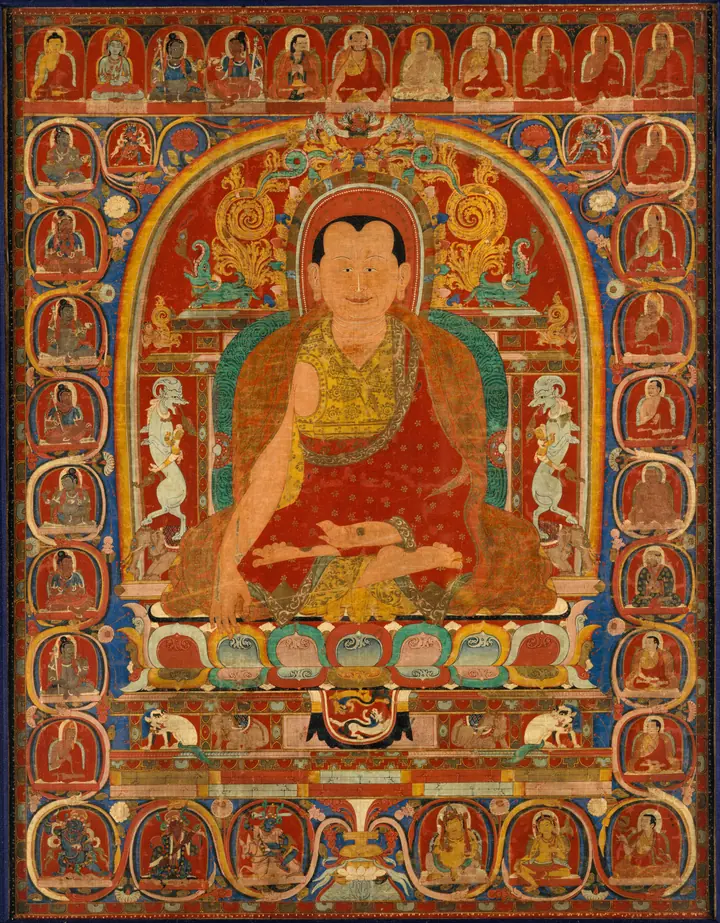
06
ca. 1350 · Metropolitan Museum of Art
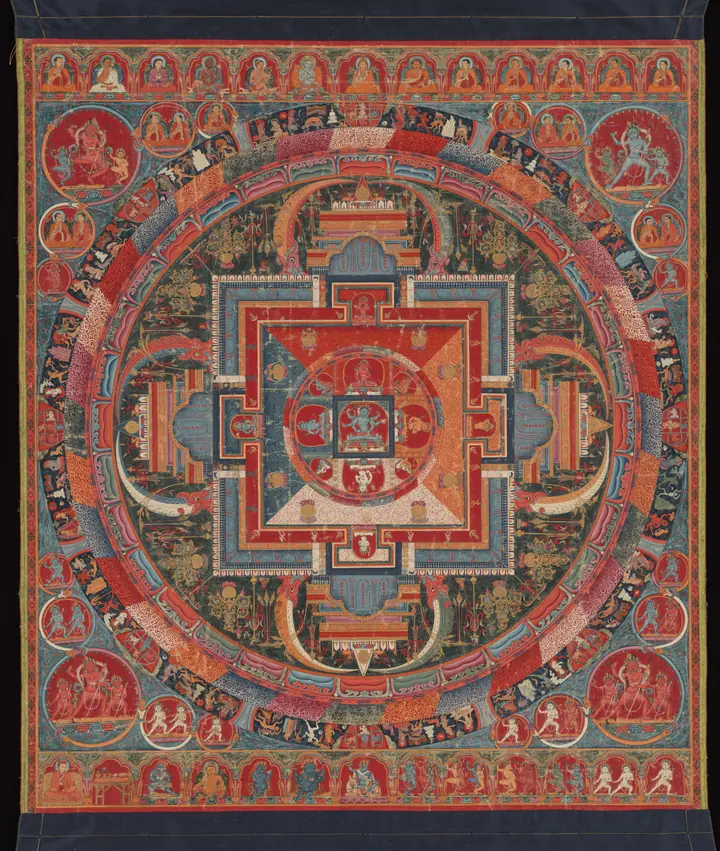
07
late 14th century · Metropolitan Museum of Art
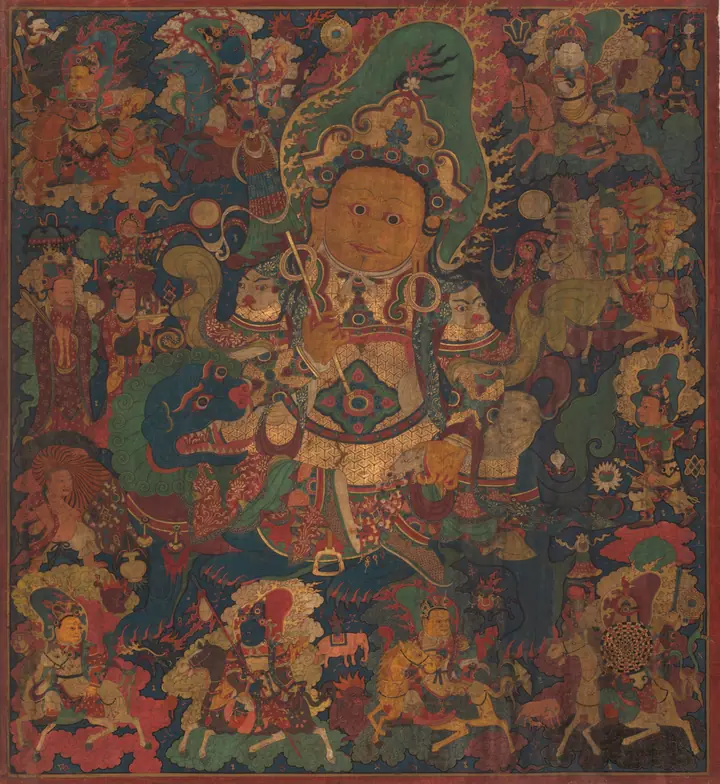
08
15th century · Metropolitan Museum of Art
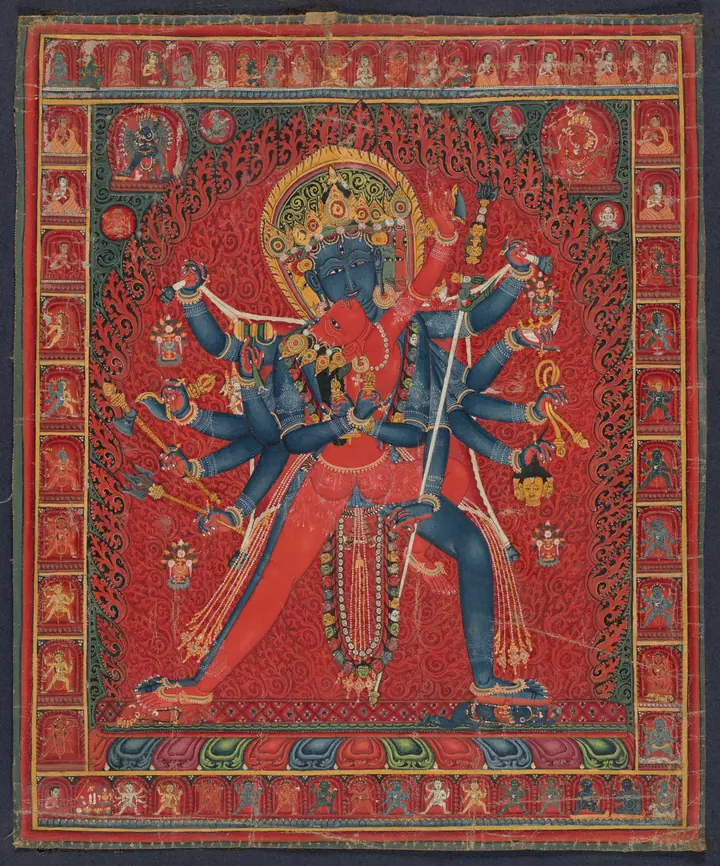
09
1450–1500 · Metropolitan Museum of Art
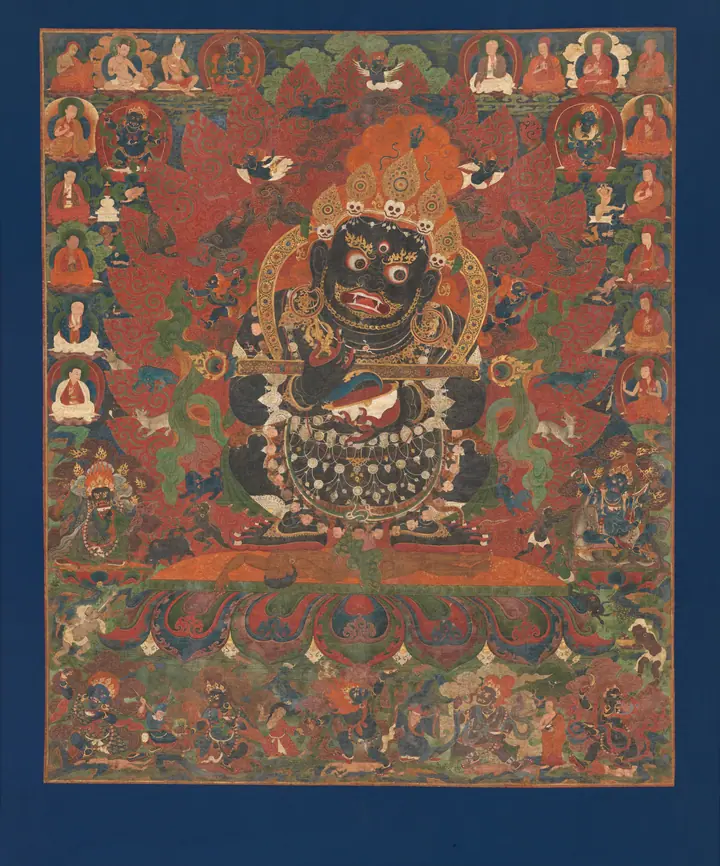
10
ca. 1500 · Metropolitan Museum of Art
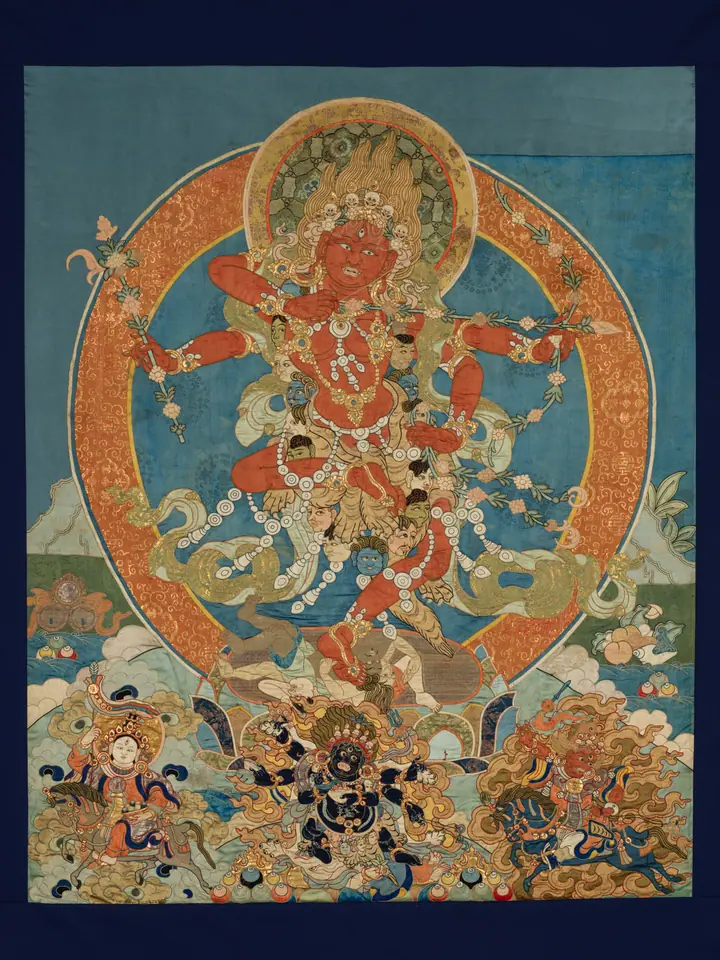
11
19th century · Metropolitan Museum of Art
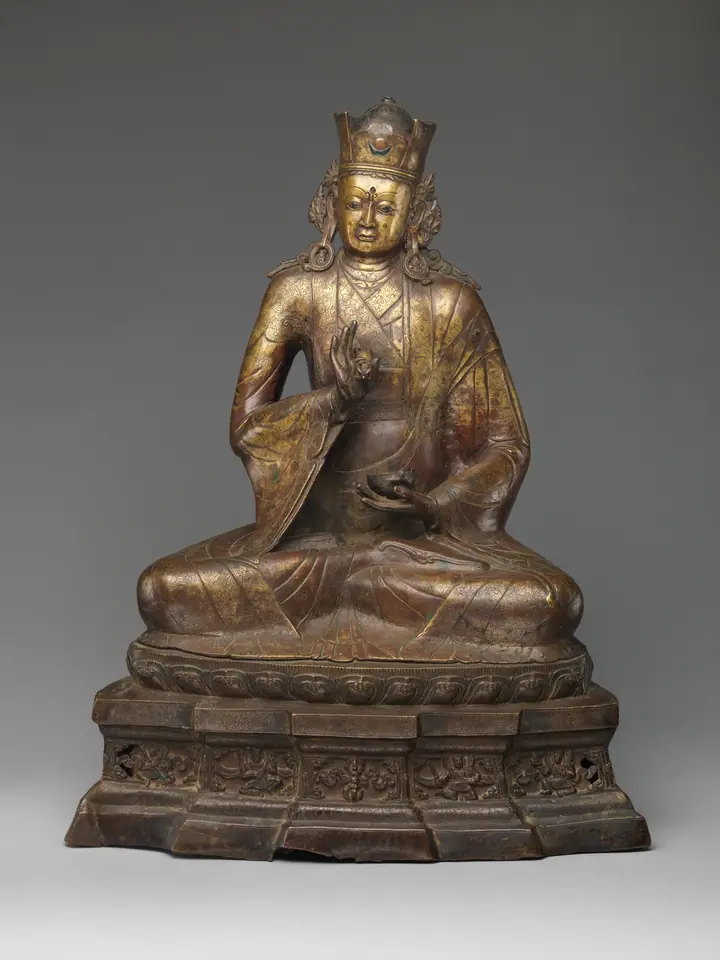
12
14th century · Metropolitan Museum of Art
03The pantheon
All 48 deitiesColour, posture, gesture and implement are a precise visual grammar. Each record decodes one figure, then leads to the works that depict it.
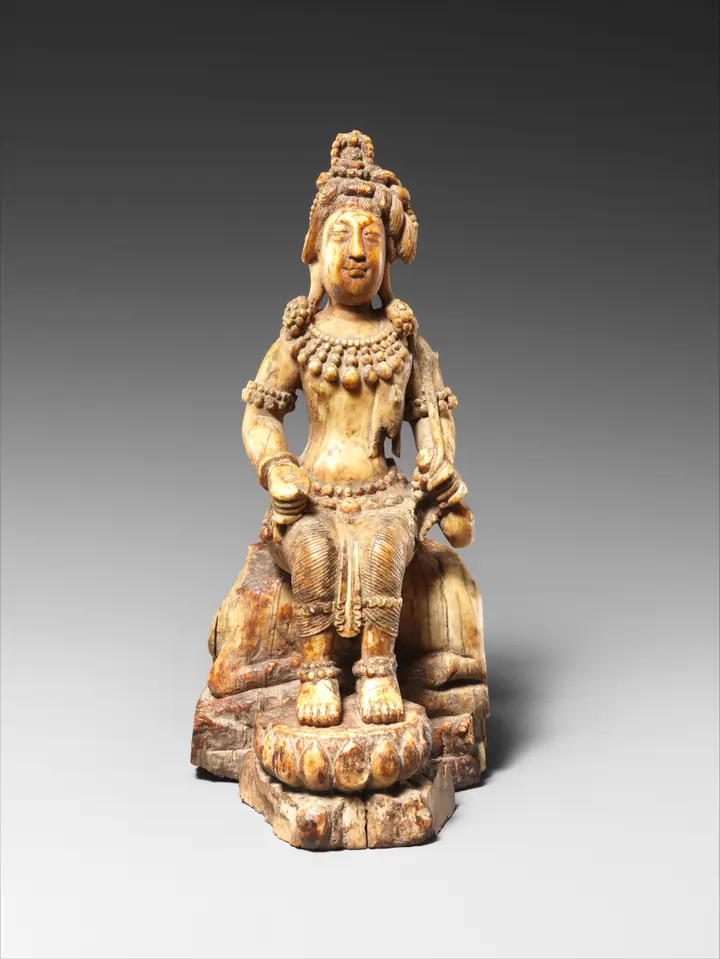
Bodhisattva
སྤྱན་རས་གཟིགས
The bodhisattva of compassion and patron of Tibet, most often shown white and four-armed with joined palms, a crystal rosary and a lotus; source of the six-syllable…
FT·DEI·014
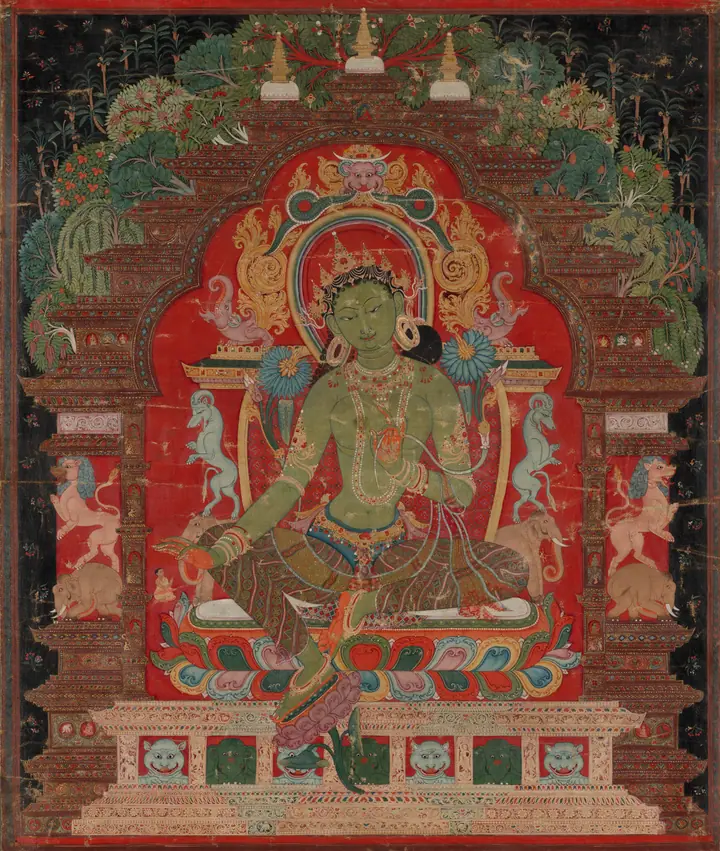
Female Buddha & Goddess
སྒྲོལ་ལྗང
The green ‘Saviouress’, a female buddha of swift compassionate action, seated with her right foot extended and holding blue lotuses, invoked for protection from fear and…
FT·DEI·020
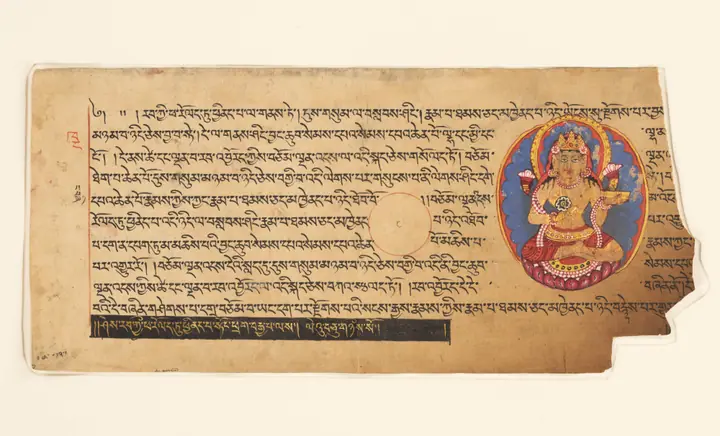
Bodhisattva
འཇམ་དཔལ་དབྱངས
The bodhisattva of wisdom, golden-orange and youthful, who raises a flaming sword that cuts through ignorance and holds a lotus bearing the Perfection of Wisdom…
FT·DEI·016
Indian Master8th century
པདྨ་འབྱུང་གནས
Eighth-century tantric master from Oddiyana, revered as Guru Rinpoche, the ‘second Buddha’ who subdued Tibet’s local deities and established the Vajrayana there.
FT·MAS·009
05The chronicle
All 0 eventsEmpire, translation, monastic statecraft, invasion and exile. A timeline that states what happened, when, and on whose evidence.
06Sowa Rigpa
Three humours, twelve pulses, and a seventeenth-century atlas of the body painted in seventy-nine scrolls. One of the world’s oldest continuously practised medical systems, set out as a system.
Enter 48 records07Science & cosmos
Eclipse tables worked on sand boards, a cosmology drawn as a mandala, a thousand years of formal logic, and four decades of laboratory dialogue between contemplatives and neuroscientists.
Enter 40 records