FT·SYM·015Emblems & Offerings
Butter Lamp
མར་མེ
Wyliemar meSanskritDīpa
A chalice-shaped lamp burning clarified butter, offered before images as the light of wisdom that removes the darkness of ignorance.
Also known asChöme · Marme · Butter Lamp Offering · Offering Lamp · Dipa
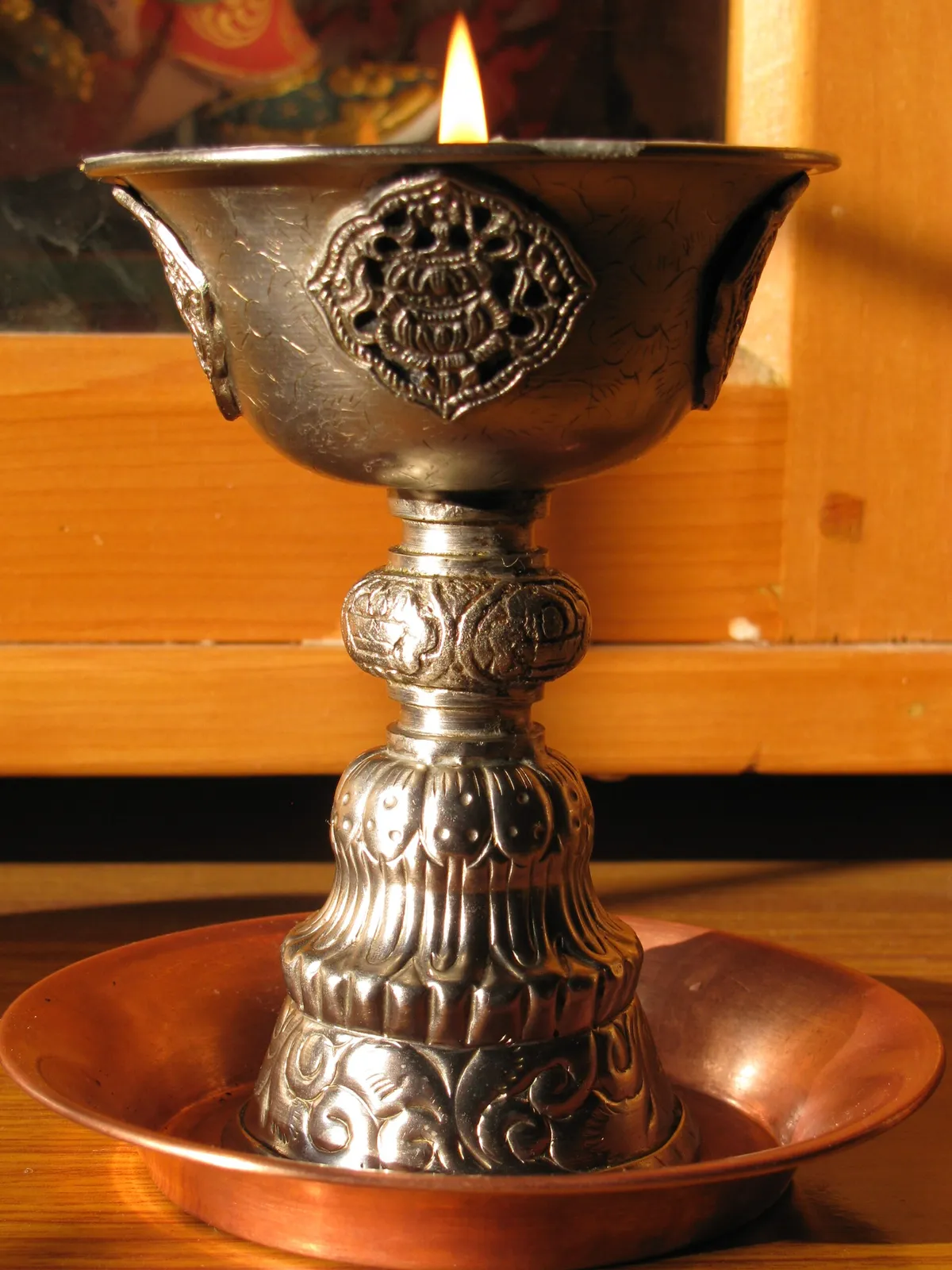
The butter lamp is the offering of light, one of the oldest acts of Buddhist worship and the most common devotional gift in Tibet. A flame before an image represents wisdom dispelling the darkness of ignorance, and those who offer it pray for clear understanding in this life and a well-lit path after death. Lamps are lit daily on household shrines, in great numbers on holy days, and for the dead during the forty-nine days after a death. Pilgrims carry butter in flasks or bags to top up the lamps of each temple they visit.
The lamp is a chalice with a wide bowl, a slender stem with a central knob and a flared foot, made of silver, brass or copper. The wick is a twist of cotton wound around a thin stick of dry grass or bamboo, set upright in a socket at the bottom of the bowl. Melted clarified butter, traditionally from the dri, the female yak, is poured around it and sets solid. Vegetable oil or ghee is now usual in India and Nepal. A small lamp burns for several hours, and the great vats of major temples hold enough butter to burn for days.
Rows of lamps burn before the Jowo image in the Jokhang in Lhasa and in every working monastery, where a lamp-keeper tends them. Sponsoring a hundred, a thousand or a hundred thousand lamps is a standard meritorious act at pilgrimage sites such as Bodh Gaya and Boudhanath. Two festivals centre on lamps: the Butter Lamp Festival on the fifteenth day of the first month, and Ganden Ngamchö on the twenty-fifth of the tenth month, when lamps are set on roofs and windowsills to mark the death of Tsongkhapa in 1419. Many monasteries now house lamps in separate buildings to reduce the risk of fire.
Connections
12 linked records across the archive.
Sources
References consulted for this record.
- 01Butter lamp — Wikipedia
- 02Chotrul Duchen — Wikipedia
- 03Robert Beer, The Encyclopedia of Tibetan Symbols and Motifs (Shambhala, 1999)