FT·SYM·023Ritual Implement
Phurba
ཕུར་པ
Wyliephur paSanskritKīla
A three-edged ritual peg used to pin down and transform obstructing forces, and the emblem of the wrathful deity Vajrakilaya.
Also known asPhurpa · Kila · Ritual Dagger · Ritual Peg · Purba
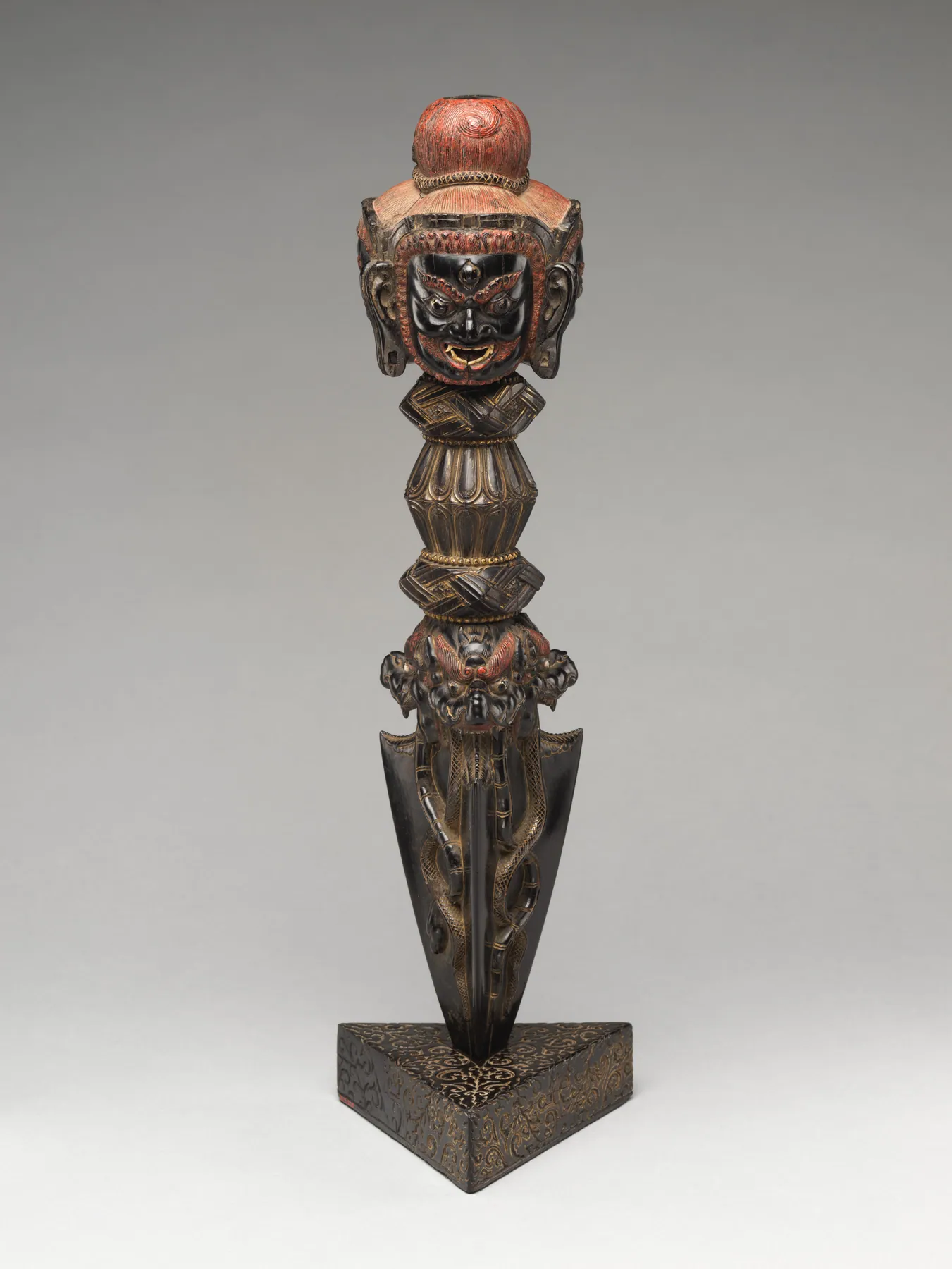
The phurba is a ritual stake with a three-sided blade. Its ancestor is the Indian kila, a peg used to tether animals, fix tents and mark out consecrated ground. In tantric Buddhism the peg became a weapon of meditation that fixes hostile forces in place so that they can be subdued and released. Those forces are understood outwardly as harmful spirits and inwardly as ignorance, craving and hatred. The implement is identified with the deity Vajrakilaya, whose practice is central to the Nyingma school and is also maintained in the Sakya tradition and in Bön.
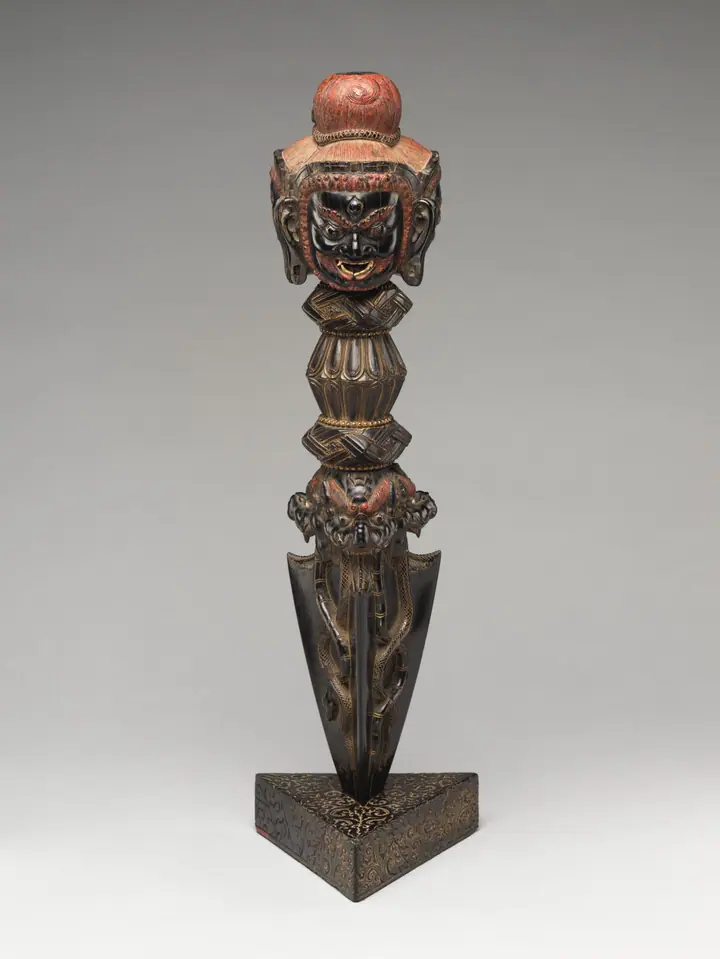
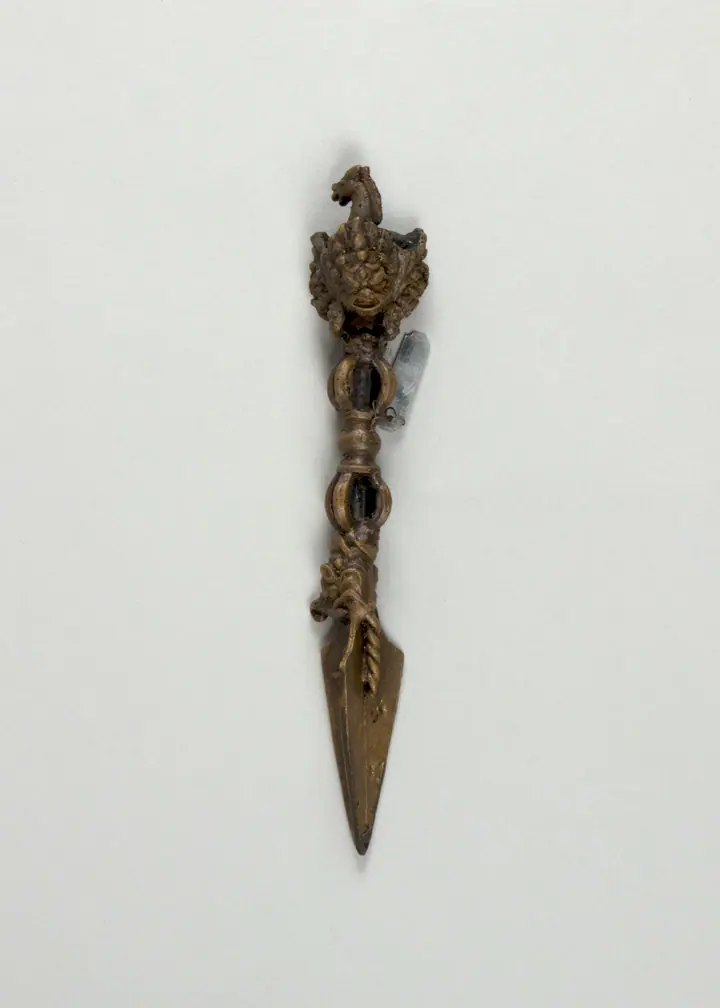
A phurba has three sections. The lower is a blade of three flat faces meeting in a point, said to cut the three poisons; it often emerges from the jaws of a makara, with serpents winding down the faces. The middle is a grip, either a vajra or an eight-sided shaft between two knotted bosses. The top bears the three faces of the wrathful deity beneath a half vajra or a horse’s head. Phurbas are made of iron, bronze, brass, wood, bone or crystal. Iron, especially meteoric iron, and dark hard woods are preferred for wrathful rites.
In ritual the phurba is rolled between the palms and thrust into an effigy of dough or drawn paper, called a linga, which stands for the obstacle, or set in a triangular stand. Sets of phurbas are planted around a site to protect it before a mandala or temple is built. The same act is performed by masked dancers in the cham. Tradition holds that Padmasambhava practised Vajrakilaya at Yangleshö in Nepal to remove obstacles before coming to Tibet, and many phurbas are counted among the treasure objects later revealed by tertöns.
In the collection
2 works in the collection relate to Phurba.
Connections
9 linked records across the archive.
Sources
References consulted for this record.
- 01Phurba — Wikipedia
- 02Ritual Peg (purba) — Project Himalayan Art, Rubin Museum
- 03Ritual Object: Kila 'Purba' Main Page — Himalayan Art Resources
- 04Robert Beer, The Encyclopedia of Tibetan Symbols and Motifs (Shambhala, 1999)