FT·SYM·034Sacred Diagram & Mantra
Mandala
དཀྱིལ་འཁོར
Wyliedkyil 'khorSanskritMaṇḍala
A symmetrical diagram of a deity’s palace and its surrounding realm, used as the plan for tantric visualisation, initiation and consecration.
Also known asKyilkhor · Kyil Khor · Sacred Circle · Deity Palace
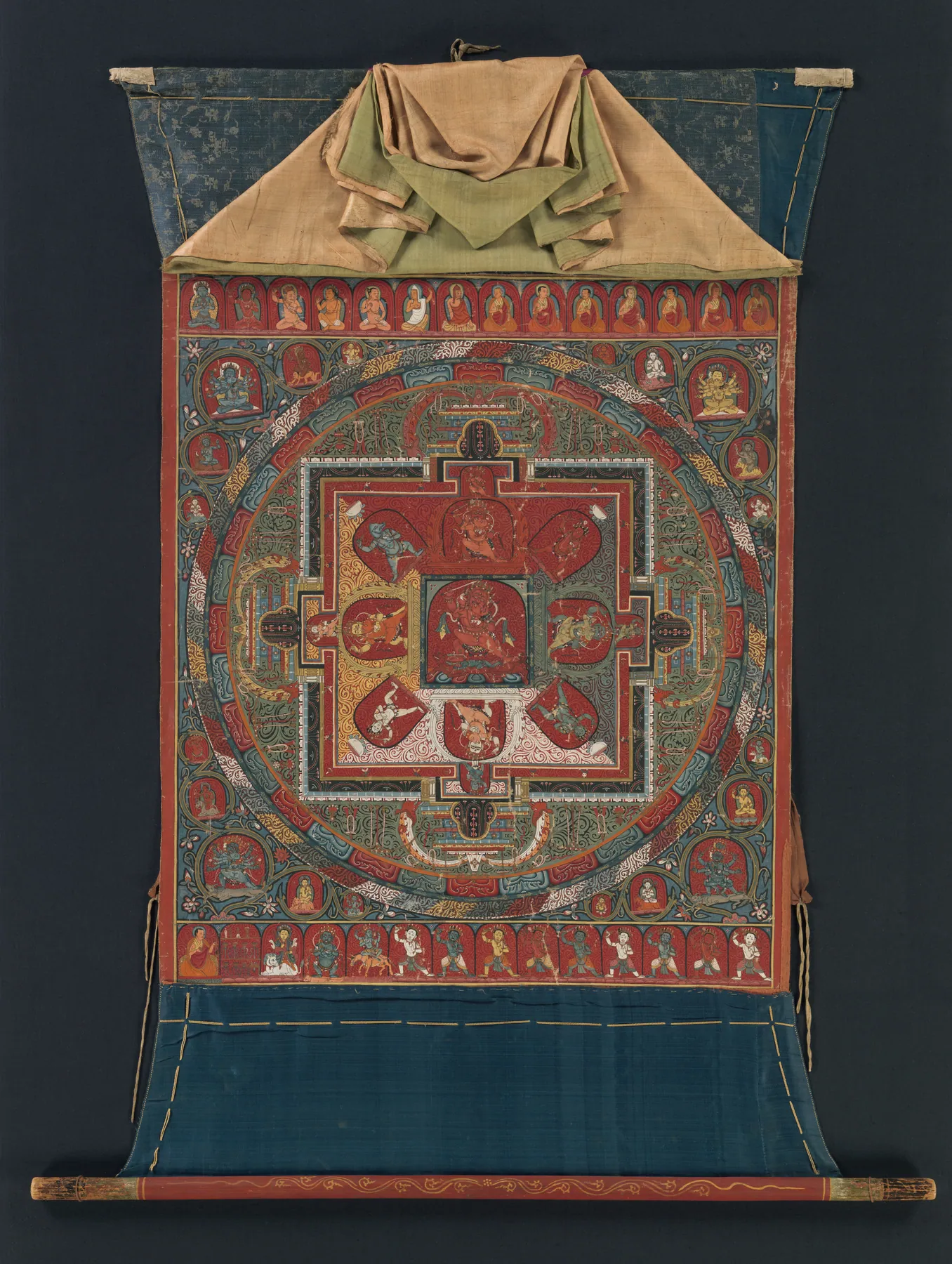
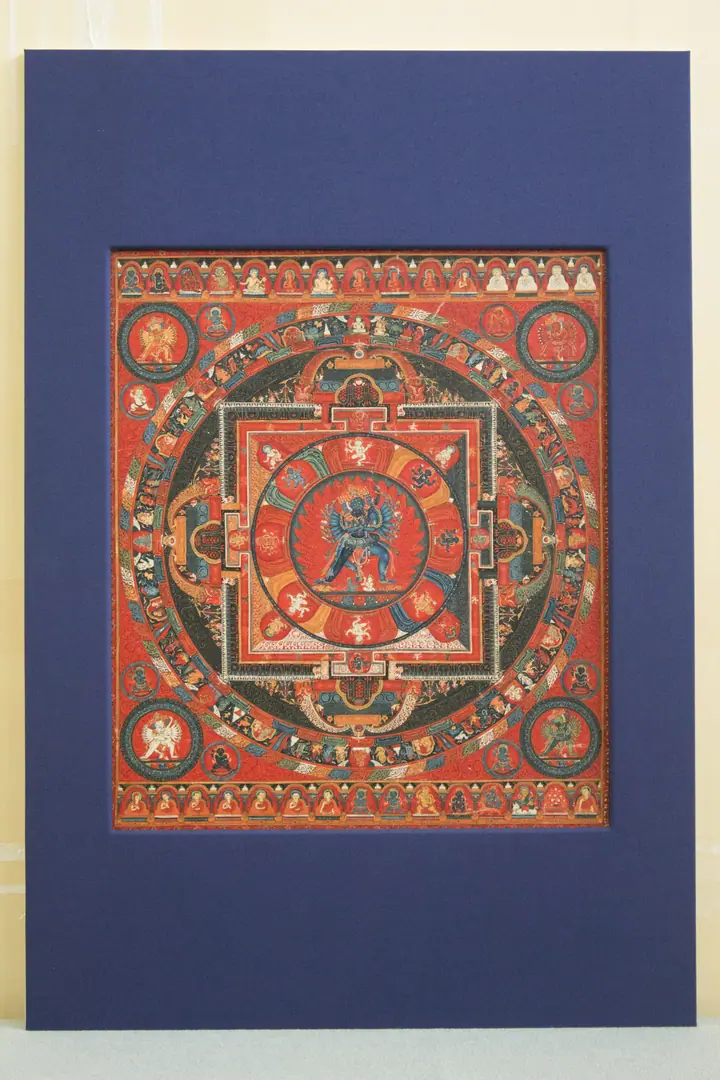
A mandala is the complete environment of an awakened being, laid out as a ground plan. The Tibetan word kyilkhor means centre and circumference. Each tantric system has its own mandala, with a principal deity at the centre and a prescribed retinue around it, and to enter the mandala in an empowerment is to be authorised to practise that system. In meditation the practitioner builds the whole structure in the mind in three dimensions and identifies with the central figure. The mandala thus serves at once as a map of the cosmos, of the purified body and mind, and of the path.
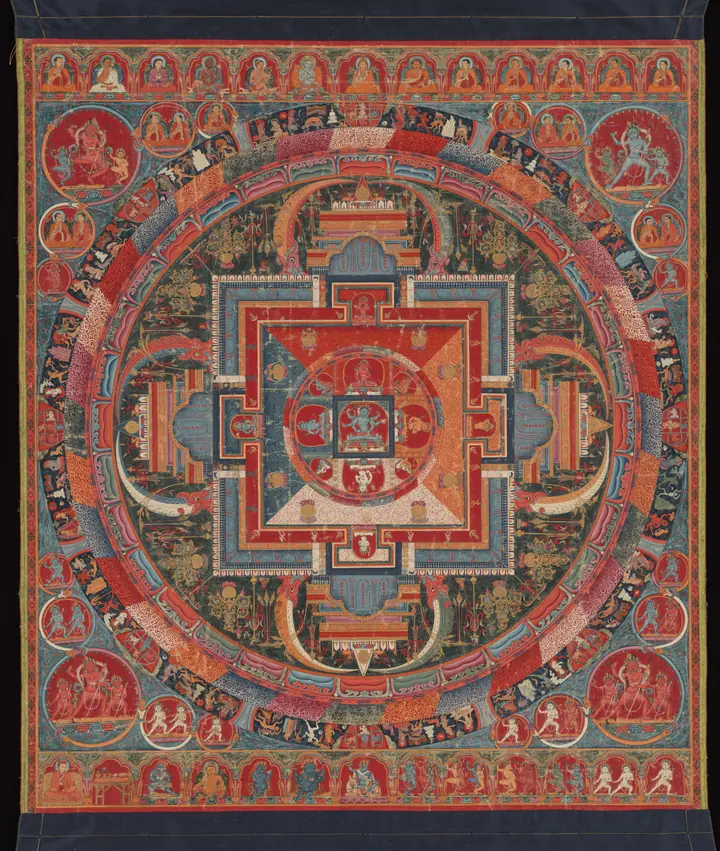
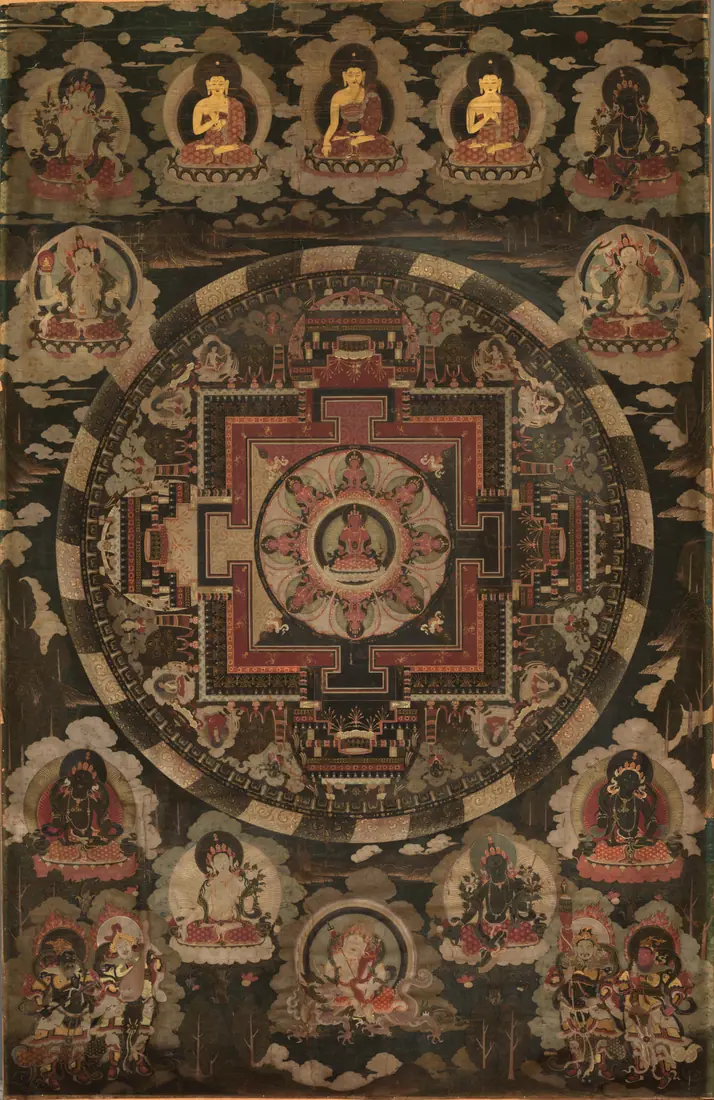
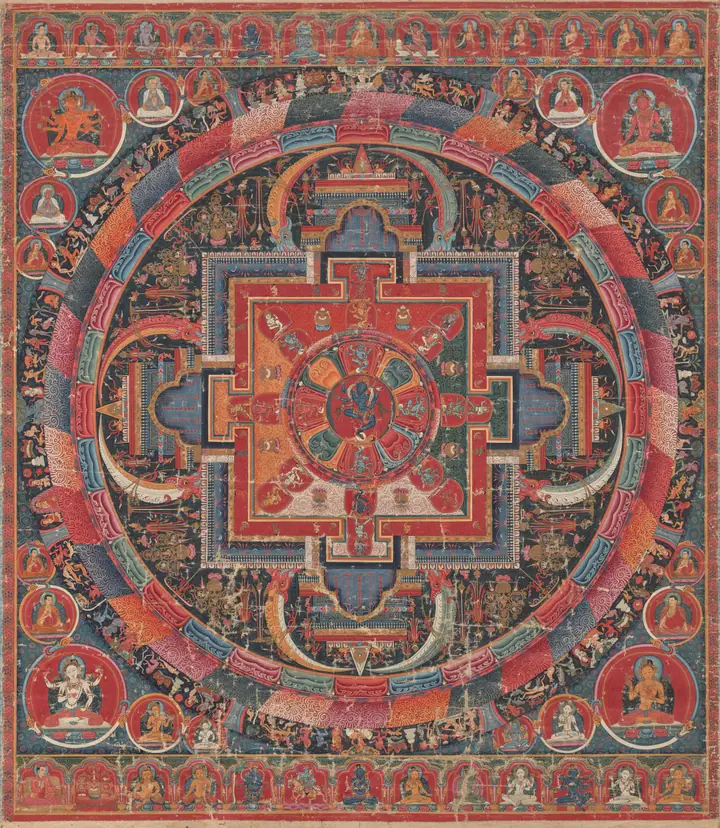
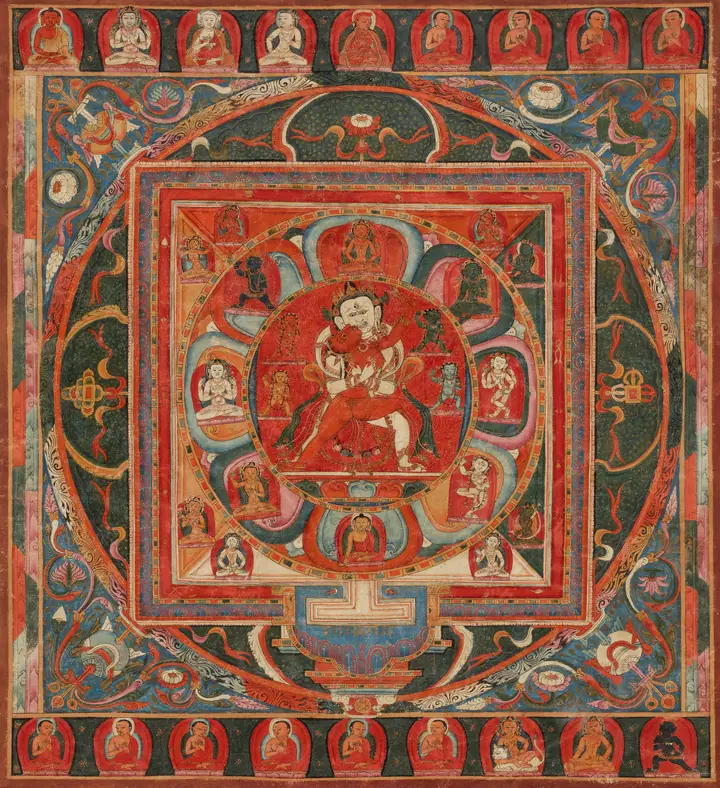
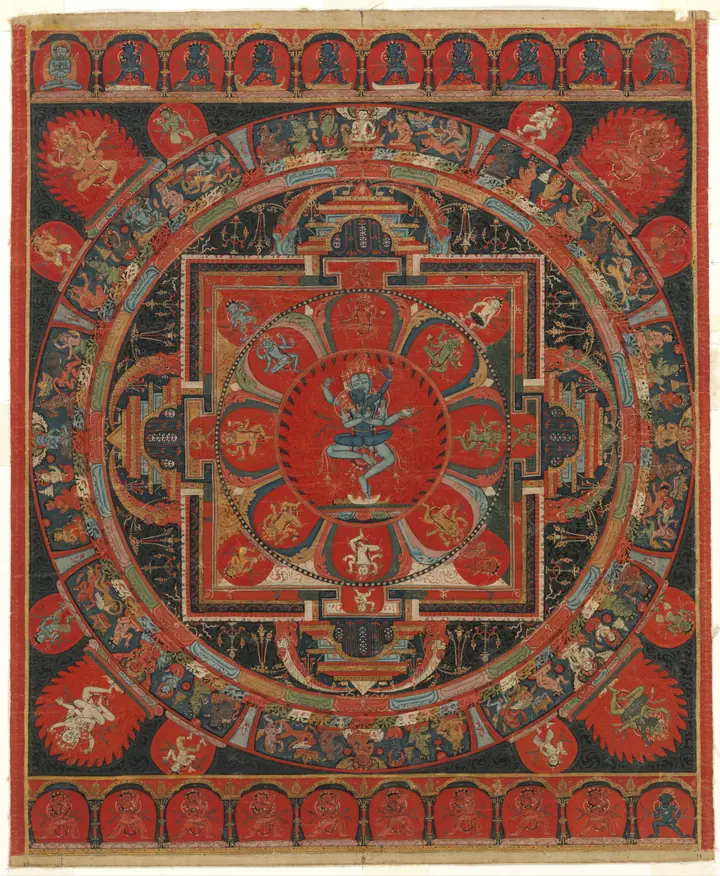
Seen from above, the palace is a square with four gates, each facing a cardinal direction and topped by a tiered archway. The floor is divided by diagonals into four triangles coloured for the directions, with east drawn at the bottom. Inner chambers hold the deities, shown as figures, as hand emblems or as seed syllables. Around the square run concentric rings: usually a ring of lotus petals, a ring of vajras and an outer ring of five-coloured flames, and in mandalas of wrathful deities a ring of eight charnel grounds. Every measurement derives from a single unit set by ritual manuals.
Mandalas are painted on cloth, drawn on temple ceilings and walls, laid out in coloured sand for particular ceremonies, and built as three-dimensional models in wood or gilt metal. Whole buildings follow the plan, among them the monastery of Samye and the Kumbum stupa at Gyantse. Collections such as the Vajravali, compiled in India around 1100, and the sets painted at Ngor for the Sakya school preserve many designs. The term is also used for the plate offering of the universe and, more loosely, for any ordered field, including the group of disciples around a teacher.
In the collection
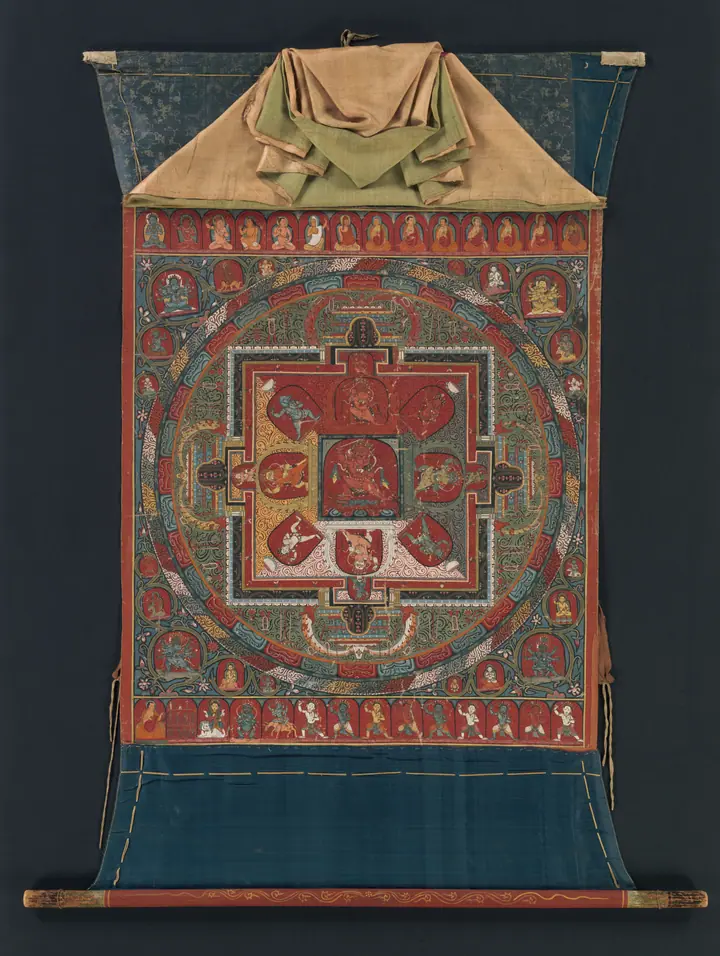
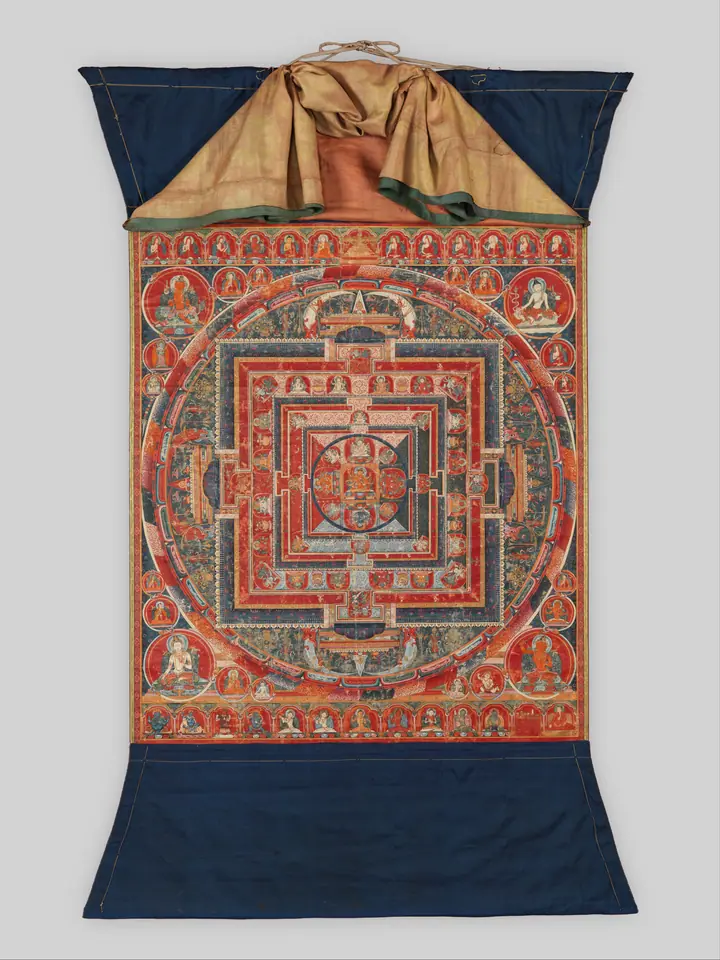
10 works in the collection relate to Mandala.
Connections
24 linked records across the archive.
Sources
References consulted for this record.
- 01Mandala — Wikipedia
- 02Mandala: Mandala Main Page — Himalayan Art Resources
- 03Mandala (glossary) — Project Himalayan Art, Rubin Museum
- 04Martin Brauen, The Mandala: Sacred Circle in Tibetan Buddhism (Serindia, 1997)