FT·SYM·027Ritual Implement
Damaru
ཌཱ་མ་རུ
Wylieḍā ma ruSanskritḌamaru
A small double-headed hourglass drum sounded by swinging pellets, played in the right hand with the bell to mark the rhythm of tantric liturgy.
Also known asHand Drum · Pellet Drum · Changteu · Thö Nga · Skull Drum · Chö Drum
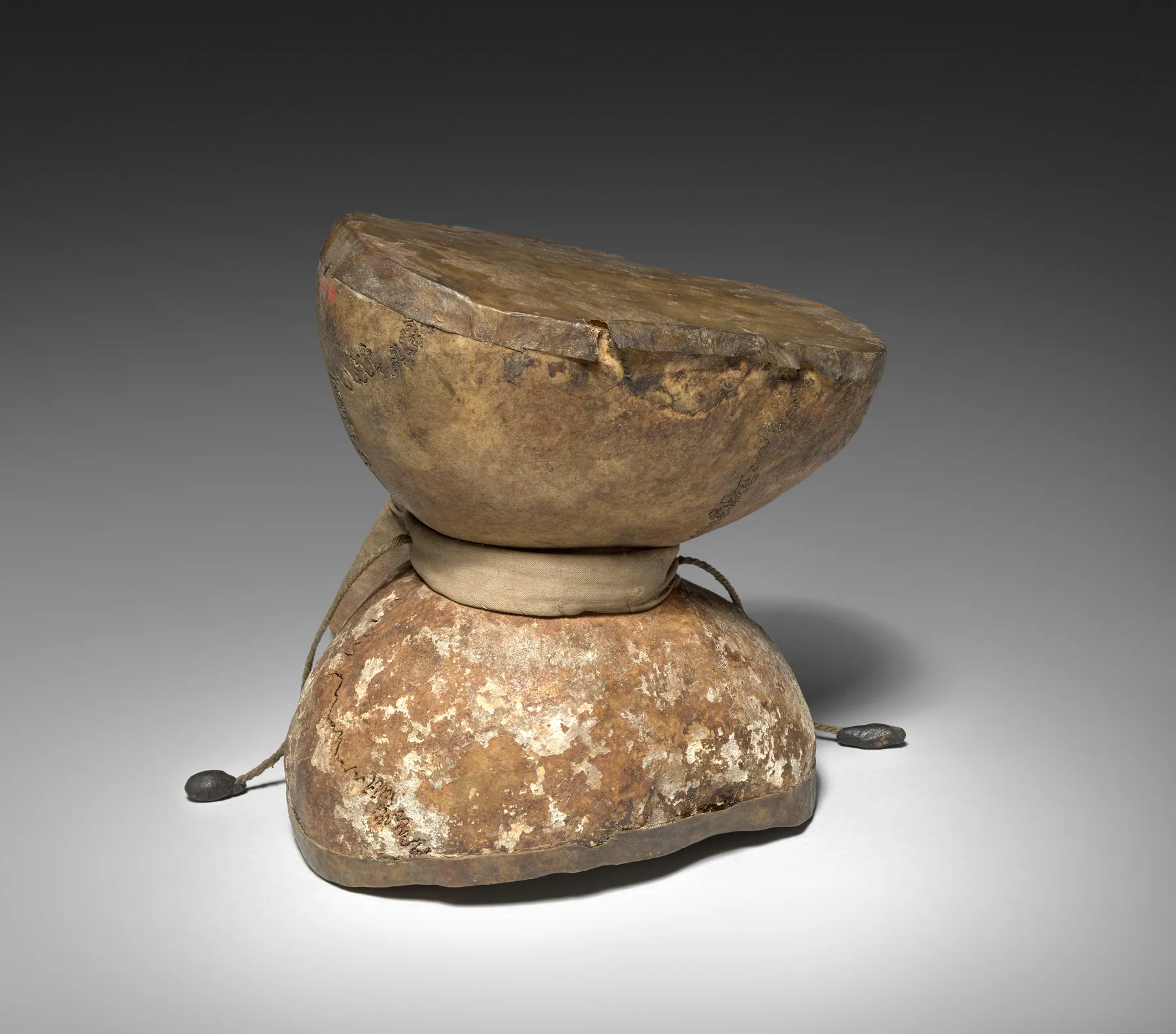
The damaru is a two-headed hand drum shaped like an hourglass. In India it is the drum of the god Shiva and of wandering ascetics. In Buddhist tantra it is the instrument of dakinis and adepts and one of the offerings of sound. It is played in the right hand, the side of method, while the left hand rings the bell. Its sharp rattling beat is said to summon the buddhas and dakinis, to proclaim the sound of great bliss and to rouse the practitioner from the sleep of ignorance.
Two bowls are joined at their apexes and covered with skins, traditionally stained green. A cloth band round the waist carries two short cords ending in knotted or wax-covered pellets, which strike the heads alternately when the wrist is rotated. From the band hang a handle and a long tail of brocade with tassels. The common small drum is turned from wood such as acacia or sandalwood. The skull drum is made of two cranium tops, by tradition those of a boy and a girl. The large drum of the chö practice, often more than twenty centimetres across, is wooden and deeper in tone.
The small damaru punctuates the chanting in rituals of the higher tantras, played in short bursts together with the bell. Chö practitioners sing their liturgy to the slow steady beat of the large drum, with the thighbone trumpet at hand, a practice associated with Machig Labdrön and followed in every school. In art a raised damaru identifies many dakinis and Indian adepts, and a small one hangs from the khatvanga staff. Skull drums are regarded as powerful objects and are normally used only by those with the appropriate training.
In the collection
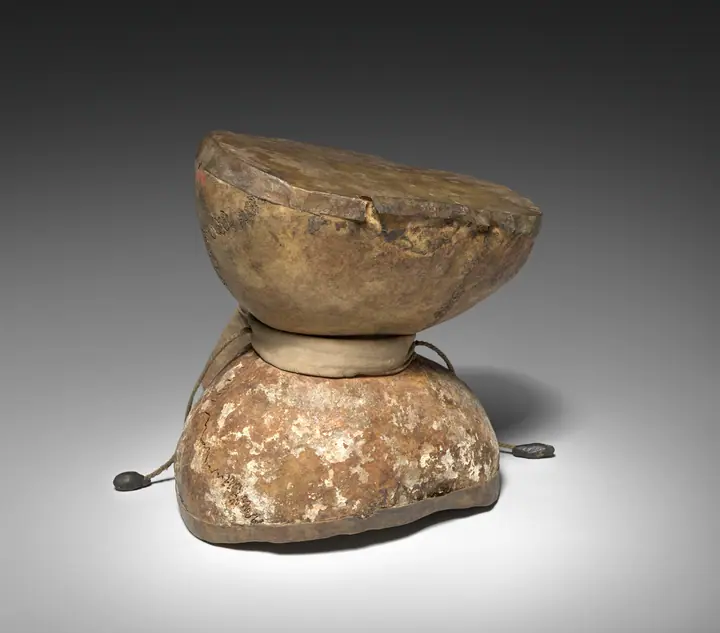
1 work in the collection relate to Damaru.
Connections
13 linked records across the archive.
Sources
References consulted for this record.
- 01Damaru — Wikipedia
- 02Double-Sided Skull Drum — Project Himalayan Art, Rubin Museum
- 03Ritual Object: Musical Instruments — Himalayan Art Resources
- 04Robert Beer, The Encyclopedia of Tibetan Symbols and Motifs (Shambhala, 1999)