FT·SYM·043Painting & Sculpture
Thangka
ཐང་ཀ
Wyliethang kaSanskritPaṭaDatefrom the 11th century
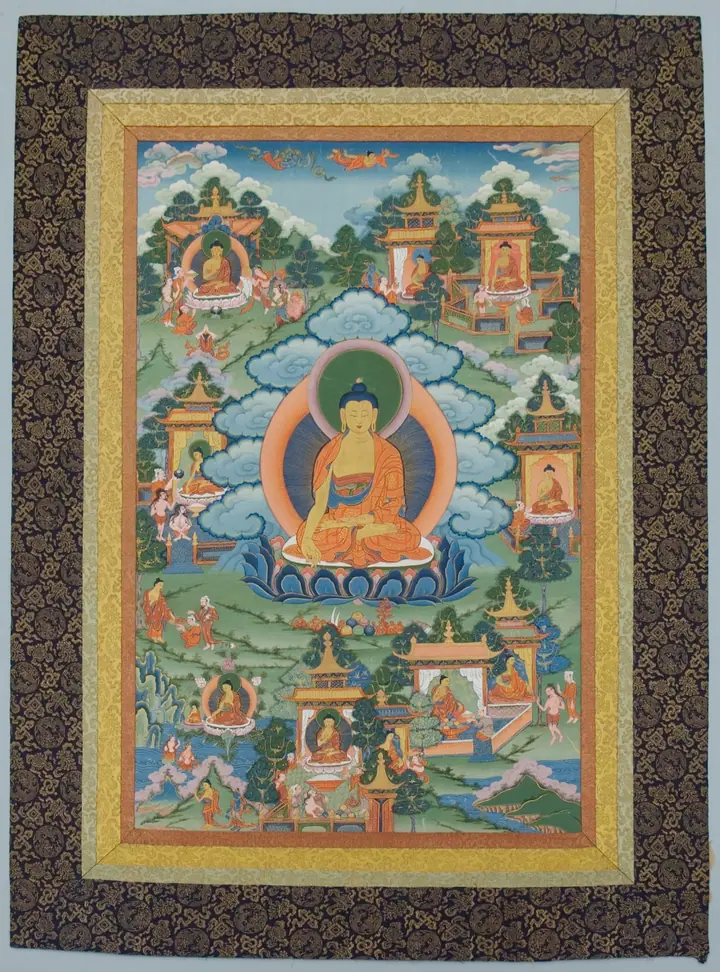
A portable painting on cloth, mounted in silk and rolled for storage, that serves as a support for meditation, teaching and devotion.
Also known asTangka · Thanka · Scroll Painting · Tibetan Scroll Painting
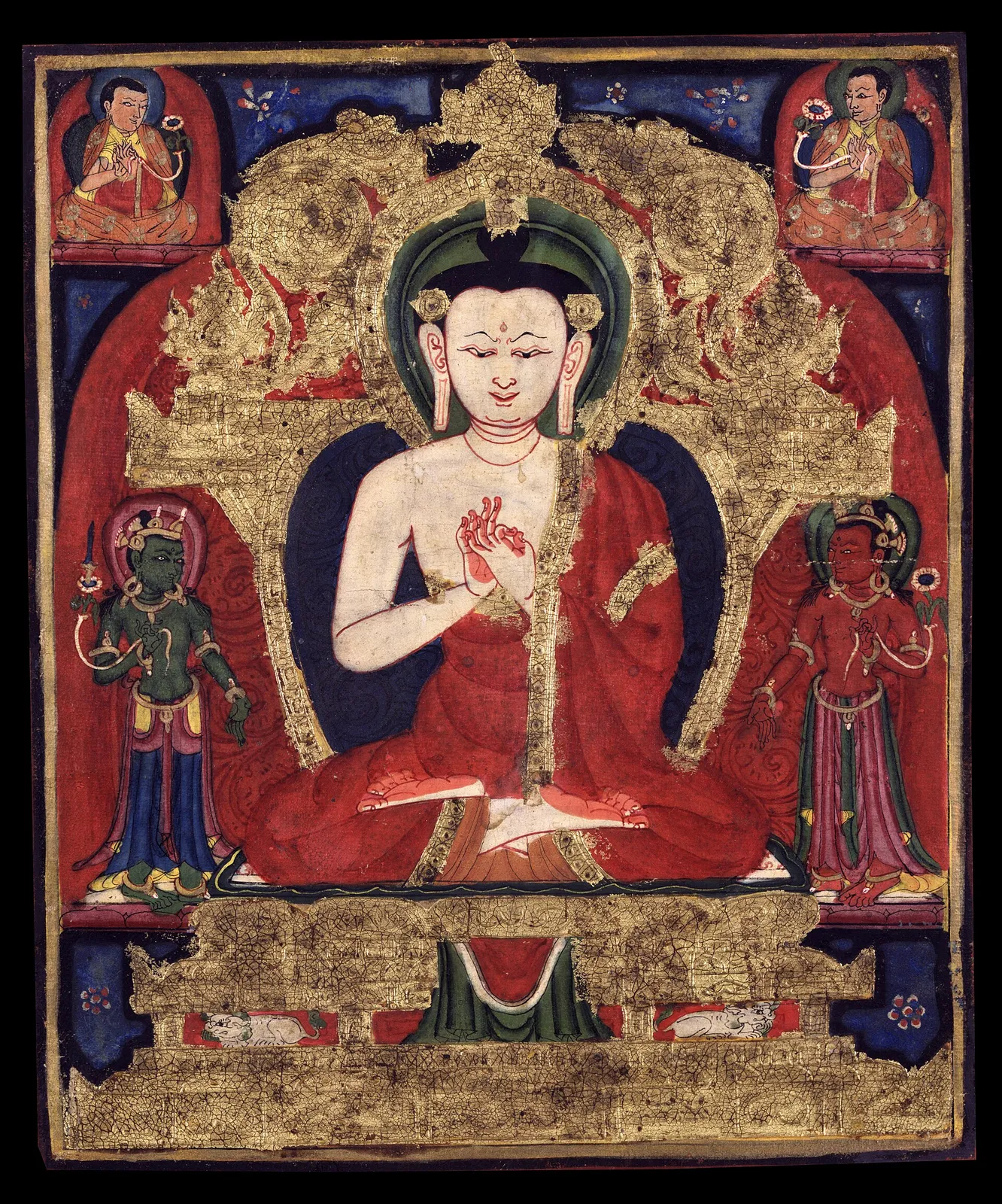
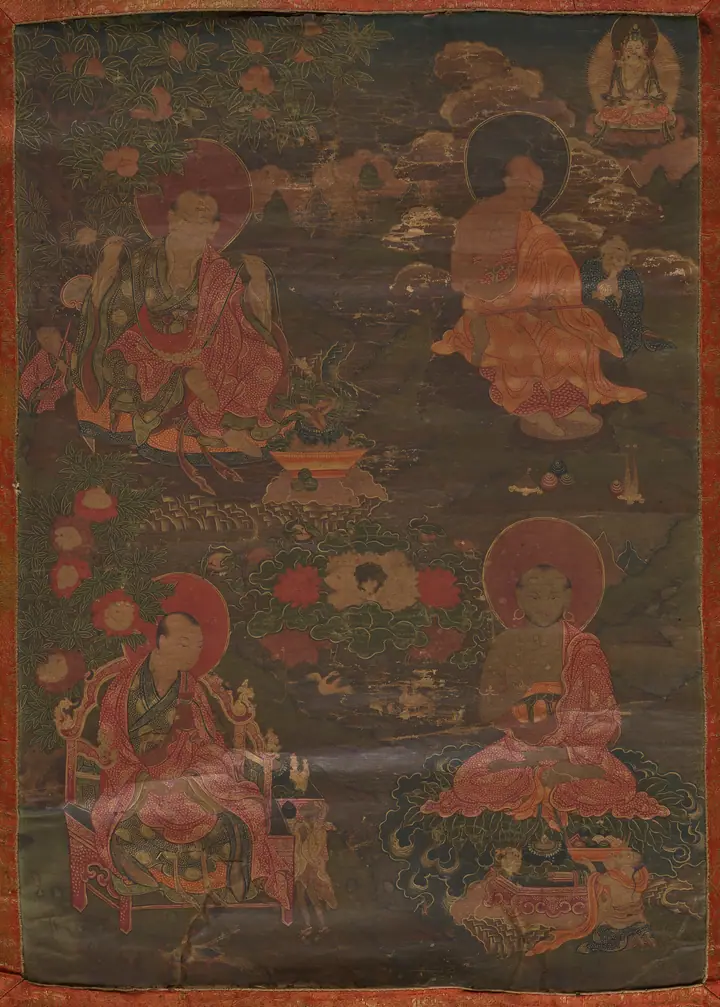
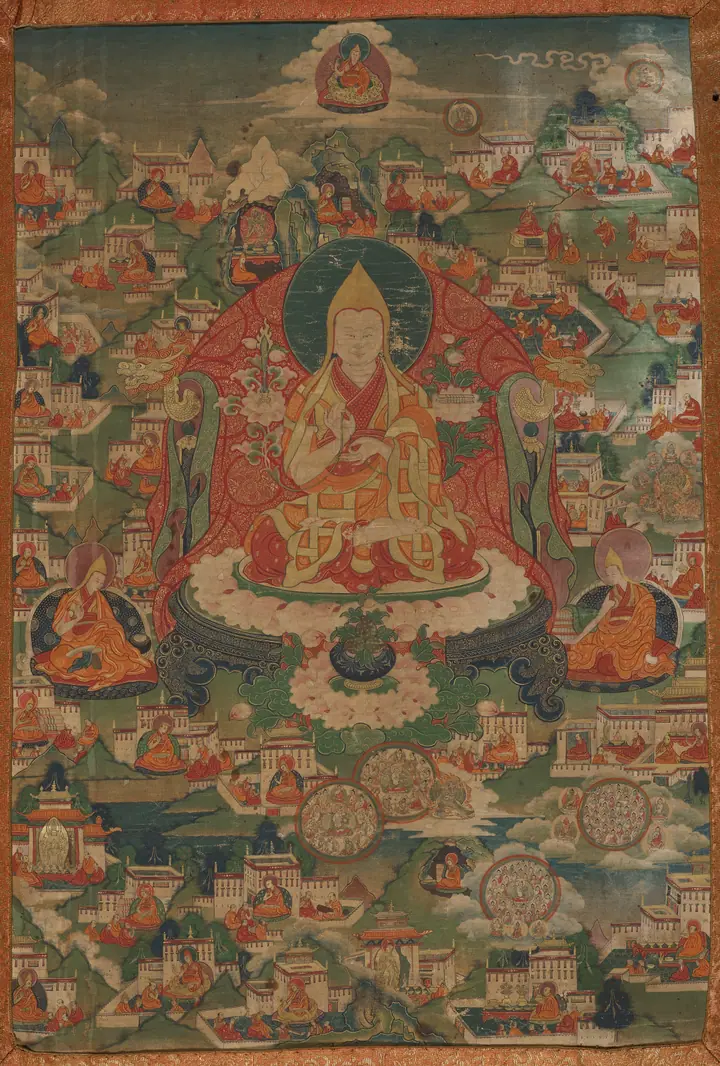
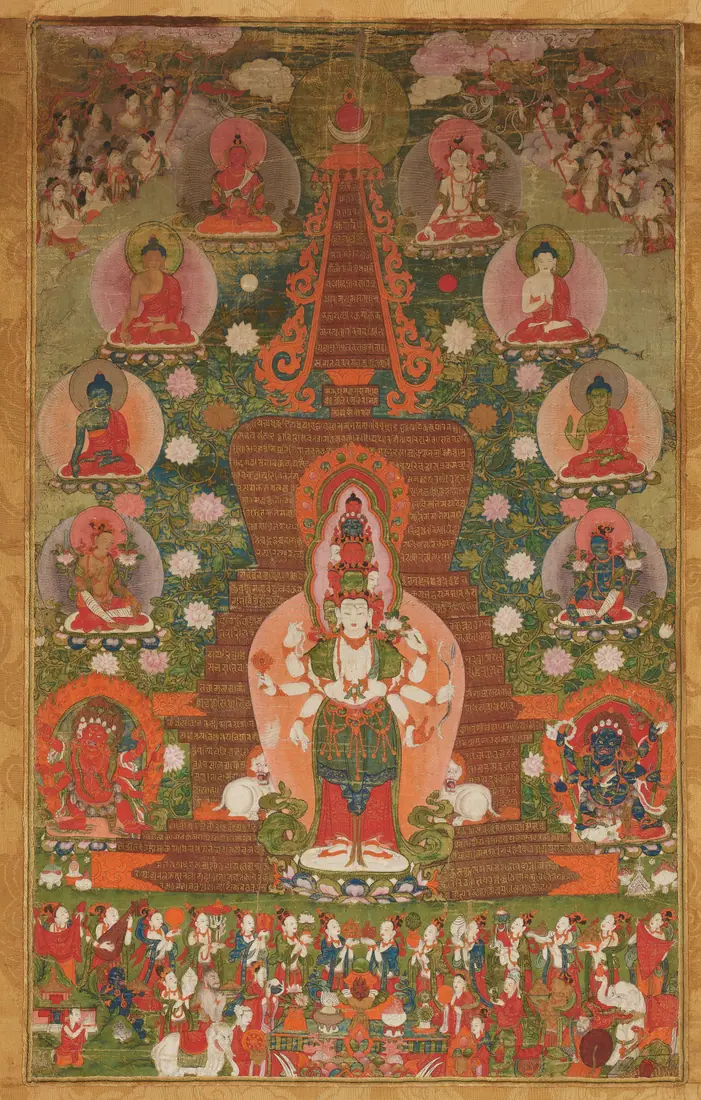
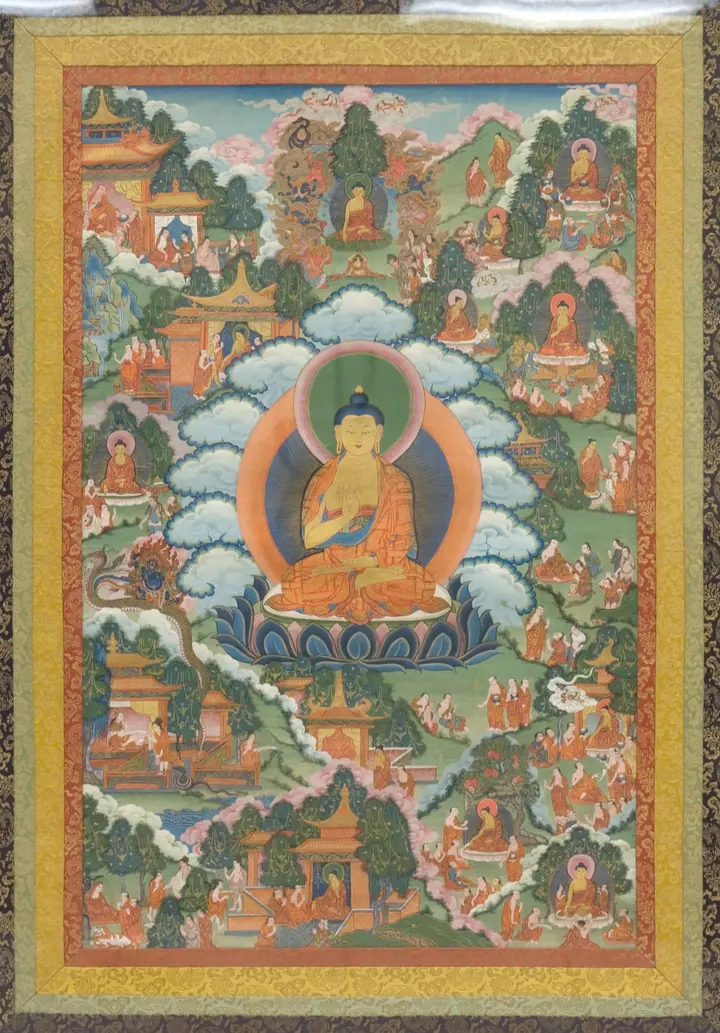
The thangka is the characteristic painting format of Tibetan Buddhism. It is an image on cloth, framed in textile and not in wood, and rolled up when not displayed, which suited a society in which teachers, traders and nomads travelled constantly. Thangkas depict buddhas, deities, mandalas, lineage teachers, narrative lives and diagrams. They are commissioned to gain merit, to remove obstacles, to aid a dying or dead relative, or because a teacher has prescribed a particular deity. Their Indian ancestor is the painted cloth, or pata, and the earliest surviving Tibetan examples date from about the eleventh century.
A cotton cloth is stretched on a frame, sized with glue and coated with a ground of chalk or white clay, then polished smooth with a stone. The painter rules a grid of proportional lines, draws the figure in charcoal and ink, and applies mineral and plant colours bound in hide glue, first flat areas, then shading and outlines. Gold is added last, and the eyes of the main figure are painted in a short ceremony. The painting is sewn into a brocade mount with a wider lower border, a thin silk veil and two wooden rods, the lower one tipped with metal knobs.
A finished thangka is consecrated, usually by writing the syllables om, ah and hum on the back behind the forehead, throat and heart of each figure. Besides painted thangkas there are embroidered, woven and appliqué examples, block prints, and paintings in gold line on black or red grounds. Regional schools such as Menri, Khyenri and Karma Gadri developed from the fifteenth century. The art is practised today in Tibet, in Rebkong in Amdo, whose arts were inscribed by UNESCO in 2009, and in Nepal, India and Bhutan, with training schools for both monastic and lay painters.
In the collection
15 works in the collection relate to Thangka.
Connections
21 linked records across the archive.
Sources
References consulted for this record.
- 01Thangka — Wikipedia
- 02Thangka (glossary) — Project Himalayan Art, Rubin Museum
- 03Regong arts — UNESCO Intangible Cultural Heritage
- 04David P. Jackson and Janice A. Jackson, Tibetan Thangka Painting: Methods and Materials (Serindia, 1984)