FT·SYM·024Ritual Implement
Kapala
ཐོད་པ
Wyliethod paSanskritKapāla
A cup made from the top of a human skull, held by tantric deities and used in ritual as a vessel for offerings that signify transformed perception.
Also known asSkull Cup · Thöpa · Thod pa · Skull Bowl
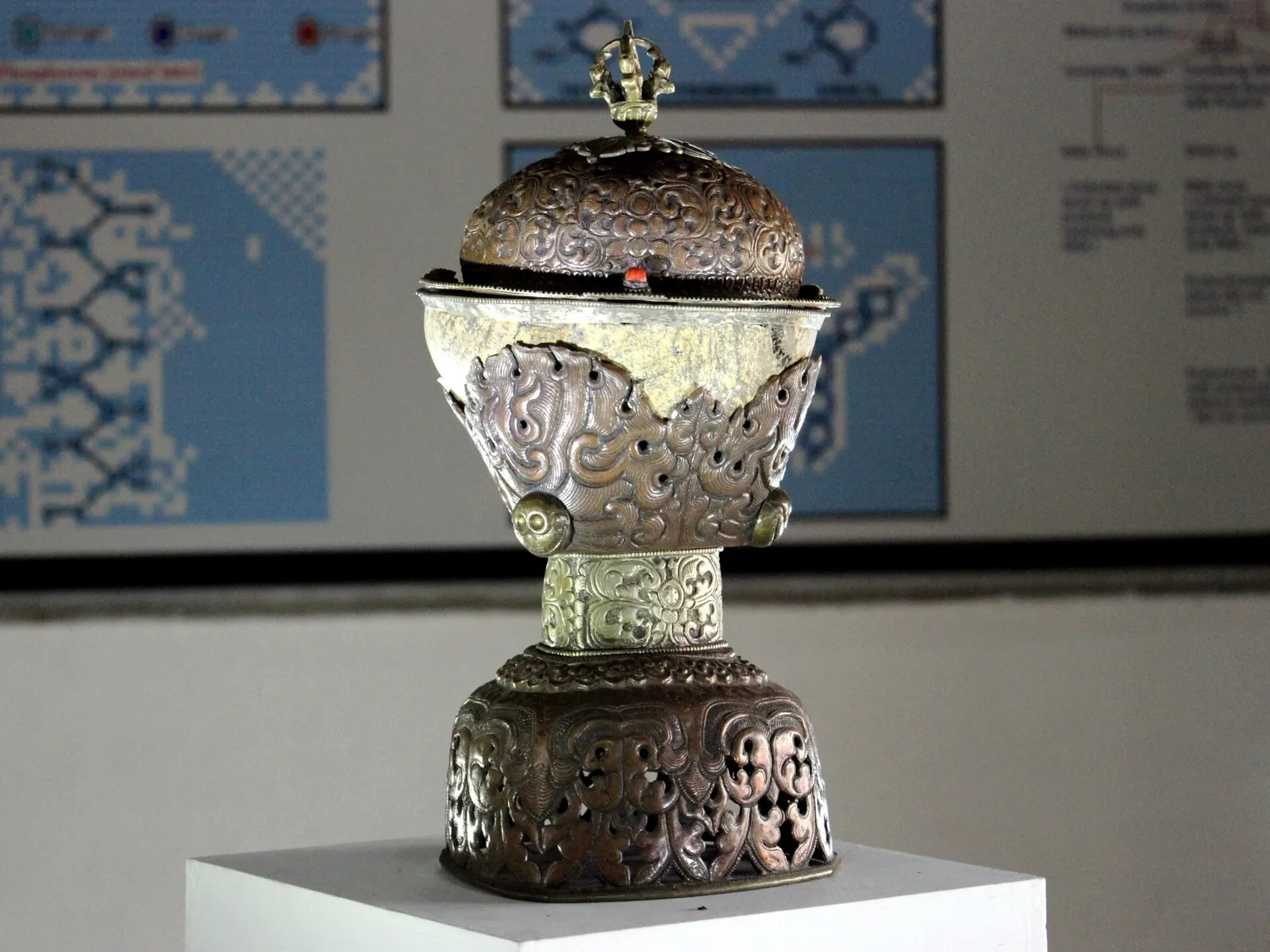
The kapala is a bowl made from the upper part of a human cranium. It entered Buddhism from the practices of Indian tantric ascetics who lived in cremation grounds and used a skull as their only vessel. In Vajrayana the skull is a reminder of impermanence and a sign that the practitioner has abandoned the ordinary distinction between pure and impure. As a container it holds nectar or symbolic blood, which stand for wisdom and for the transmuted energies of the body. Wrathful and semi-wrathful deities and dakinis hold one in the left hand at the heart.
The skull is cut along the brow line, cleaned and often lined with silver or copper. Ritual texts specify the qualities of a suitable skull, including its colour, thickness and the pattern of its sutures. A finished kapala sits on a triangular metal stand representing a fire of wisdom, sometimes with three small modelled heads at the corners. A domed metal lid with a half-vajra handle covers it. Many examples used on shrines are not bone at all but are cast in brass, bronze or silver in the same oval shape.
On the altar a pair of skull cups holds the inner offering: consecrated tea or alcohol standing for nectar and, in wrathful rites, a red liquid standing for blood. In empowerments a sip from the kapala is given to initiates. A kapala is paired with the curved knife in the hands of Vajrayogini, Mahakala and many other deities, the knife as method and the cup as wisdom. Skulls for ritual use were traditionally obtained from sky-burial sites. Today the trade in human remains is restricted in many countries, and metal or resin substitutes are common.
Connections
12 linked records across the archive.
Sources
References consulted for this record.
- 01Kapala — Wikipedia
- 02Skull Cup — Project Himalayan Art, Rubin Museum
- 03Ritual Object: Main Page — Himalayan Art Resources
- 04Robert Beer, The Encyclopedia of Tibetan Symbols and Motifs (Shambhala, 1999)