FT·SYM·016Emblems & Offerings
Torma
གཏོར་མ
Wyliegtor maSanskritBali
A sculpted cake of roasted barley flour and butter that serves in ritual as an offering, as the temporary body of a deity, or as a weapon against obstacles.
Also known asRitual Cake · Offering Cake · Bali · Tor
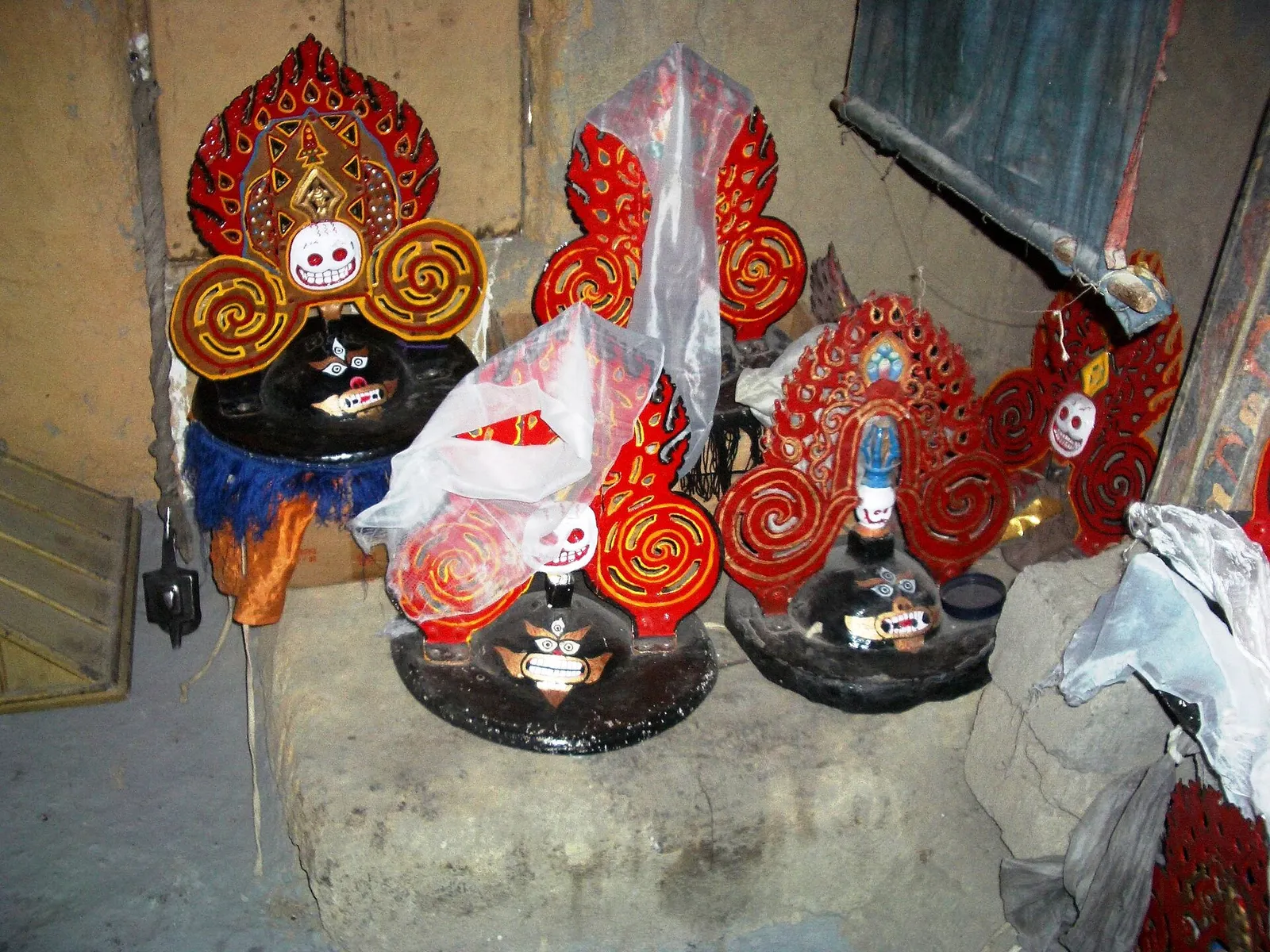
Tormas are hand-modelled figures of dough used in almost every Tibetan Buddhist and Bön ritual. The practice continues the Indian bali, a food offering to deities and spirits, adapted to the staple foods of the plateau. A torma may be food presented to the buddhas and protectors, a gift to appease local spirits, a support in which a deity is invited to reside for the length of a ceremony, or a charged object hurled to repel harmful forces. The Tibetan word is explained as that which is scattered or cast away, pointing to giving without attachment.
The dough is tsampa, roasted barley flour, kneaded with water and butter and shaped by hand or pressed in wooden moulds. Most tormas are cones or tapering cylinders on a round base, though each deity and rite prescribes its own form, some with flanges, steps or flame-shaped wings. Tormas for peaceful deities are left white or pale, and those for wrathful deities are dyed red with a root extract or paint. Discs, petals and flames of coloured butter, pressed out in cold water, are fixed to the front. Permanent versions for long retreats are made of clay or wood.
Monks learn torma making as part of ritual training, and each monastery keeps its own designs. Offering tormas remain on the shrine during a ceremony and are afterwards placed outdoors on a clean high spot for birds and animals. Feast tormas are shared and eaten by the participants. In year-end rites such as Gutor, held on the twenty-ninth day of the twelfth month, a large torma is carried out in procession and thrown into a fire to clear the misfortunes of the old year. Elaborate butter-decorated tormas develop into the art of butter sculpture.
Connections
10 linked records across the archive.
Sources
References consulted for this record.
- 01Torma — Wikipedia
- 02Tormas — Project Himalayan Art, Rubin Museum
- 03Subject: Torma Offering Main Page — Himalayan Art Resources
- 04Robert Beer, The Encyclopedia of Tibetan Symbols and Motifs (Shambhala, 1999)