FT·MAS·009Indian Master
Padmasambhava
པདྨ་འབྱུང་གནས
Wyliepad+ma 'byung gnasSanskritPadmasambhavaDate8th century
Eighth-century tantric master from Oddiyana, revered as Guru Rinpoche, the ‘second Buddha’ who subdued Tibet’s local deities and established the Vajrayana there.
Also known asGuru Rinpoche · Padmakara · Pema Jungne · Lopon Rinpoche · The Lotus-Born
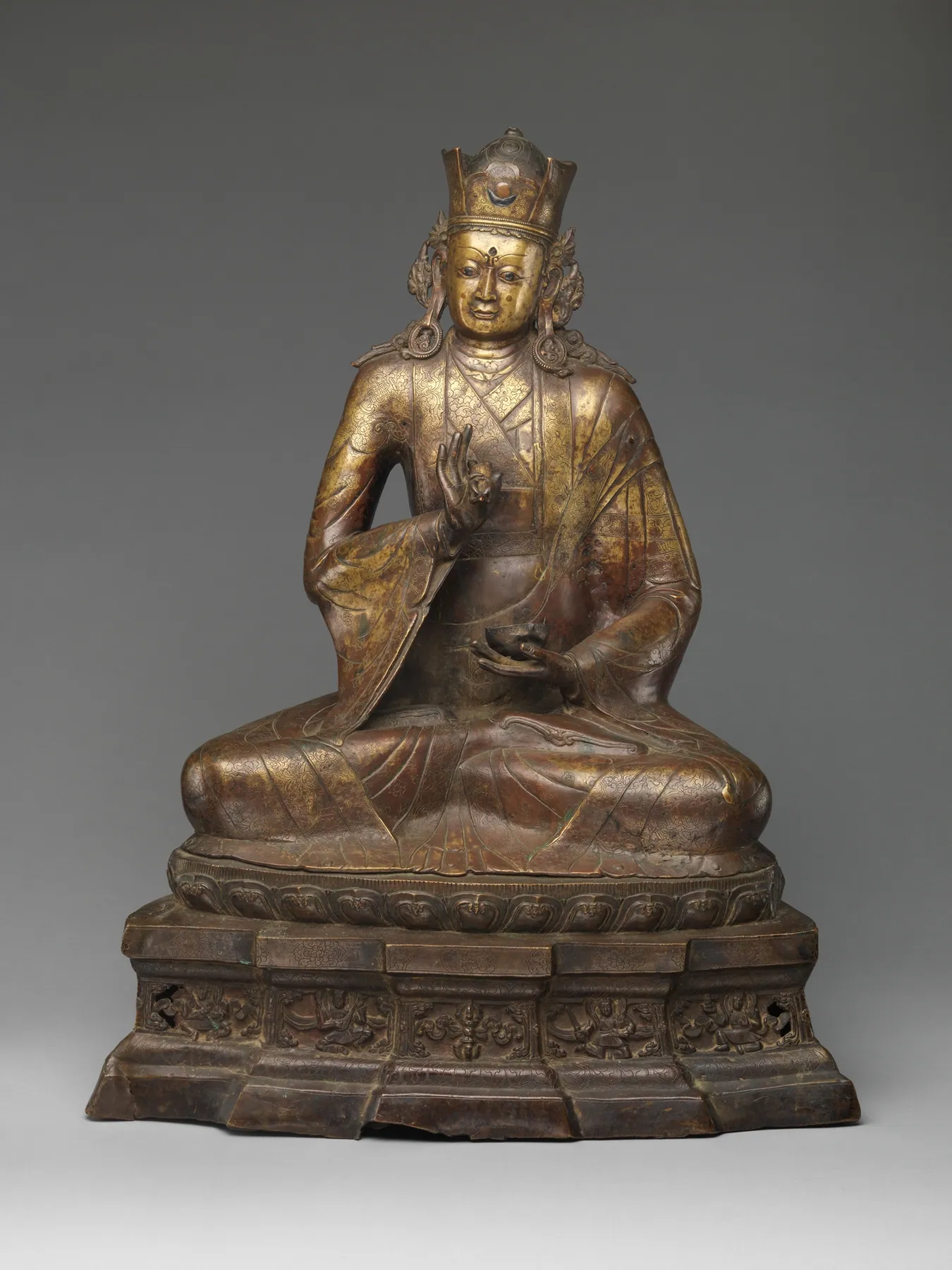
Padmasambhava, the ‘Lotus-Born’, is the most venerated teacher in Tibetan Buddhism and the figure to whom the Nyingma school traces its origin. Tibetans call him Guru Rinpoche, the Precious Teacher. He is held to have come from Oddiyana, a region usually identified with the Swat valley, and to have brought tantric teachings to Tibet in the reign of Trisong Detsen. His historical existence is generally accepted, but almost everything told of him belongs to sacred biography composed long after his lifetime.
The oldest narrative, the Testament of Ba, presents a modest figure: a tantric specialist recommended by Shantarakshita who tames hostile local deities, works with water and irrigation, and leaves Tibet when ministers grow suspicious. Dunhuang manuscripts of the tenth century connect him with Vajrakilaya rites and a retreat at Yanglesho in Nepal. The full legend took shape in treasure biographies, notably Nyangral Nyima Ozer’s Copper Palace in the twelfth century and Orgyen Lingpa’s Pema Kathang in the fourteenth: a birth on a lotus, eight manifestations, twenty-five Tibetan disciples, and teachings hidden as treasures (terma).
Devotion to Guru Rinpoche extends across all schools and the whole Himalayan region. His twelve-syllable Vajra Guru mantra and the Seven-Line Prayer are recited daily; the tenth day of each lunar month is his feast; and sites such as Samye Chimphu, Paro Taktsang in Bhutan, Maratika and Pharping in Nepal and Tso Pema in India are visited as places of his practice. Treasure revealers (tertons) who are held to recover his hidden teachings have continued to appear into the present century.
In the collection
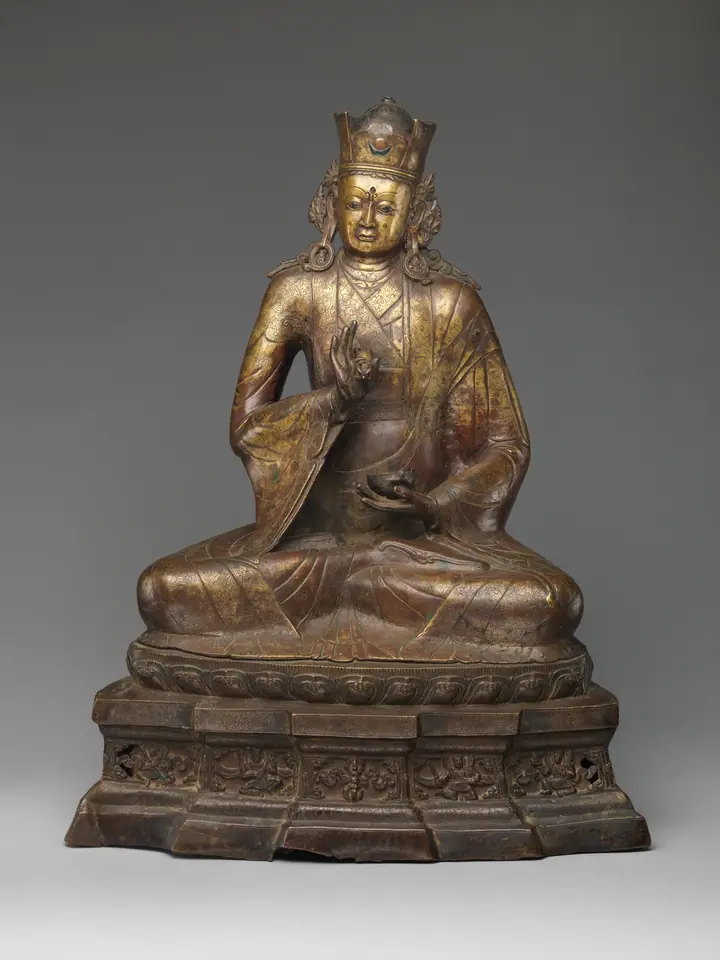
1 work in the collection depict or name Padmasambhava.
Connections
25 linked records across the archive.
Sources
References consulted for this record.
- 01Padmasambhava — The Treasury of Lives
- 02Padmasambhava — Wikipedia
- 03Padmasambhava — Rigpa Shedra Wiki
- 04Jacob Dalton, 'The Early Development of the Padmasambhava Legend in Tibet', Journal of the American Oriental Society 124.4 (2004)