FT·DEI·044Dharma Protector
Mahakala
ནག་པོ་ཆེན་པོ
Wylienag po chen poSanskritMahākāla
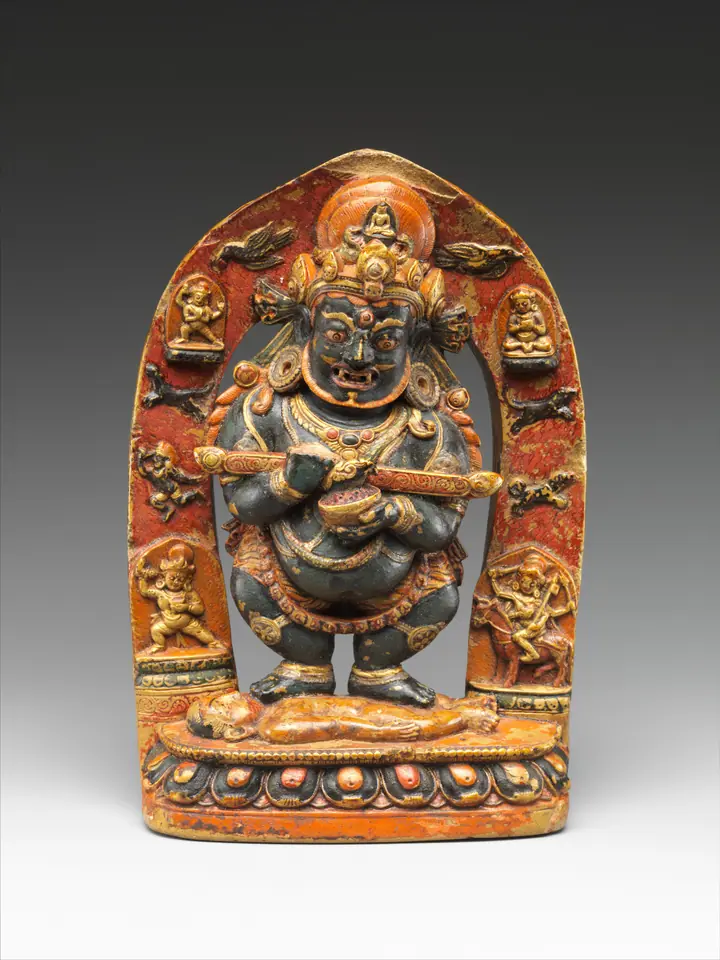
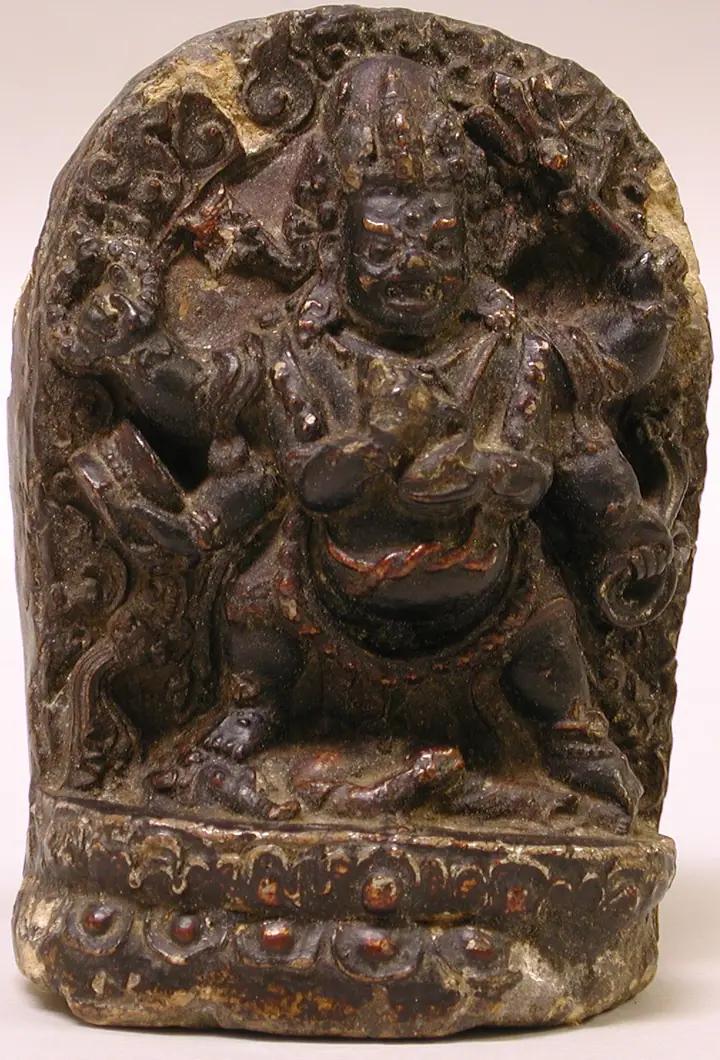
The ‘Great Black One’, the principal class of enlightened protector in Tibetan Buddhism, a wrathful dark figure with curved knife and skull cup who appears in many distinct forms.
Also known asMahākāla · Gonpo · Nagpo Chenpo · Great Black One · Bernagchen · Chaturmukha Mahakala
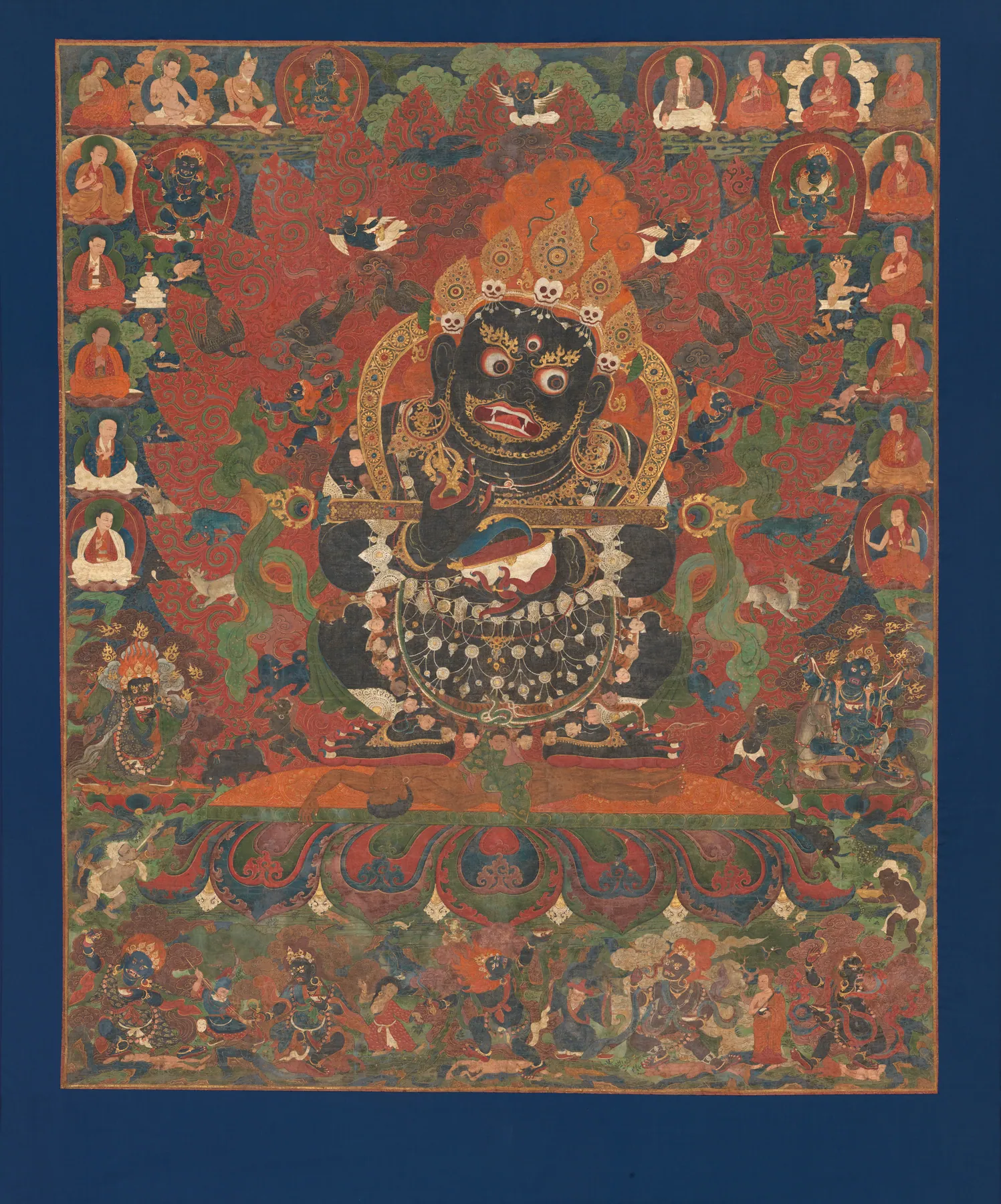
Mahakala, ‘Great Black One’, called Gonpo, ‘Lord’ or ‘Protector’, in Tibetan, is not a single deity but a category of wrathful protectors, each tied to a particular tantra and lineage. They are classed as wisdom protectors, enlightened beings who appear in terrifying form to guard the teachings and remove obstacles, as distinct from worldly spirits bound by oath. Most are regarded as emanations of the buddha Vajradhara; the Six-armed form alone is held to emanate from Avalokiteshvara. The name is shared with a form of the Hindu god Shiva.
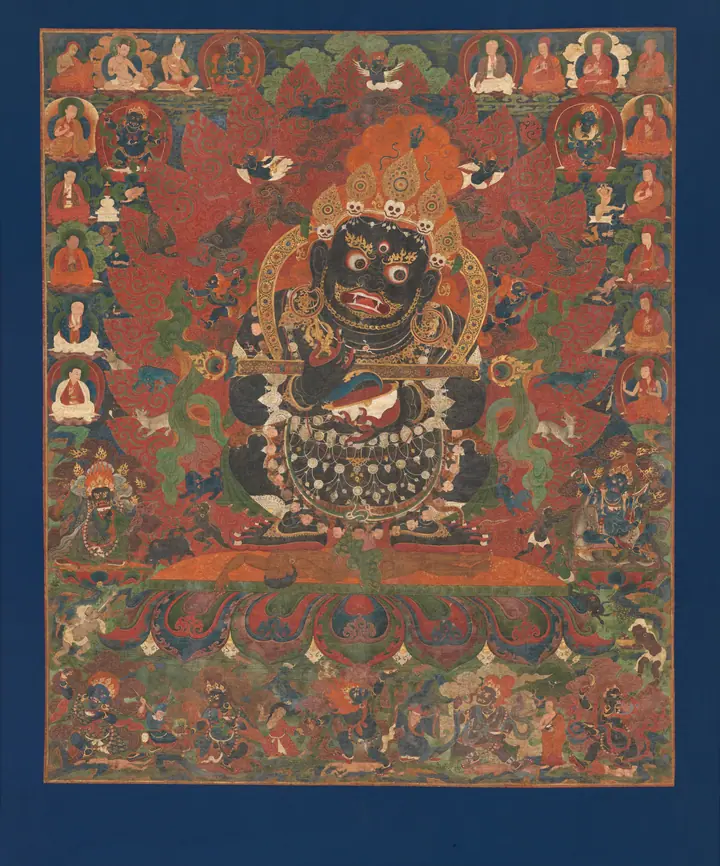
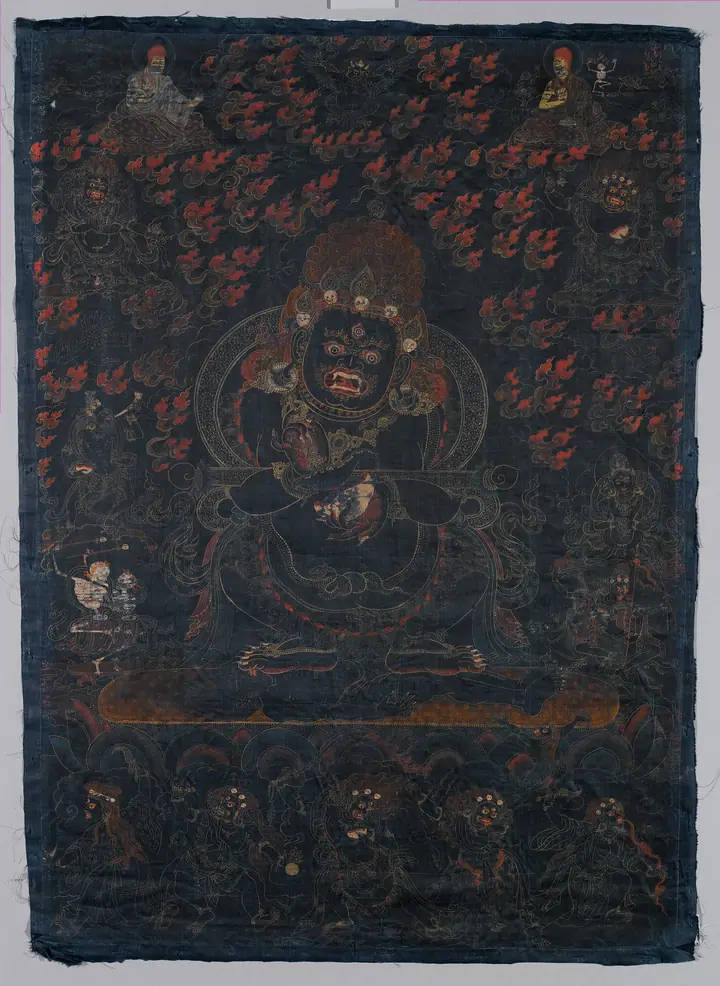
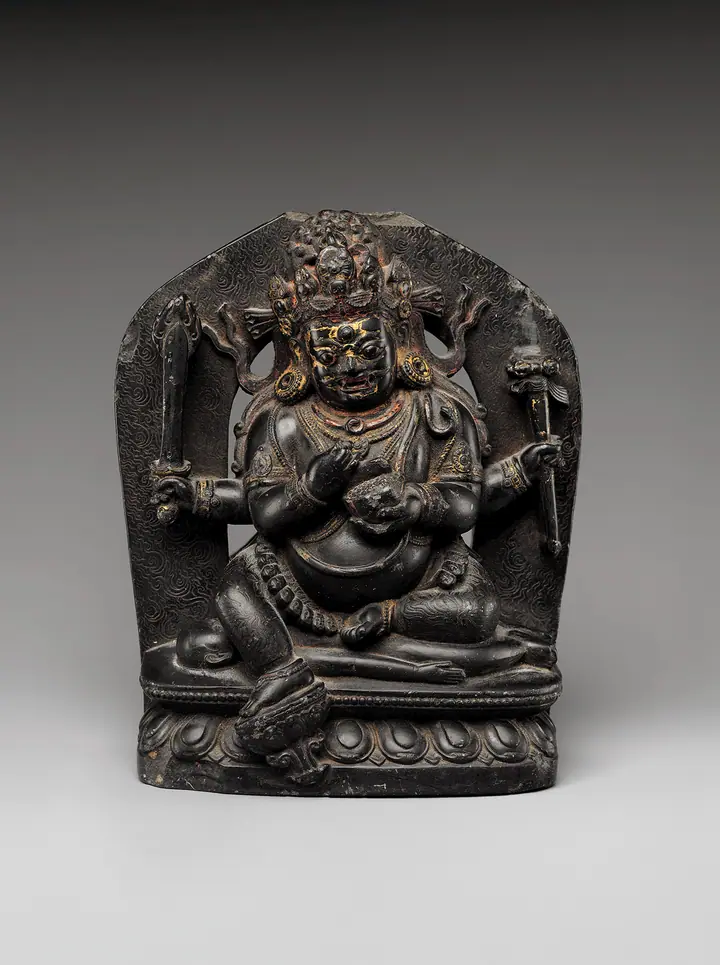
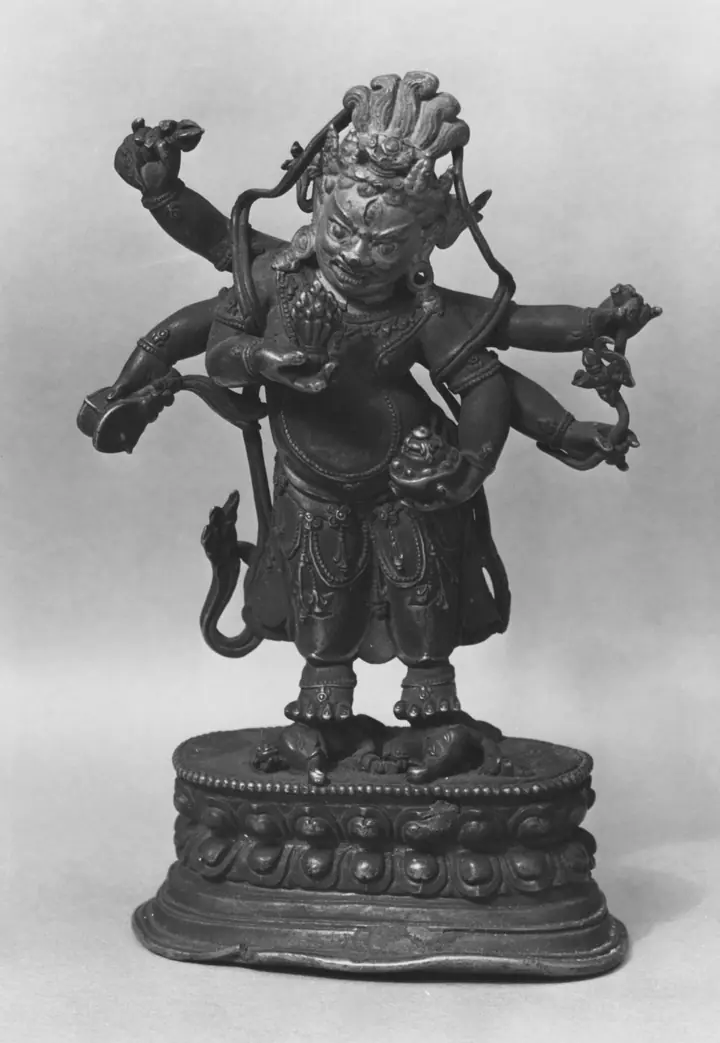
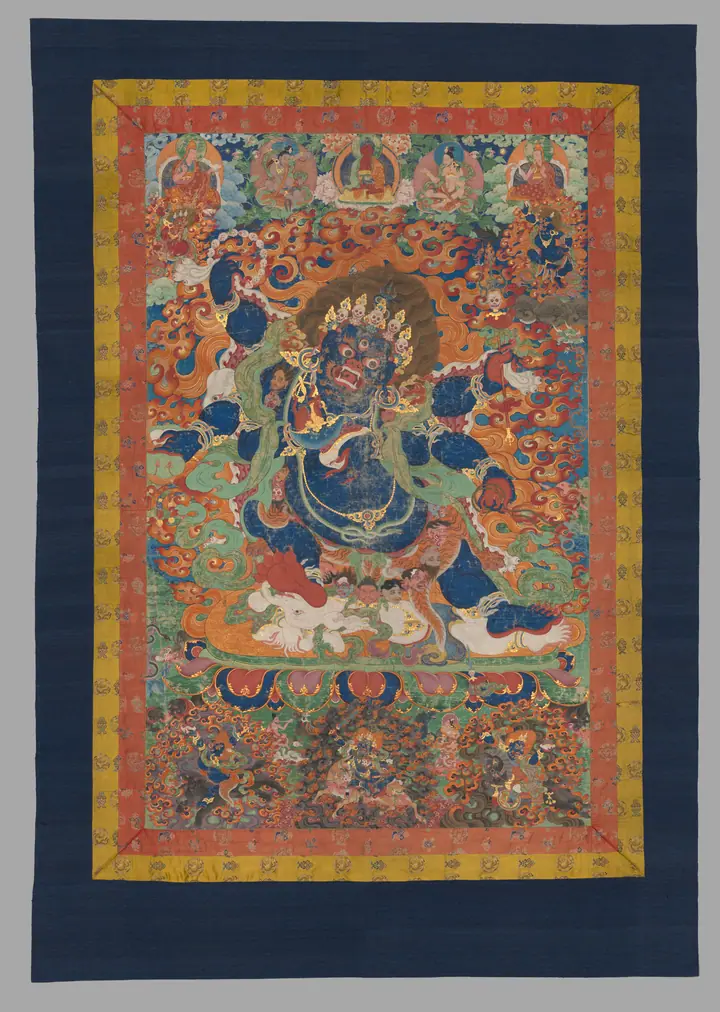
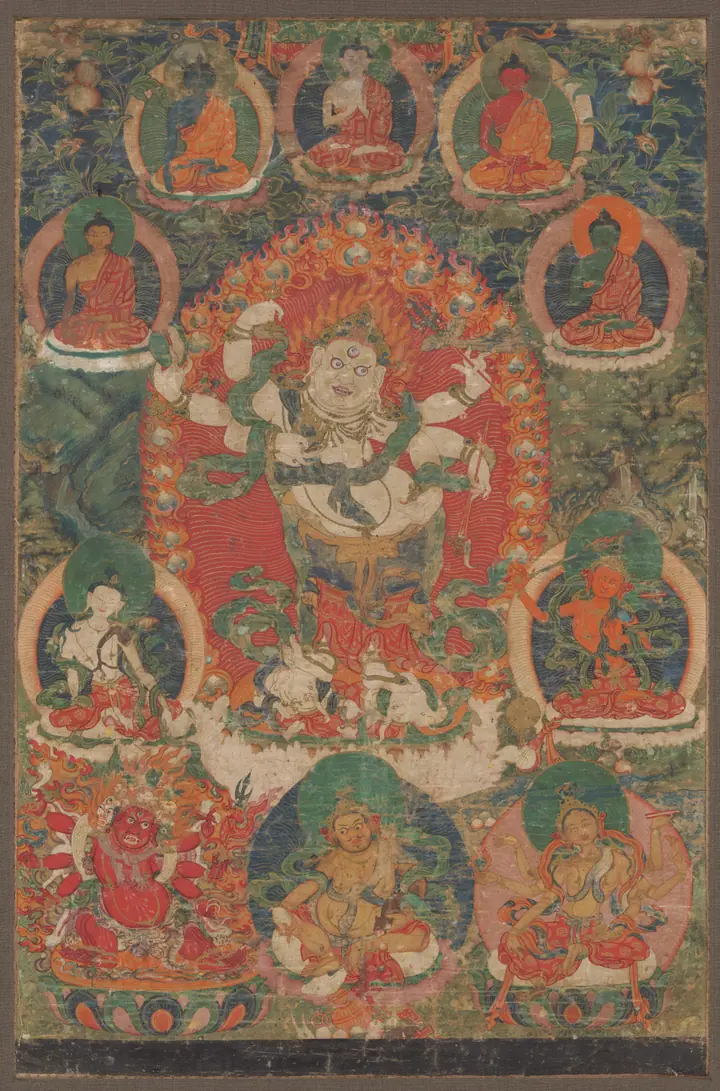
Common features identify the type: a squat, powerful body, black or dark blue; one or more faces with three bulging eyes, bared fangs and flaming hair; a crown of five skulls, a garland of fifty severed heads, snake ornaments and a tiger-skin loincloth; and a setting of dark flames and smoke, often painted on a black ground. Nearly all hold a curved knife above a skull cup at the heart. The number of arms and the remaining implements distinguish the forms: two arms with a wooden gong for Panjaranatha, four with sword and staff, six with rosary, drum, trident and lasso, and four faces for Chaturmukha.
Each school has its own principal Mahakala. The Sakya rely on Panjaranatha and the Four-faced form; the Karma Kagyu on the two-armed Bernagchen, ‘Black-cloaked’; other Kagyu lines on the Four-armed; the Shangpa and Gelug on the Six-armed; and the Nyingma on Maning Mahakala and others. Protector chapels (gonkhang) in monasteries house their images, often veiled, with daily offerings of tea and sculpted dough cakes (torma). Mongol and Manchu emperors adopted Mahakala as a guardian of the state.
In the collection
10 works in the collection depict or name Mahakala.
Connections
12 linked records across the archive.
Sources
References consulted for this record.
- 01Mahakala Main Page — Himalayan Art Resources
- 02Mahakala — Wikipedia
- 03Rob Linrothe and Jeff Watt, Demonic Divine: Himalayan Art and Beyond (Rubin Museum of Art and Serindia, 2004)