FT·DEI·016Bodhisattva
Manjushri
འཇམ་དཔལ་དབྱངས
Wylie'jam dpal dbyangsSanskritMañjuśrī
The bodhisattva of wisdom, golden-orange and youthful, who raises a flaming sword that cuts through ignorance and holds a lotus bearing the Perfection of Wisdom scripture.
Also known asJampelyang · Jampal Yang · Jamyang · Manjughosha · Mañjuśrī · Arapachana Manjushri
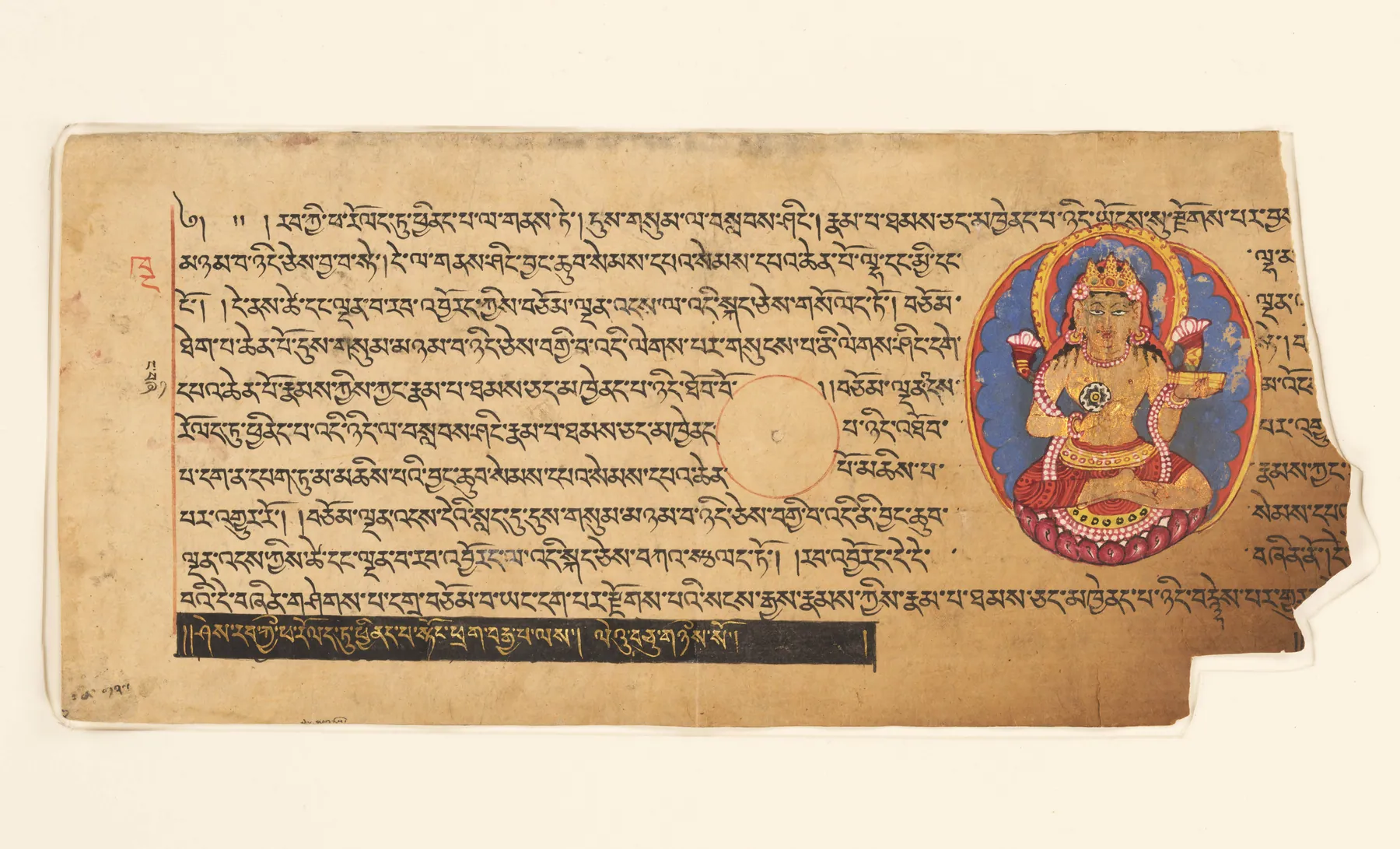
Manjushri, ‘Gentle Glory’, also called Manjughosha, ‘Gentle Voice’, personifies the wisdom that understands emptiness. In the Mahayana sutras he is the chief speaker on questions of ultimate truth, as in the Vimalakirti Sutra, and in the tantras he is a buddha with numerous peaceful and wrathful forms, of which Yamantaka is the fiercest. Tibetan students invoke him at the start of study and debate, and great scholars such as Sakya Pandita, Longchenpa and Tsongkhapa are regarded as his emanations.
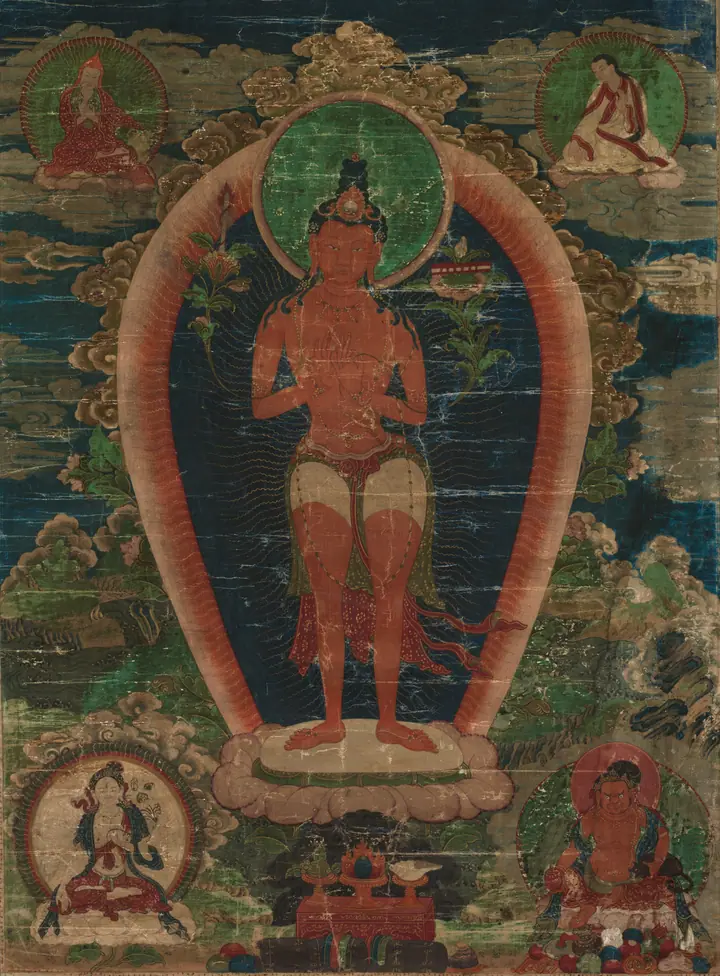
The commonest form is orange or saffron yellow, a sixteen-year-old prince with one face and two arms, seated in vajra posture. The right hand brandishes a double-edged sword tipped with flame, which severs the root of ignorance. The left hand, at the heart, holds the stem of a blue lotus (utpala) that opens beside his left ear and supports a volume of the Perfection of Wisdom. His hair is bound in knots and he wears a bodhisattva’s jewels and silks. Other forms include white Manjushri, the four-armed Namasangiti Manjushri, Manjushri seated on a lion, and a black wrathful form.
With Avalokiteshvara and Vajrapani he forms the Lords of the Three Families (Rigsum Gonpo), representing wisdom, compassion and power, a triad painted on rock faces and housed in small shrines at the entrances to villages. His earthly seat is Wutai Shan, the five-peaked mountain in Shanxi, China, long a destination for Tibetan and Mongolian pilgrims, and the Manchu emperors were styled his emanations. The Manjushri Namasangiti, ‘Chanting the Names of Manjushri’, is among the most frequently recited tantric texts.
In the collection
2 works in the collection depict or name Manjushri.
Connections
13 linked records across the archive.
Sources
References consulted for this record.