FT·SCH·012Movement & Practice Lineage
Chod Tradition
གཅོད
WyliegcodDate11th–12th century
Practice lineage founded by Machig Labdron, in which the meditator cuts through self-clinging by offering the body in visualisation, accompanied by drum and bell.
Also known asChod · Chöd · Cho · Severance · Cutting Through · Gcod
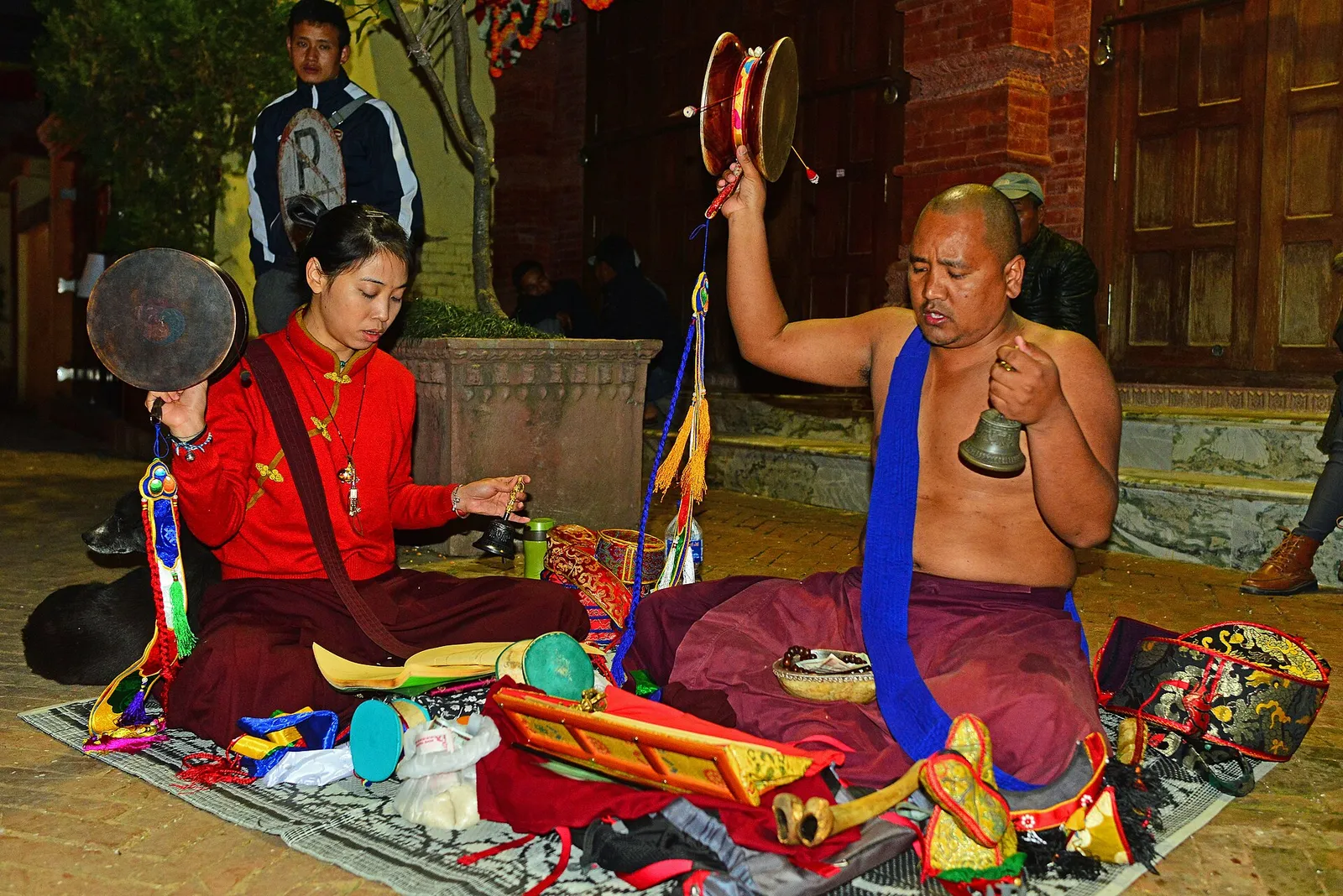
Chod, ‘cutting’ or ‘severance’, is a system of meditation and ritual that took shape in Tibet in the late eleventh and twelfth centuries. Its founder was the Tibetan woman teacher Machig Labdron (1055–1149), who drew on the Perfection of Wisdom sutras and on instructions from the Indian adept Padampa Sangye, founder of the related Zhije or ‘pacification’ tradition. Chod never became a separate monastic school. It is a lineage of practice transmitted within all the schools, and tradition describes it as the one teaching that travelled from Tibet to India.
What is cut is clinging to a self, the root of suffering in Buddhist analysis. Machig taught that the real ‘demons’ are not external beings but whatever obstructs freedom: attachment to pleasant and unpleasant experience, pride in attainment, and above all self-grasping. In the core practice the meditator, after generating compassion, ejects consciousness from the body, which is then imagined as cut up, transformed into nectar and offered to buddhas, protectors, spirits and all beings to whom karmic debts are owed. The liturgy is sung to a hand drum, bell and thighbone trumpet. Traditionally it was performed alone at night in charnel grounds and other frightening places.
Lines of transmission are called ‘father’, ‘mother’ and ‘experiential’ Chod. Well-known forms include those of the Karma Kagyu, shaped by the third Karmapa; the Nyingma ‘Laughter of the Dakinis’ from the Longchen Nyingthig and the Dudjom treasures; a Gelug ‘Ganden ear-whispered’ lineage; and Bön Chod traditions with their own revealed texts. Chod practitioners, some of them itinerant, were called on to perform rites for the sick and the dead and to handle corpses in epidemics. The practice is widely taught today, including in adapted forms outside Tibetan communities.
Connections
15 linked records across the archive.
Sources
References consulted for this record.
- 01Chöd — Wikipedia
- 02Sarah Harding (trans.), Machik's Complete Explanation: Clarifying the Meaning of Chöd (Snow Lion, 2003)
- 03Jérôme Edou, Machig Labdrön and the Foundations of Chöd (Snow Lion, 1996)