FT·ART·100Painting
Mandala
early 1700s · Tibet
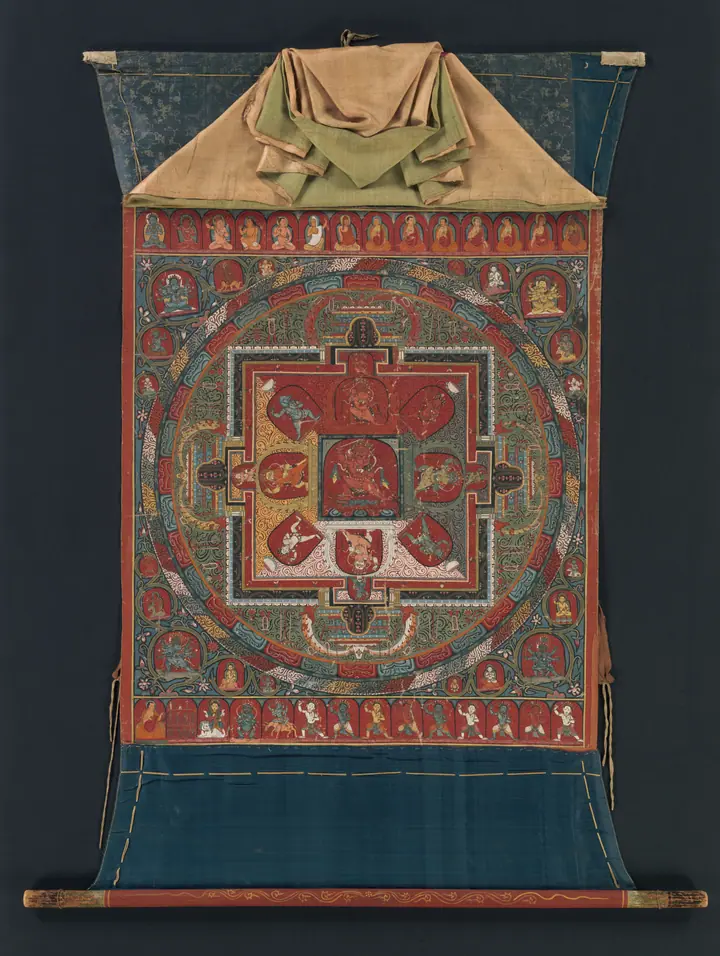
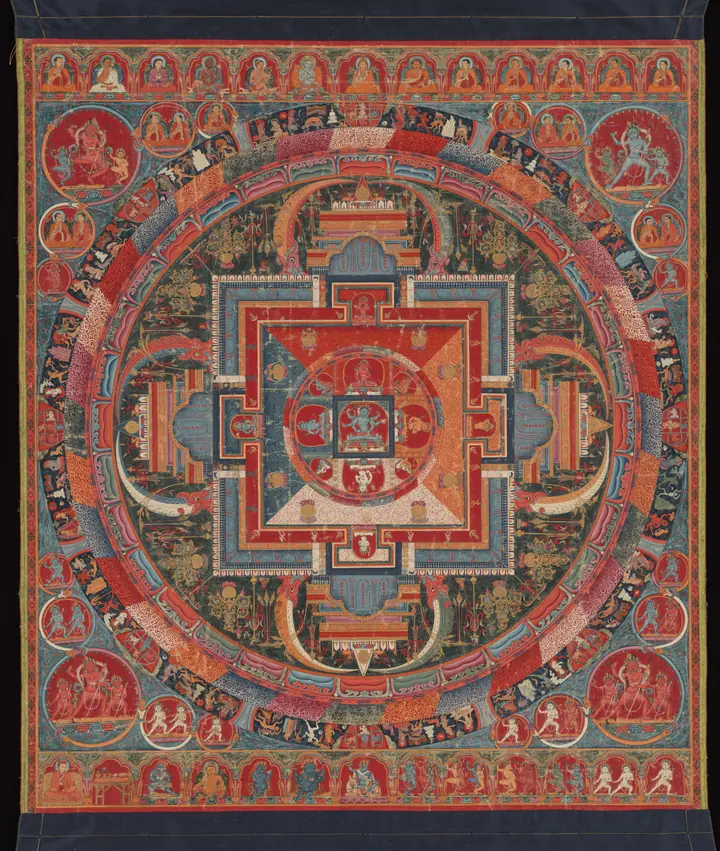
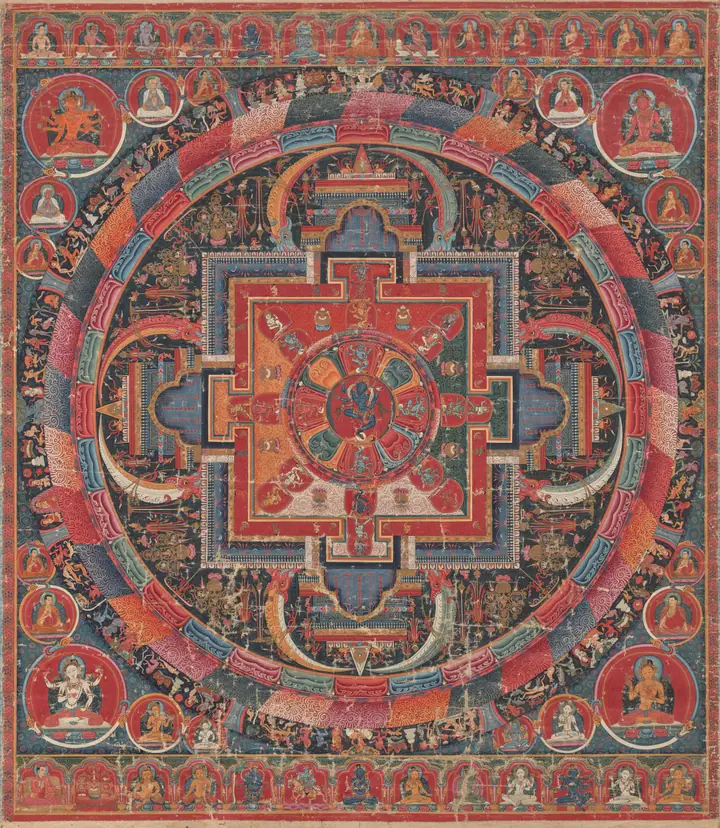
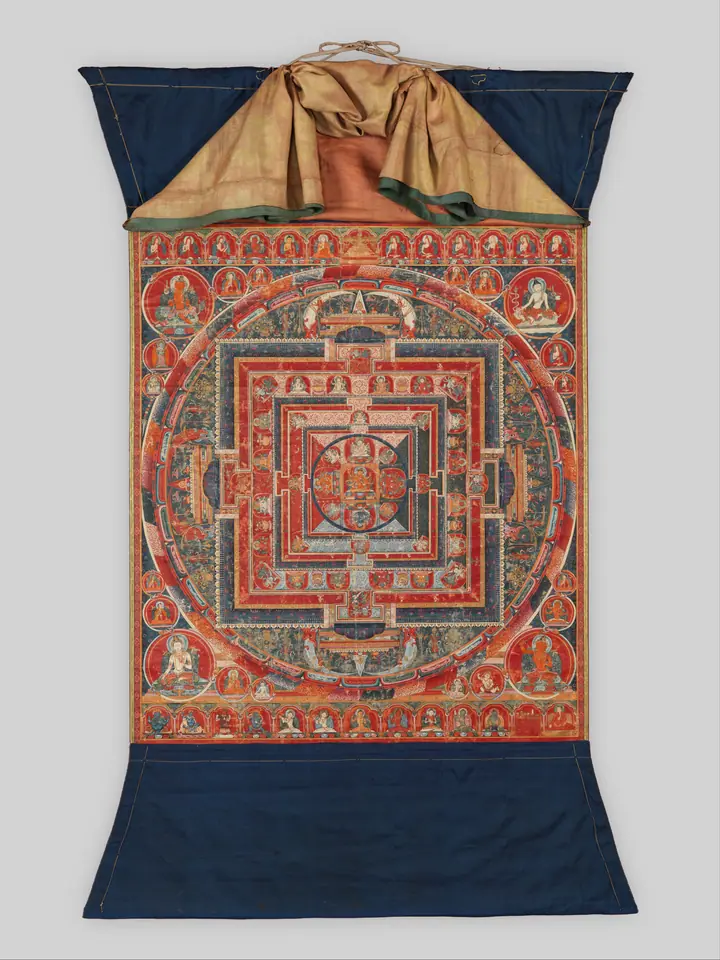
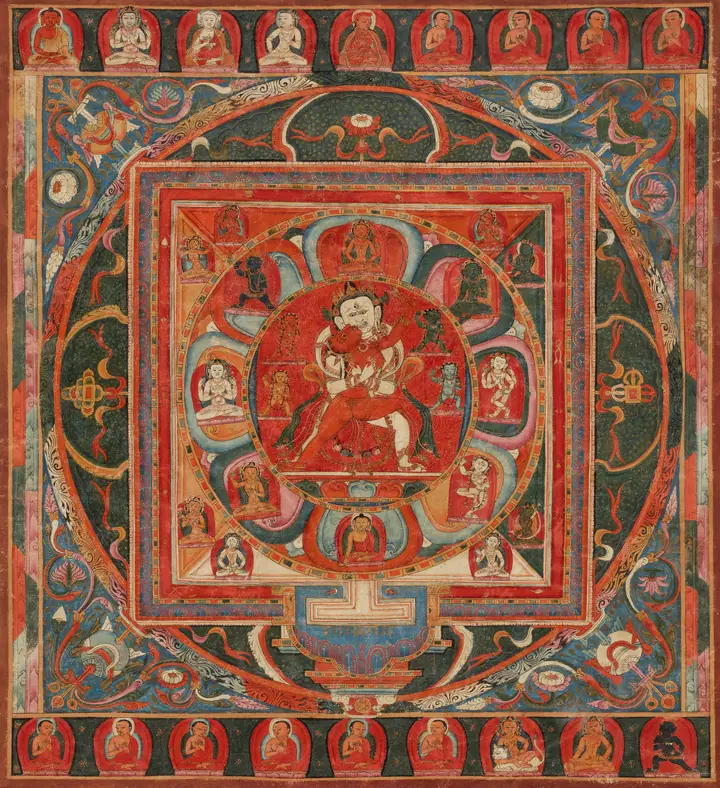
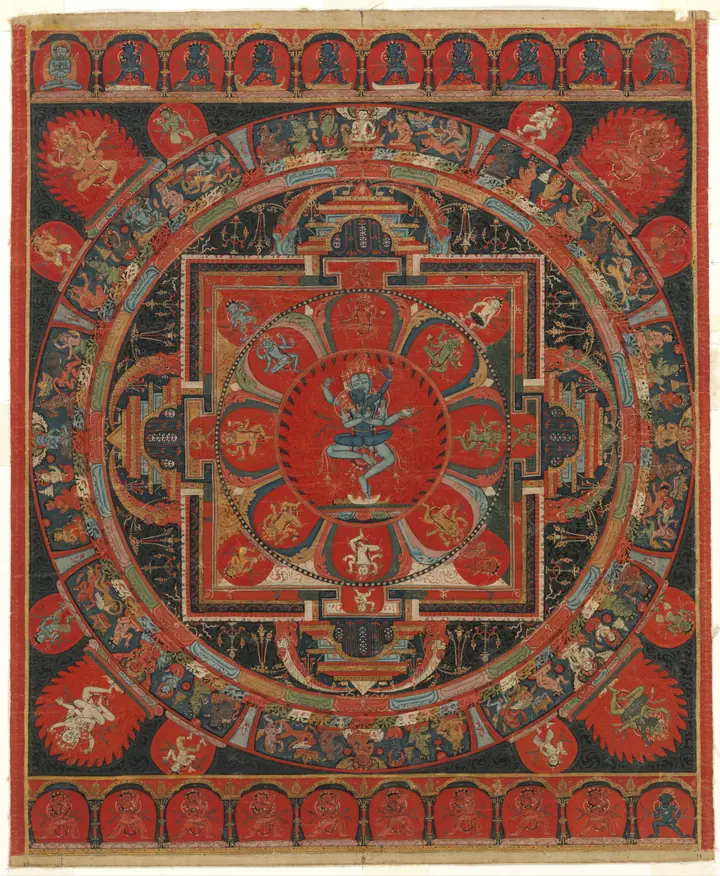
At the center of this mandala is the red Amitayus, the Buddha of eternal life, surrounded by eight additional Amitayus figures in a lotus pattern in a central enclosure, which acts as a reference to sacred space. The space is accessible by four gateways that form a square around it, which are further surrounded by siddhas, or Buddhist masters who experienced an expedited path to Enlightenment. At each of the bottom corners of the thangka, lokapalas stand as guardians of the four directions. At the bottom center, a white Dharmapala, or guardian of teaching, sits atop a dragon. On either side of him are two Tara figures, three green and one white. Above, around the central circular section, Lokeshvara is pictured at left and Ushnishasitatpatra at right. In the top left is Prajnaparamita with the attributes of a flaming sword and the wisdom text. In the top right, Vajrasattva is shown with a vajra emerging from his accompanying lotus flower. In the center of the top row are the Buddhas of the past, present, and future. The Present Buddha holds a jar in his left hand, indicating that he is Shakyamuni in his form as Bhaishajyaguru, the Medicine Buddha. This, and the associations of the other deities depicted on the mandala, suggest that its patron was likely battling an illness and sought healing and longevity through meditation on its imagery.
Text: The Cleveland Museum of Art, open-access catalogue.
- Date
- early 1700s
- Culture
- Tibet
- Medium
- color on canvas
- Dimensions
- Overall: 128.2 x 82.6 cm (50 1/2 x 32 1/2 in.)
- Classification
- Painting
- Accession no.
- 1915.316
- Credit line
- Gift of Howard Eells
- Holding museum
- The Cleveland Museum of Art
- Image rights
- Public domain (CC0)
Depicted and related
Related works
Works that share a subject, a form or a century.