FT·PLA·025Monastery
Shalu
ཞྭ་ལུ
Wyliezhwa luDatefounded 1040
Eleventh-century monastery south of Shigatse, rebuilt in the 14th century with Chinese-style tiled roofs and celebrated murals, and seat of the scholar Buton.
Also known asShalu Monastery · Zhalu · Zhwa lu · Xialu Si
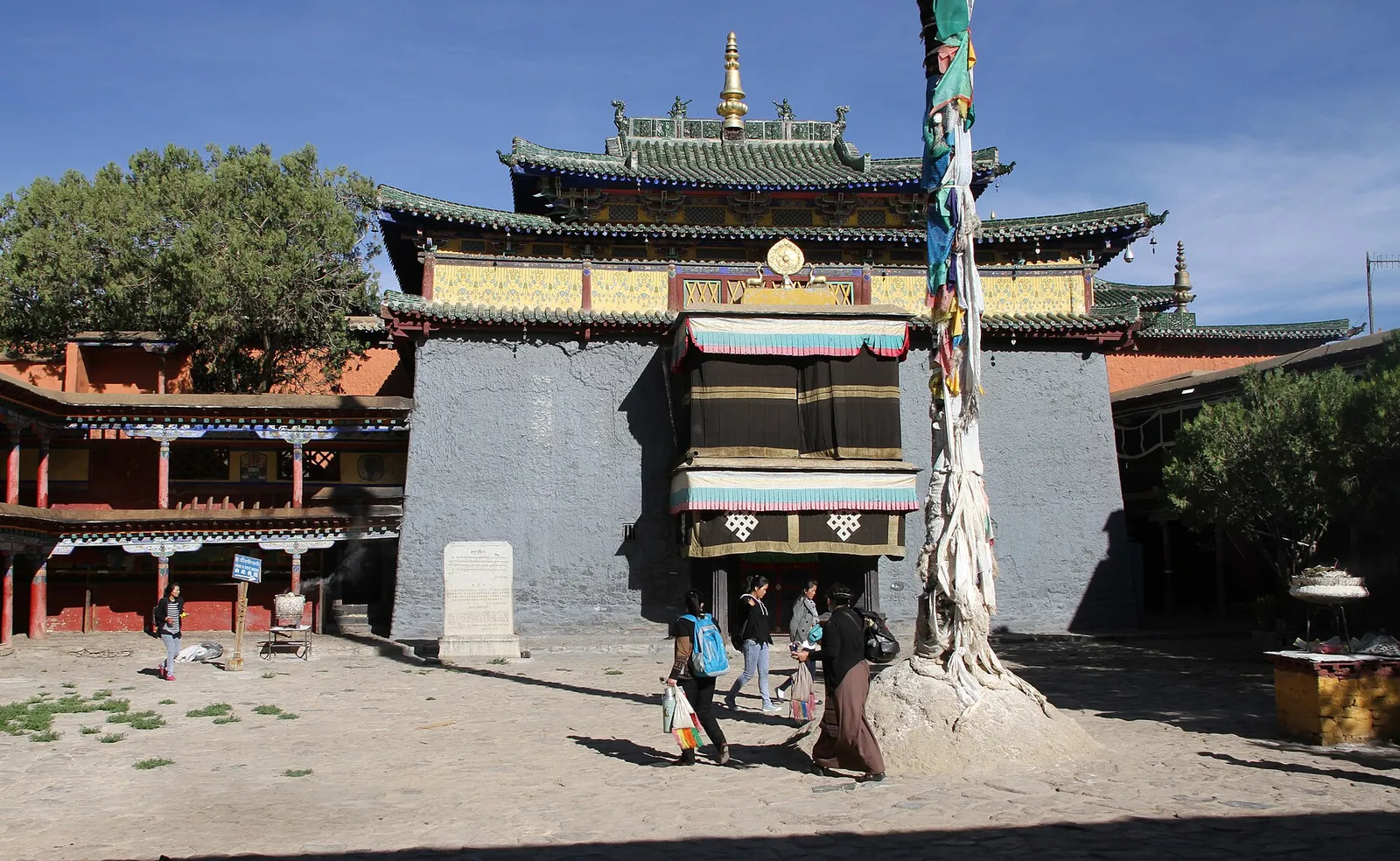
Shalu is a small monastery of great historical weight, founded in 1040, or by another reckoning 1027, by Chetsun Sherab Jungne of the local Che clan. It was among the first religious houses of the later spread of Buddhism in Tsang. Its fame rests on Buton Rinchen Drub (1290–1364), abbot from 1320, who catalogued and edited the translated scriptures that became the Kangyur and Tengyur and wrote an influential history of Buddhism. His followers formed a distinct tradition, the Bulug or Shalu school, drawing on Sakya and Kadam teachings; Tsongkhapa studied with Buton’s disciples.
The monastery stands in a farming village about twenty kilometres south of Shigatse. Its core is the Serkhang, a temple of the 11th century that was rebuilt in the early 14th century by the Shalu prince Drakpa Gyaltsen with funds and craftsmen from the Mongol Yuan court. The result joins a Tibetan ground storey to upper pavilions with Chinese timber brackets and roofs of turquoise-glazed tiles. The corridors and chapels are covered with murals in which Newar, Chinese and Tibetan conventions are combined, among the most important surviving paintings of the period in Tibet. A hermitage, Ripuk, lies in the hills behind.
The outer buildings and monks’ quarters of Shalu were demolished during the Cultural Revolution, but the Serkhang with most of its murals survived. Some paintings have suffered from damp and from later repainting. A state-funded restoration of the structure began in 2009. Shalu is today a small monastery, loosely affiliated with the Sakya school, with a few dozen monks. It was once known for training in yogic disciplines such as inner heat and swift walking, and pilgrims still visit its relics, including a stone image of Avalokiteshvara held to be self-arisen.
Connections
12 linked records across the archive.
Sources
References consulted for this record.
- 01Zhalu — The Treasury of Lives
- 02Shalu Monastery — Wikipedia
- 03Roberto Vitali, Early Temples of Central Tibet (Serindia, 1990)