FT·DEI·016Bodhisattva
Thousand-armed Avalokiteshvara
སྤྱན་རས་གཟིགས་ཕྱག་སྟོང་སྤྱན་སྟོང
Wyliespyan ras gzigs phyag stong spyan stongSanskritSahasrabhuja Ekādaśamukha Avalokiteśvara
The standing form of Avalokiteshvara with eleven heads and a thousand arms, an eye in each palm, expressing compassion that sees and reaches every being at once.
Also known asEleven-faced Avalokiteshvara · Eleven-headed Avalokiteshvara · Ekadashamukha · Sahasrabhuja Lokeshvara · Chenrezig Chaktong Chentong · Ekādaśamukha Avalokiteśvara
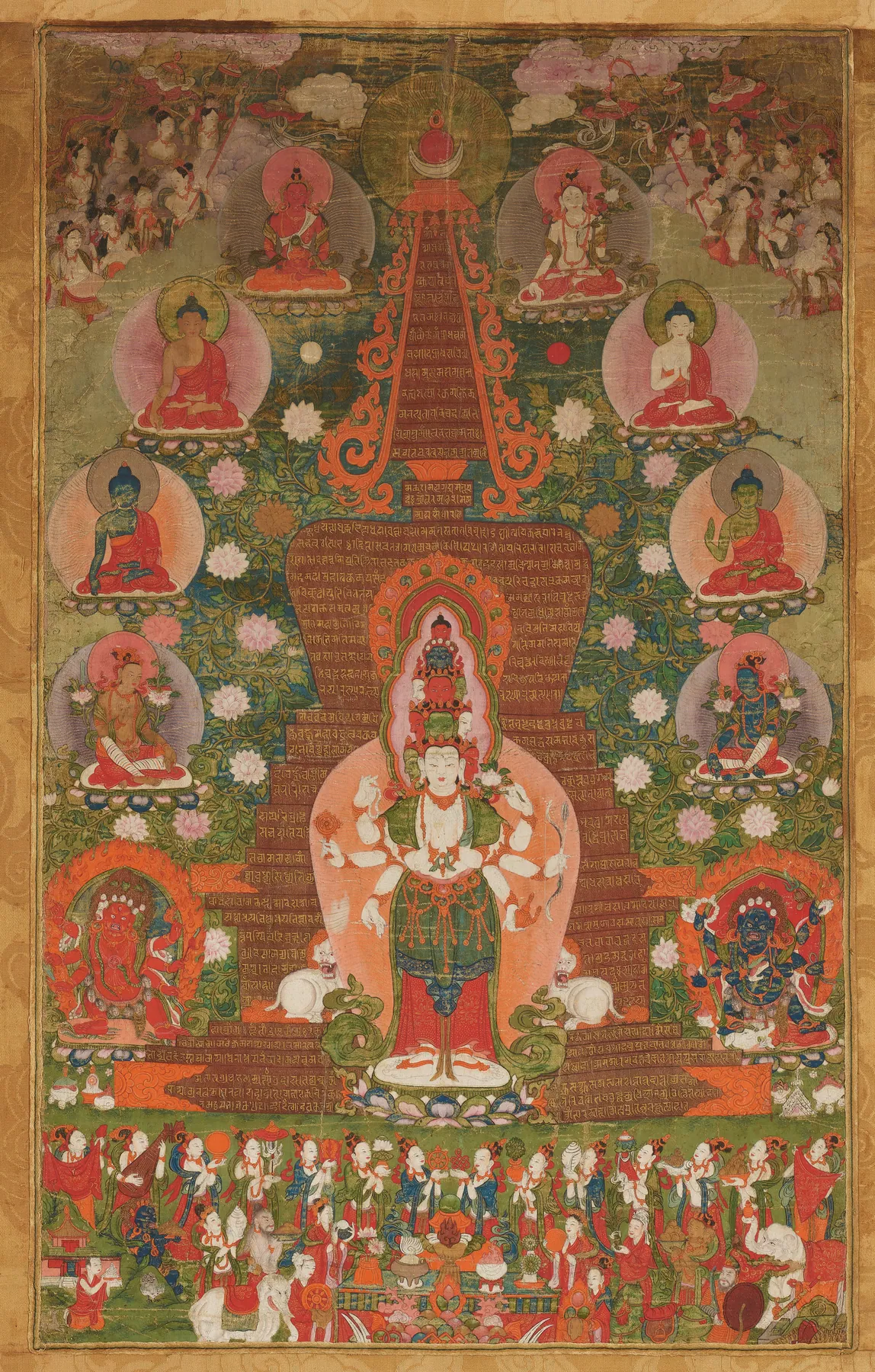
The Eleven-faced, Thousand-armed Avalokiteshvara is the most elaborate peaceful form of the bodhisattva of compassion. A widely told Tibetan account explains its origin: seeing that the number of suffering beings never lessened despite his efforts, Avalokiteshvara despaired and his head split into pieces; Amitabha restored him with eleven heads and a thousand arms so that he could see and help in all directions. Eleven-headed images are known in India from about the sixth century, and the form was established in Tibet during the imperial period.
He stands upright on a lotus, white in colour. The heads rise in five tiers: three rows of three peaceful faces, then a single wrathful dark face, and at the top the red face of Amitabha. Eight principal arms are fully shown. The first pair joins palms at the heart around a jewel; the other right hands hold a crystal rosary, make the gesture of giving and hold a wheel; the left hold a lotus, a water vase, and a bow and arrow. The remaining 992 arms fan out like a halo, each palm bearing an eye. An antelope skin covers the left shoulder.
This form is the focus of nyungne, a two-day practice of fasting, silence and prostration open to laypeople, which is traced to the Indian nun Bhikshuni Lakshmi (Gelongma Palmo), who is said to have been cured of leprosy through it. The image in the Jokhang known as the Rangjung Ngaden, ‘Five-fold Self-arisen’, which tradition connects with Songtsen Gampo, is of this type. Large clay and gilt copper examples stand in temples across Tibet and the Himalaya, and the form is common in thangkas.
In the collection
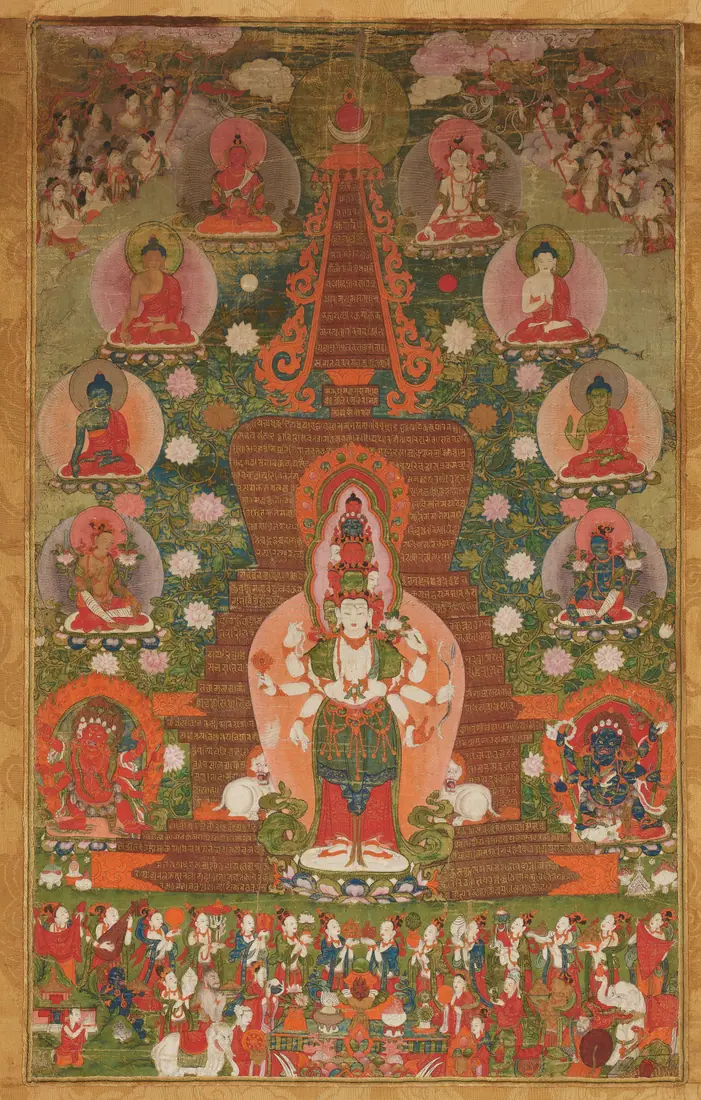
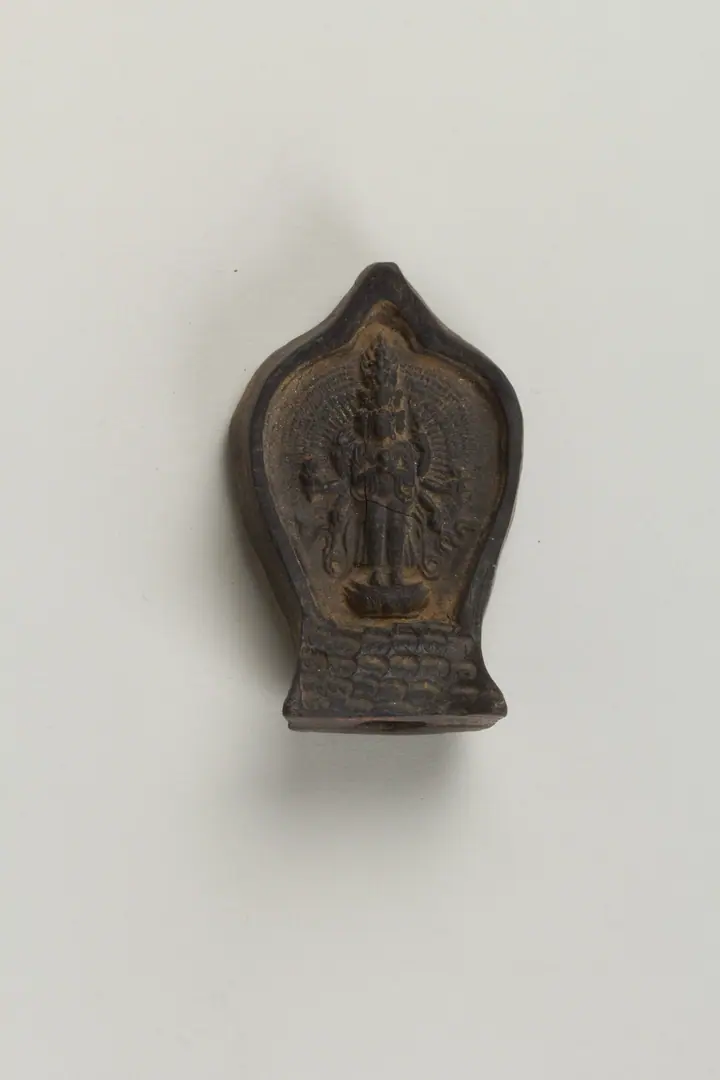
2 works in the collection depict or name Thousand-armed Avalokiteshvara.
Connections
9 linked records across the archive.
Sources
References consulted for this record.