FT·PLA·030Monastery
Palpung
དཔལ་སྤུངས
Wyliedpal spungsDatefounded 1727
Chief Karma Kagyu monastery of Kham, founded near Derge in 1727 by Situ Panchen and later the home of Jamgon Kongtrul and the non-sectarian movement.
Also known asPalpung Monastery · Pelpung · Palpung Thubten Chokhor Ling · Babang Si
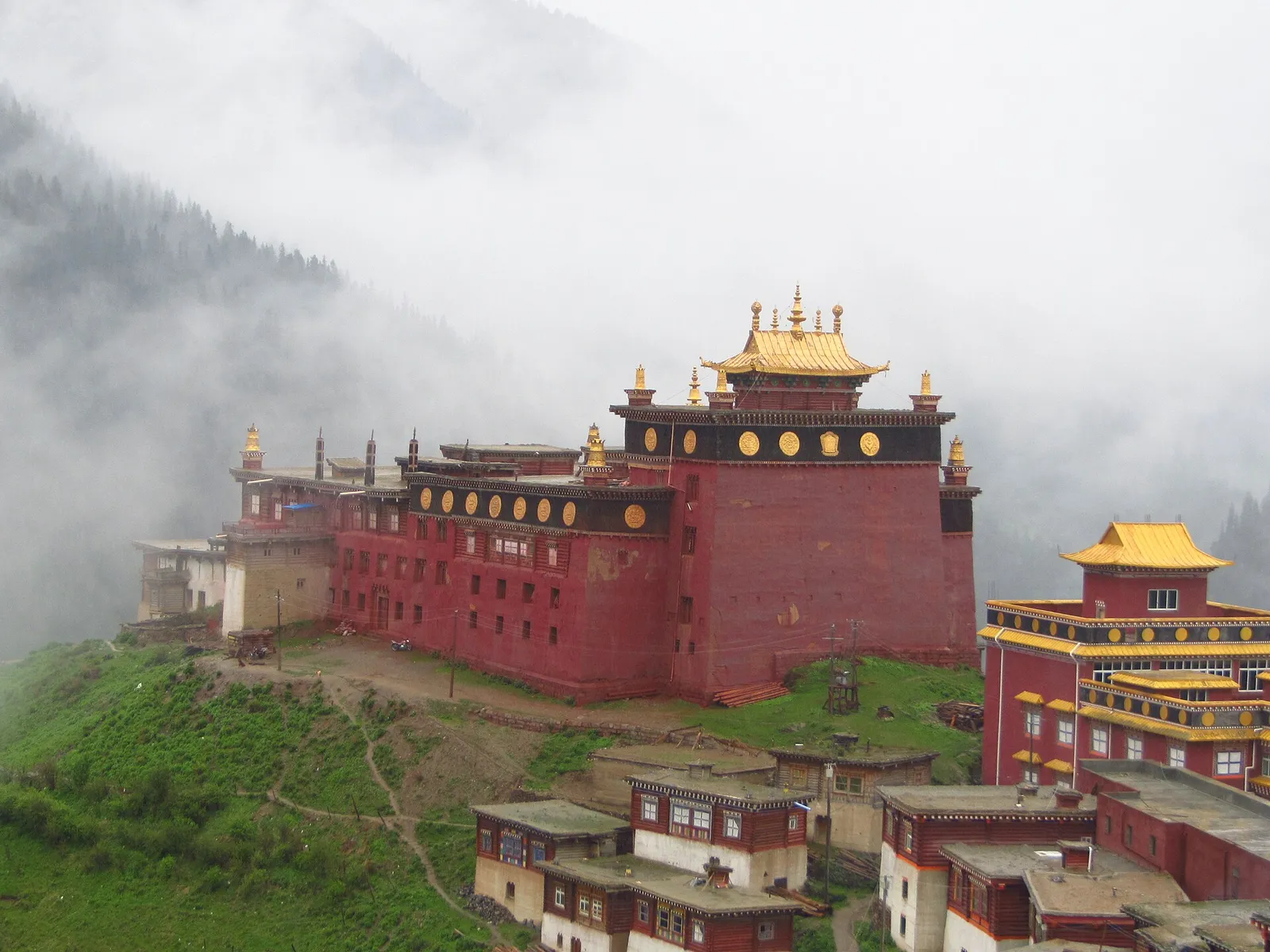
Palpung is the seat of the Tai Situ line of reincarnate lamas and the mother monastery of the Karma Kagyu school in eastern Tibet. It was founded in 1727 by the Eighth Tai Situ, Chokyi Jungne (1700–1774), known as Situ Panchen, with the backing of the king of Derge, on the site of an older Drigung Kagyu house. Situ Panchen was a grammarian, physician, painter and editor of the Derge Kangyur, and under him Palpung became a centre of scholarship, medicine and of the Karma Gadri style of painting.
The monastery stands on a wooded ridge above the village of Babang, at about 3,900 metres in the hills south-east of Derge town. Its main temple is a massive earth and timber block several storeys high, one of the largest surviving traditional buildings in Kham, enclosing assembly halls, chapels, a printing house and a library. On the cliff above lies Tsadra Rinchen Drak, the retreat centre where Jamgon Kongtrul Lodro Thaye (1813–1899) lived, taught the three-year retreat and compiled the great collections of teachings associated with the Rime, or non-sectarian, movement.
Palpung was closed in the late 1950s and its contents dispersed, but the main temple was not demolished. Monks returned in the 1980s, and the building, in danger of collapse, was placed on the World Monuments Watch in 1998 and 2000 and repaired using traditional materials and methods. It was listed as a national heritage site in 2013. The Twelfth Tai Situ, who left Tibet as a child, established Palpung Sherabling in Himachal Pradesh, India, as his seat in exile, and affiliated centres now exist in many countries.
Connections
9 linked records across the archive.
Sources
References consulted for this record.
- 01Pelpung — The Treasury of Lives
- 02Palpung Monastery — Wikipedia
- 03Jamgön Kongtrul, The Autobiography of Jamgön Kongtrul: A Gem of Many Colors, trans. Richard Barron (Snow Lion, 2003)