FT·DEI·008Buddha
Maitreya
བྱམས་པ
Wyliebyams paSanskritMaitreya
The ‘Loving One’, a bodhisattva now in the Tushita heaven and destined to be the next buddha, shown enthroned with legs lowered or bearing a wheel and water flask on flowers.
Also known asJampa · Jampa Gonpo · Maitreya Buddha · Maitreya Bodhisattva · Ajita · Future Buddha
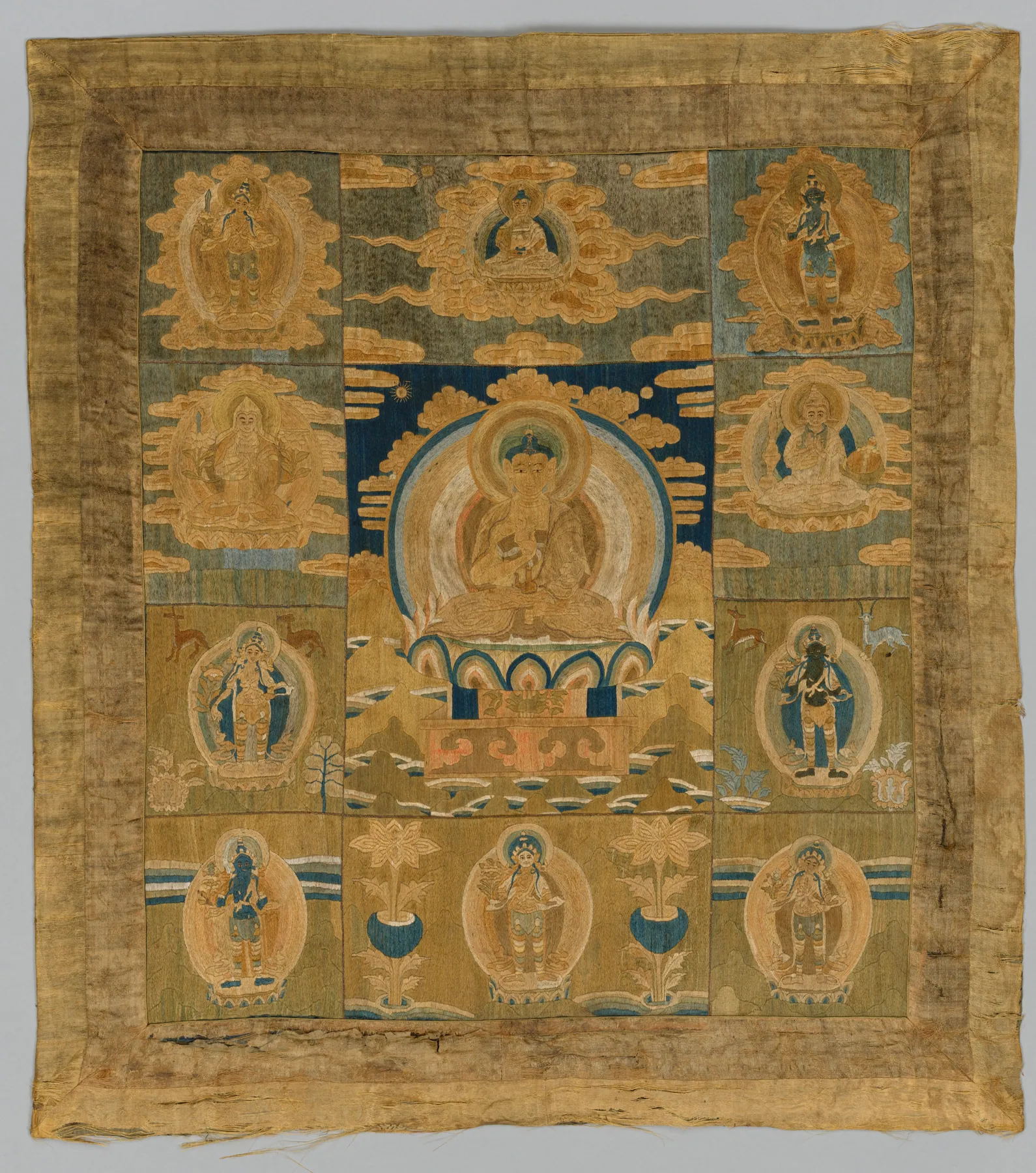
Maitreya, from the Sanskrit for loving-kindness, is accepted by every Buddhist tradition as the successor of Shakyamuni. He is held to dwell in the Tushita heaven as a bodhisattva of the highest stage until the teaching of the present buddha has disappeared, when he will be born on earth and attain awakening. Tibetan tradition also credits him with revealing five treatises to the fourth-century Indian master Asanga, among them the Ornament of Clear Realisation, a text central to monastic study.
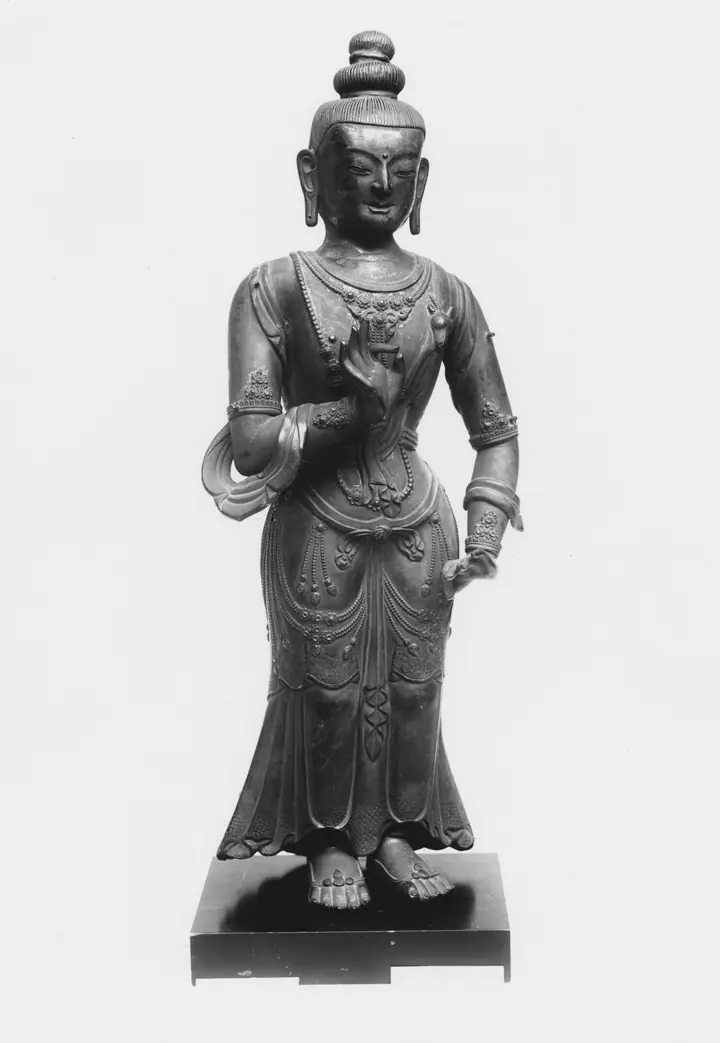
He is golden yellow and appears in two guises. As a bodhisattva he wears a crown, jewels and silks, with a small stupa in his headdress; his hands form the teaching gesture at the heart and hold the stems of two flowers that carry a wheel of Dharma and a water flask at his shoulders. As the coming buddha he wears monastic robes. In either guise he may sit in vajra posture or, distinctively, on a raised throne with both legs lowered and feet resting on a lotus, as if ready to rise. A standing form is common in early sculpture.
Colossal seated Maitreyas are a feature of Tibetan monasteries. The gilt copper image at Tashilhunpo, made under the Ninth Panchen Lama between 1914 and 1918, is about 26 metres high, and rock-cut figures such as that at Mulbekh in Ladakh are many centuries older. Tsongkhapa’s restoration of the Maitreya of Dzingji in the 1390s is counted among his great deeds, and towards the end of the Great Prayer Festival in Lhasa an image of Maitreya was carried round the Barkhor to hasten his coming.
In the collection
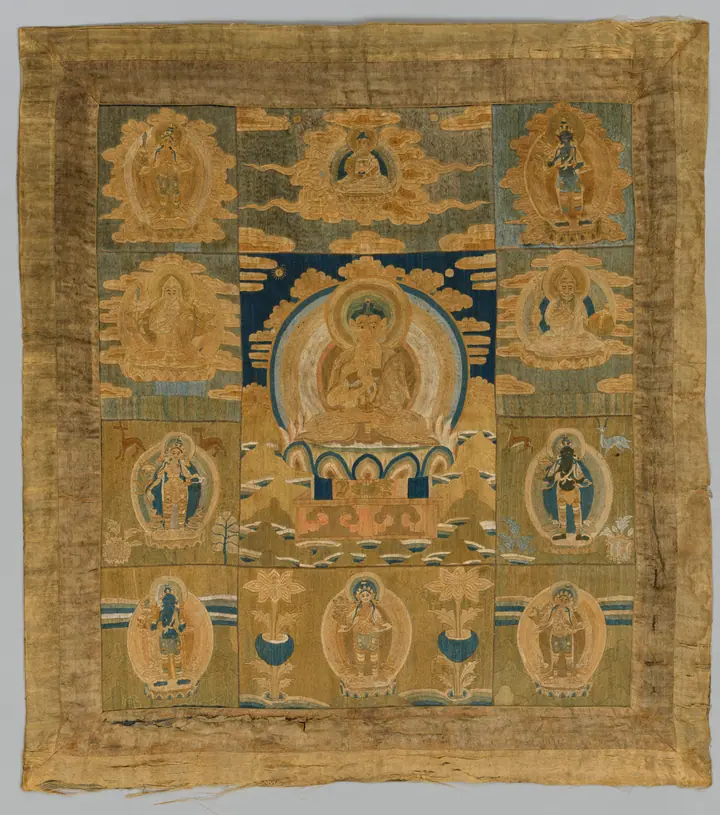
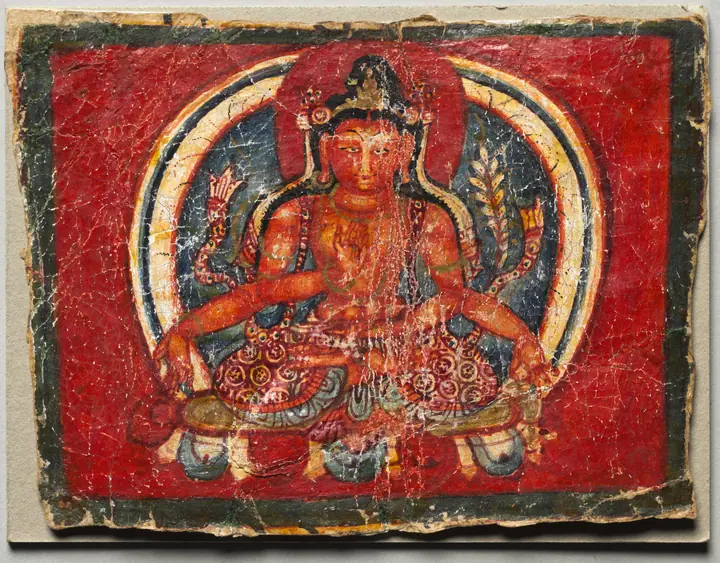
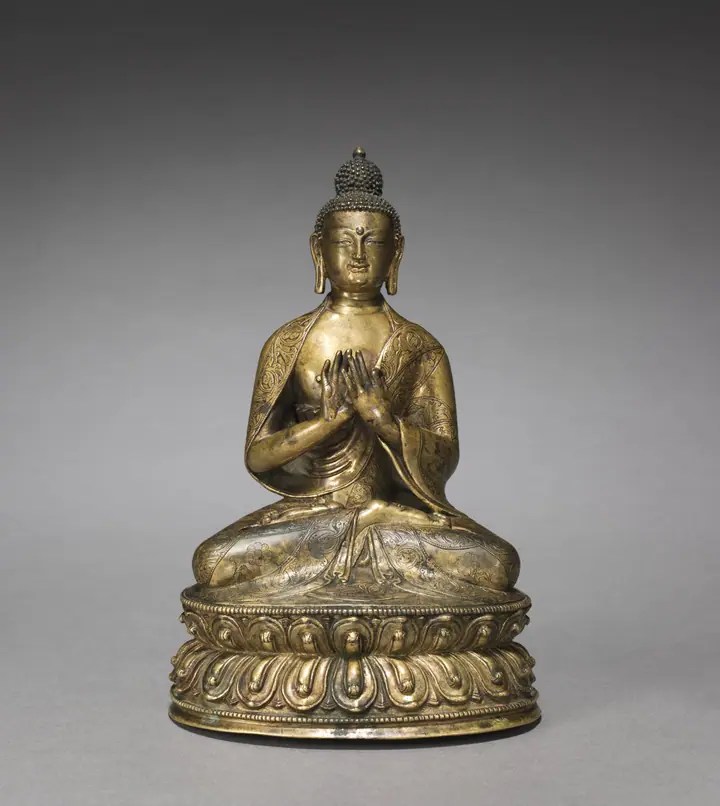
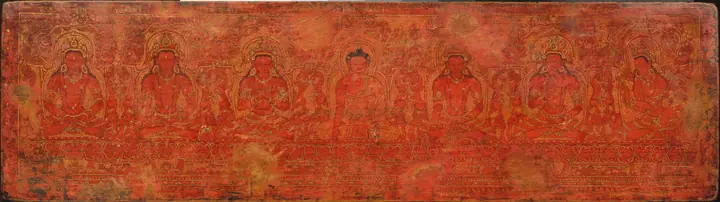
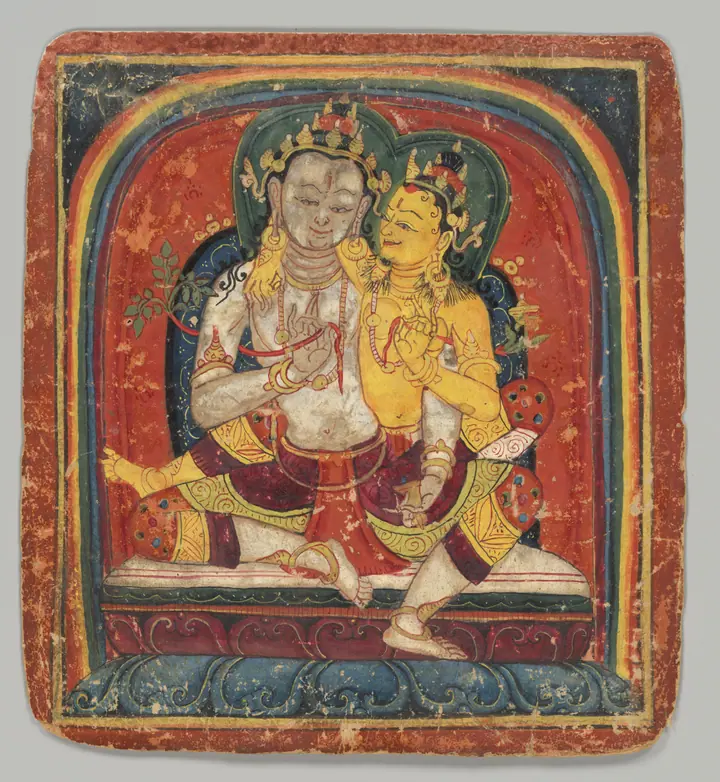
6 works in the collection depict or name Maitreya.
Connections
15 linked records across the archive.
Sources
References consulted for this record.