FT·ART·111Painting
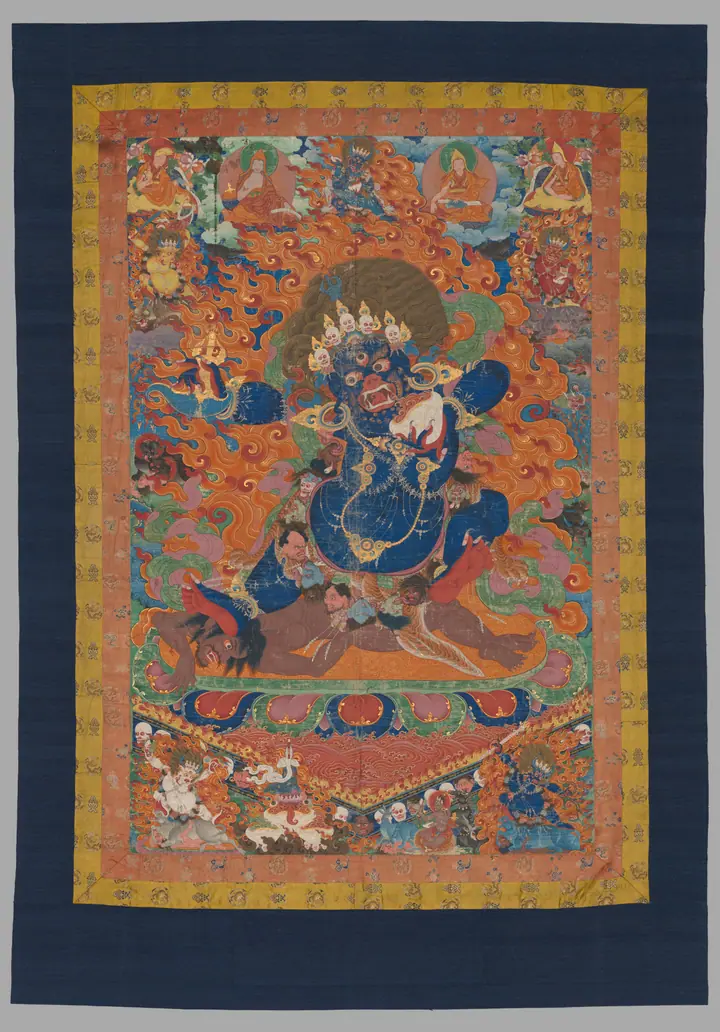
Vajrabhairava
18th century · Tibet
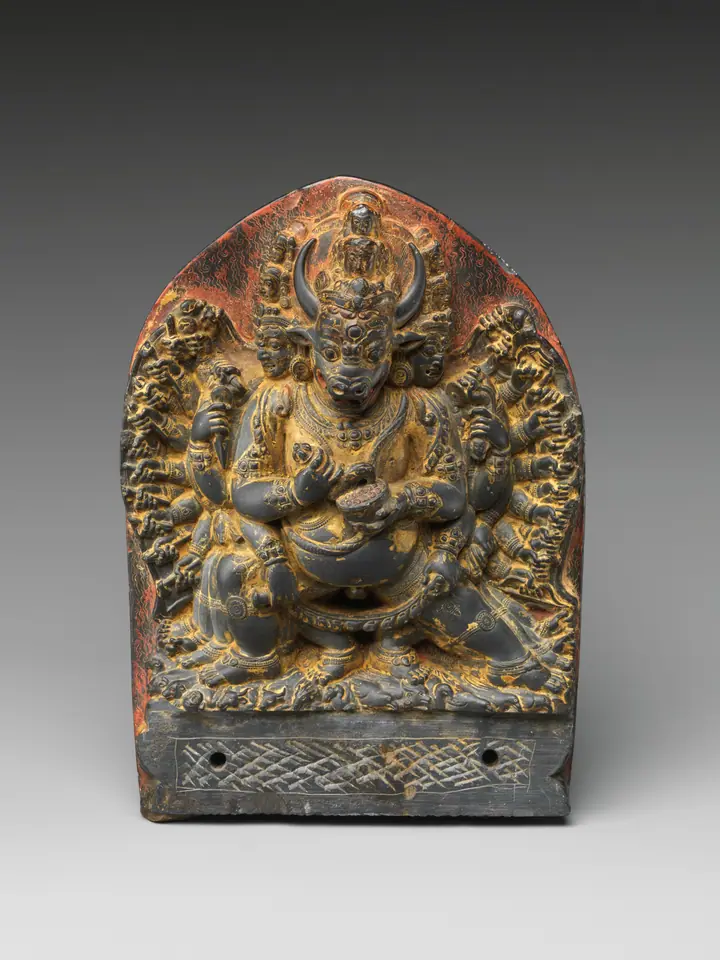
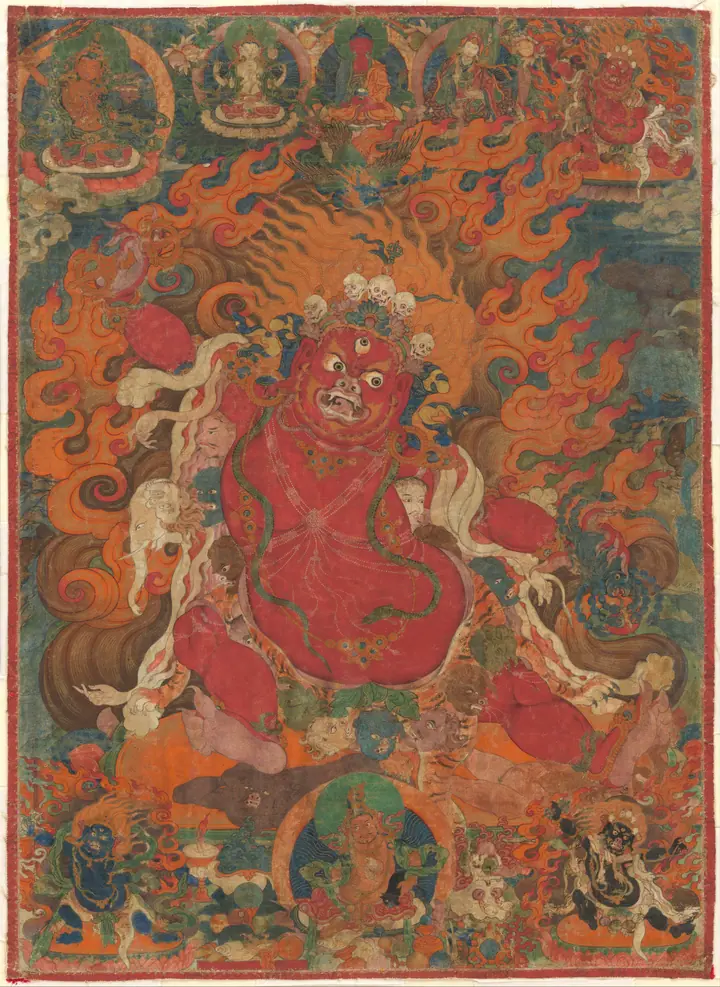
This black-ground thangka would have guided an advanced practitioner in meditation focused on overcoming the fear of death. The central deity, Vajrabhairava, is depicted in his most ferocious form with numerous heads, including a water buffalo’s as his central head. Each of his 32 arms bears a weapon and he tramples demons and Hindu gods underfoot. The image’s ferocity was intended to protect the practitioner from their own fears and delusion when meditating on this difficult subject. Other protector deities surround Vajrabhairava, including the goddess Palden Lhamo on horseback at the bottom center, functioning to empower the practitioner. Five lineage gurus of the Gelugpa (yellow hat) order appear overhead, and the bodhisattva Manjushri is at the very center. The theme of death is further conveyed by the grizzly setting, likely a cremation ground, where frightening creatures run amock and blood, guts, brains, and eyeballs appear in offering vessels.
Text: Minneapolis Institute of Art, open-access catalogue.
- Date
- 18th century
- Culture
- Tibet
- Medium
- Opaque colors and gold on cotton
- Dimensions
- 49 1/2 x 29 in. (125.73 x 73.66 cm)
- Classification
- Painting
- Accession no.
- 89.52
- Credit line
- Gift of funds from the Regis Corporation
- Holding museum
- Minneapolis Institute of Art
- Image rights
- Public Domain
Depicted and related
Related works
Works that share a subject, a form or a century.