FT·SYM·055Performance & Craft
Tibetan Opera
ལྷ་མོ
Wylielha moDatetradition dates it to the 15th century
Ache Lhamo, the classical lay theatre of Tibet, tells Buddhist stories through chanted narration, high sustained song, dance and masks to the beat of drum and cymbal.
Also known asAche Lhamo · Lhamo · Tibetan Folk Opera · Namthar Theatre
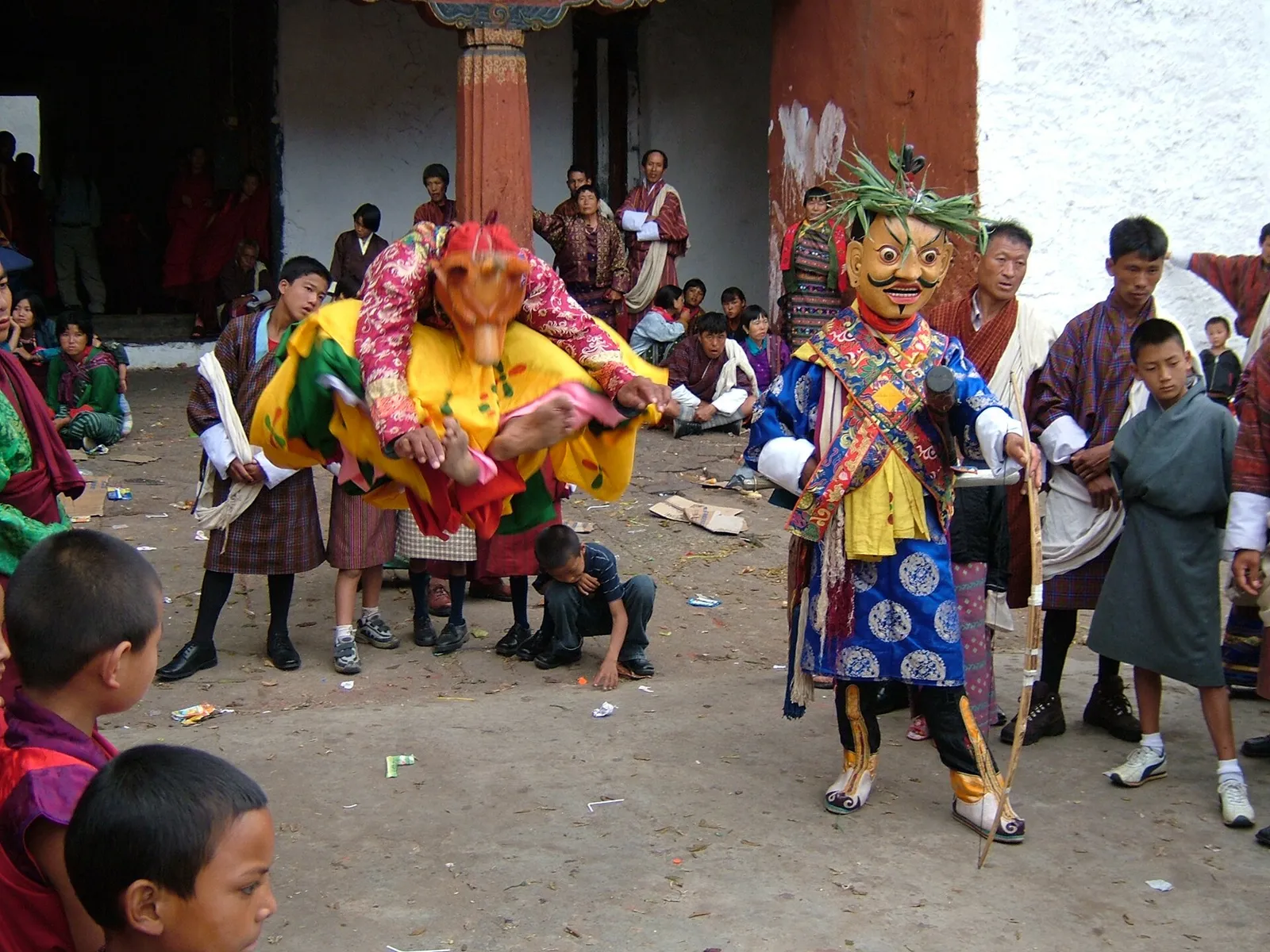
Ache Lhamo, sister goddess, is the secular musical theatre of Tibet, performed outdoors by lay troupes. Its plays dramatise the lives of virtuous kings, princesses and saints, drawn mostly from Indian Buddhist tales and Tibetan history, and teach the workings of karma and compassion while entertaining with comedy and satire. Tradition attributes its founding to the adept and bridge builder Thangtong Gyalpo, who is said to have formed a troupe of seven sisters to raise funds for his iron-chain bridges. His image is set up and honoured at every performance.
A performance lasts most of a day and takes place in the round beneath a canopy. It has three parts: a prologue in which masked hunters purify the ground, elders give blessings and goddesses dance; the story itself; and a closing auspicious rite. A narrator recites the plot in rapid chant between scenes, and the actors sing arias called namthar in a piercing, ornamented style, with the chorus joining the final notes. One drum and one pair of cymbals accompany everything. The hunters wear flat dark masks fringed with white hair, and other characters wear cloth or leather masks or none. Eight plays form the classical repertoire.
By the nineteenth century troupes from several districts performed each summer before the Dalai Lama at the Norbulingka and at Drepung during the Shotön festival, and the Kyormolung troupe of Lhasa was among the most admired. In exile the Tibetan Institute of Performing Arts, founded in 1959 and based in Dharamsala, trains performers and holds an annual opera festival. In Tibet state and amateur troupes perform, sometimes in staged and shortened versions. UNESCO inscribed Tibetan opera on its Representative List of the Intangible Cultural Heritage of Humanity in 2009, on the nomination of China.
Connections
8 linked records across the archive.
Sources
References consulted for this record.
- 01Lhamo — Wikipedia
- 02Tibetan opera — UNESCO Intangible Cultural Heritage
- 03Tibetan Institute of Performing Arts — Wikipedia
- 04Isabelle Henrion-Dourcy, Le théâtre ache lhamo: Jeux et enjeux d'une tradition tibétaine (Peeters, 2017)