FT·MAS·016Indian Master
Virupa
བིརྺ་པ
Wyliebir+wa paSanskritVirūpaDatec. 8th–10th century
Indian mahasiddha revered as the ‘Lord of Yogins’, author of the Vajra Verses that are the root of the Sakya school’s Lamdre, the Path with its Result.
Also known asBirwapa · Virupaksha · Tutop Wangchuk · Naljor Wangchuk
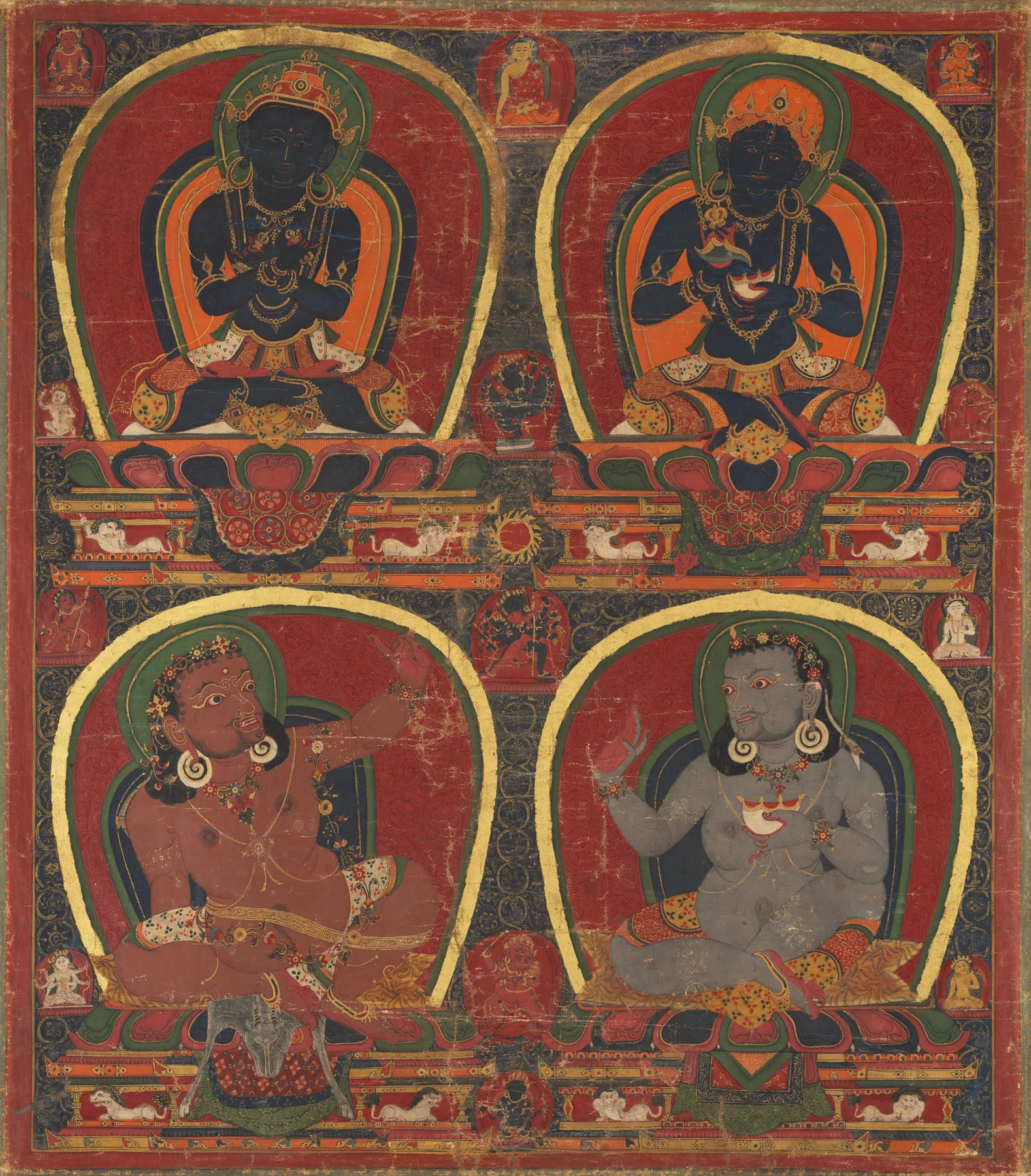
Virupa is one of the most celebrated of the eighty-four mahasiddhas, the ‘great adepts’ of Indian tantric Buddhism, and the first human teacher in the lineage of the Lamdre, the central meditation system of the Sakya school. Sakya tradition identifies him with a learned abbot of Nalanda named Dharmapala who practised tantra in secret. His dates are uncertain: traditional accounts place him in the seventh or eighth century, while historians have proposed dates as late as the tenth.
According to the Sakya histories, after years of practice without result he threw his rosary into a latrine and resolved to abandon tantra. That night the goddess Nairatmya, consort of the deity Hevajra, appeared and gave him empowerment, and within days he attained the sixth bodhisattva stage. Expelled from the monastery for drinking and eating meat, he wandered as a yogin. In the most famous episode he pledges the sun as payment for his beer and holds it motionless in the sky until the king settles the account. His teaching is condensed in the brief Vajra Verses.
The Vajra Verses passed orally through a short line of Indian masters to Gayadhara, who taught them in Tibet to Drokmi Lotsawa in the eleventh century; from Drokmi’s students they reached the Khon family of Sakya. Sachen Kunga Nyingpo is said to have received them again in a vision of Virupa himself. Paintings show Virupa as a dark, heavy-set yogin garlanded with flowers, one hand raised to halt the sun, and he is invoked daily in Sakya monasteries.
In the collection
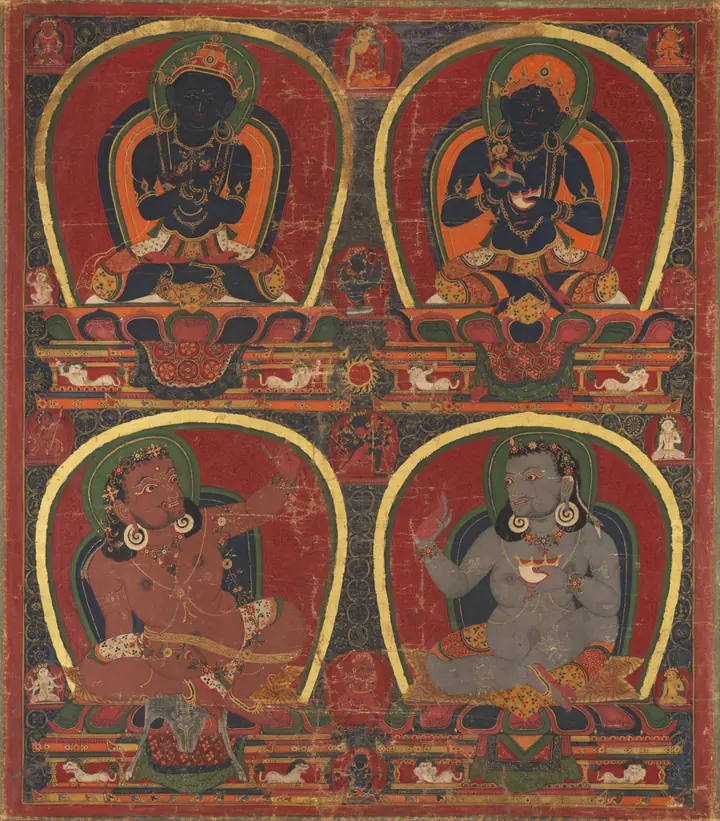
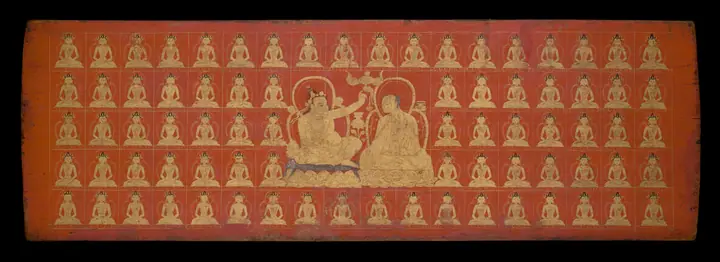
2 works in the collection depict or name Virupa.
Connections
8 linked records across the archive.
Sources
References consulted for this record.
- 01Virūpa — Wikipedia
- 02Virupa — Rigpa Shedra Wiki
- 03Ronald M. Davidson, Tibetan Renaissance: Tantric Buddhism in the Rebirth of Tibetan Culture (Columbia University Press, 2005)
- 04Cyrus Stearns, Taking the Result as the Path: Core Teachings of the Sakya Lamdré Tradition (Wisdom Publications, 2006)