FT·DEI·040Meditational Deity (Yidam)
Kurukulla
རིག་བྱེད་མ
Wylierig byed maSanskritKurukullā
The red goddess of magnetising power, four-armed and dancing, who draws a bow and arrow made of flowers and holds a hook and noose to attract and bring under control.
Also known asKurukullā · Kurukulle · Rigjema · Rigjedma · Red Kurukulla · Tarodbhava Kurukulla
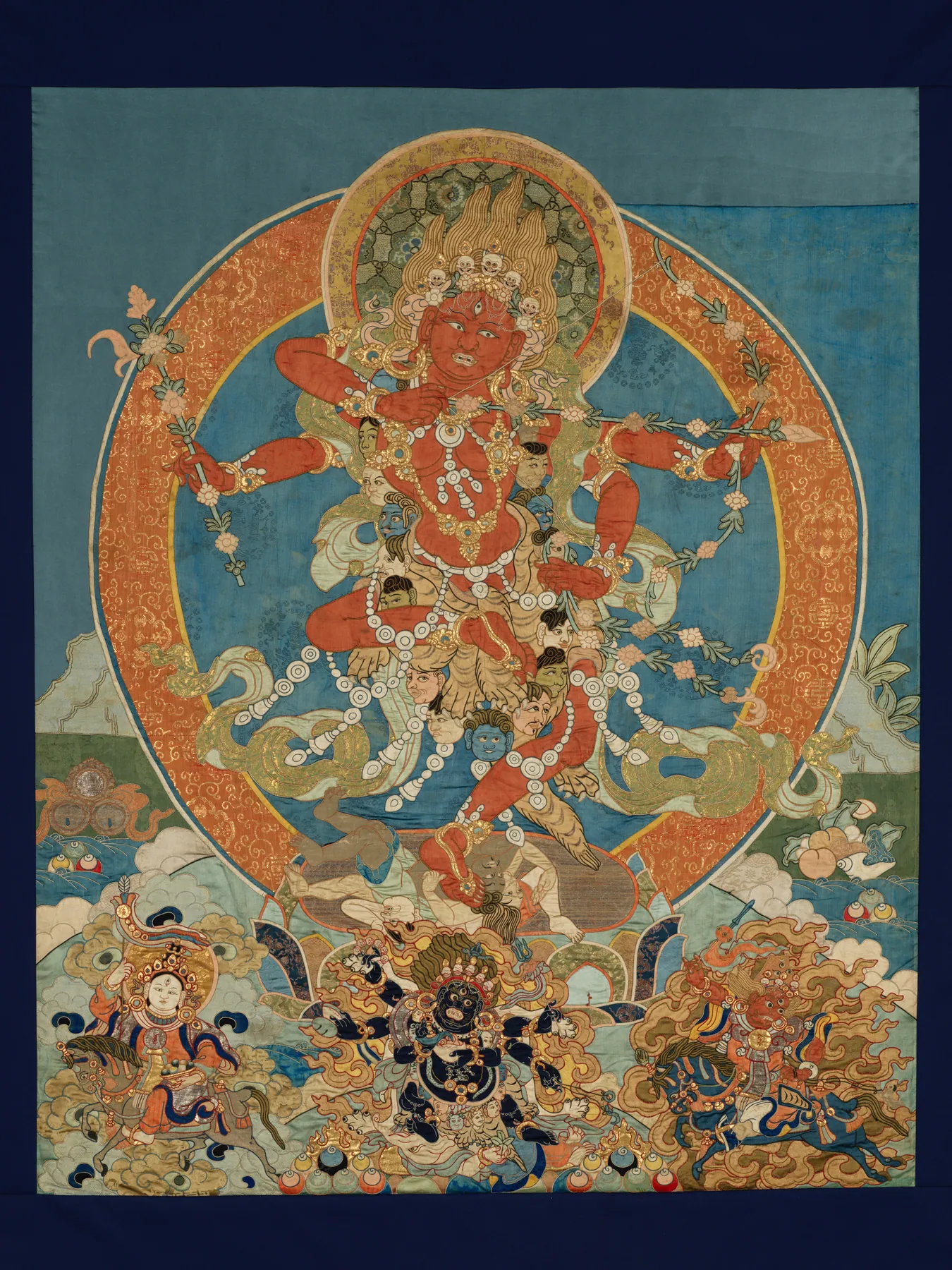
Kurukulla is the principal goddess of magnetising (Tibetan wang), one of the four kinds of enlightened activity, which draws beings and circumstances towards the practitioner and brings them under benign control. She can be understood in three ways: as a deity in her own right, as a red emanation of Tara in the lower tantras, and as an emanation of Hevajra in the Hevajra and Vajrapanjara tantras. Not every red Tara is Kurukulla, and she also has white, pink and blue forms.
The standard form is red, with one face, three eyes and four arms, a youthful woman with an expression between passionate and fierce. The first pair of hands draws a bow fitted with an arrow; the second pair holds a hook in the right hand and a noose in the left. All four implements are made of red utpala flowers. She dances on her left leg with the right drawn up, upon a corpse, a sun disc and a lotus, wearing a skull tiara, bone ornaments, a garland of fifty heads and a tiger-skin skirt, within a ring of flames.
In the Sakya school Kurukulla is counted with Ganapati and Takkiraja as one of the Three Great Red Ones, a group of power deities included among the Thirteen Golden Dharmas, and her lineage is bound up with the Hevajra teachings. Nyingma treasure cycles contain many further forms. Her practice was traditionally sought by rulers, teachers and merchants who wished to extend their influence for good ends. Red Amitabha, lord of the Lotus family, usually appears above her in paintings.
In the collection
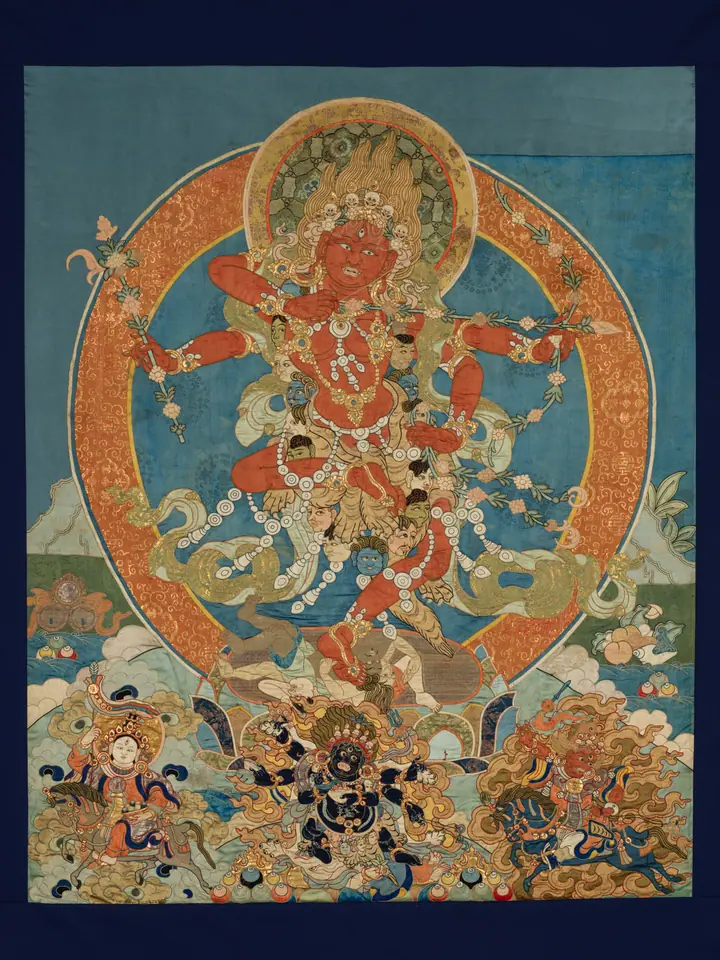
1 work in the collection depict or name Kurukulla.
Connections
7 linked records across the archive.
Sources
References consulted for this record.