FT·ART·151Sculpture
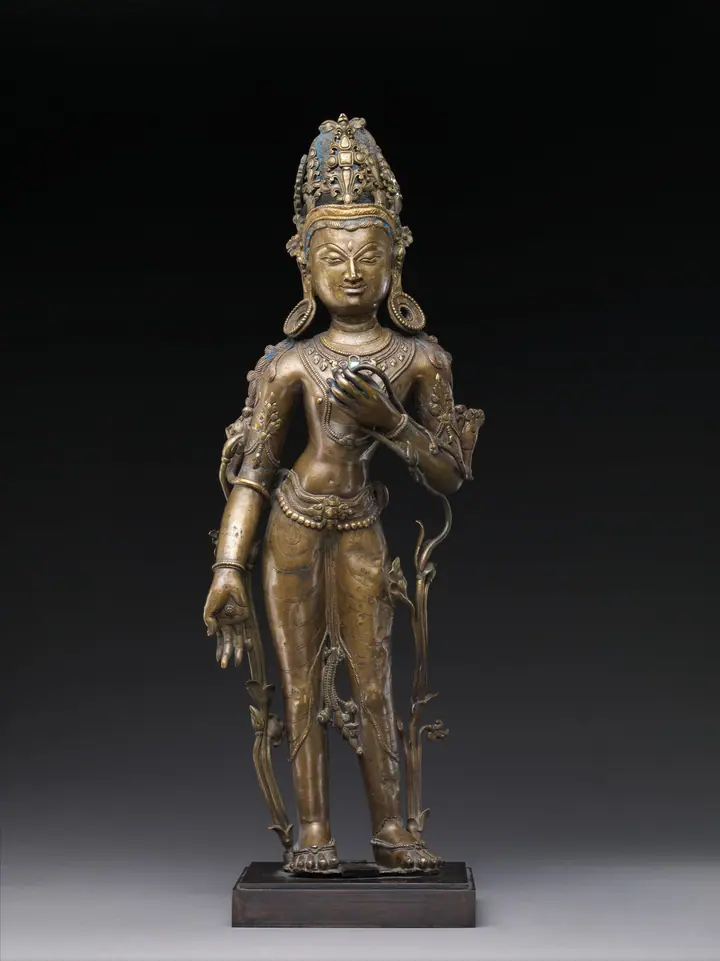
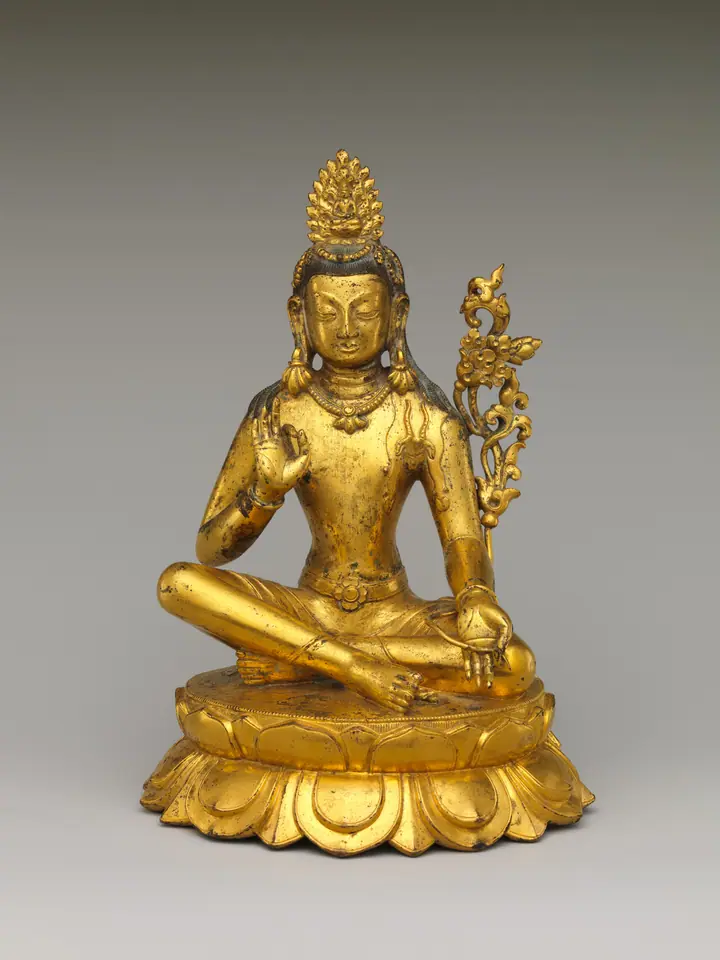
Bodhisattva Padmapani
900s–1000s · Western Tibet
Padmapani, meaning “He who holds the lotus” in Sanskrit, is another name for the bodhisattva Avalokiteshvara. This sculpture is from Western Tibet, but its features—namely the fall of his long necklace and the addition of a second lotus flower for symmetry—indicate that it may have been inspired more directly by the art of Central Tibet. This stylistic influence is also evident in the realistic nature with which the bodhisattva’s scarf is draped across his shoulders and falls at his side.
Text: The Cleveland Museum of Art, open-access catalogue.
- Date
- 900s–1000s
- Culture
- Western Tibet
- Medium
- brass inlaid with silver and gold
- Dimensions
- Overall: 26.2 cm (10 5/16 in.)
- Classification
- Sculpture
- Accession no.
- 1976.70
- Credit line
- John L. Severance Fund
- Holding museum
- The Cleveland Museum of Art
- Image rights
- Public domain (CC0)
Depicted and related
Related works
Works that share a subject, a form or a century.
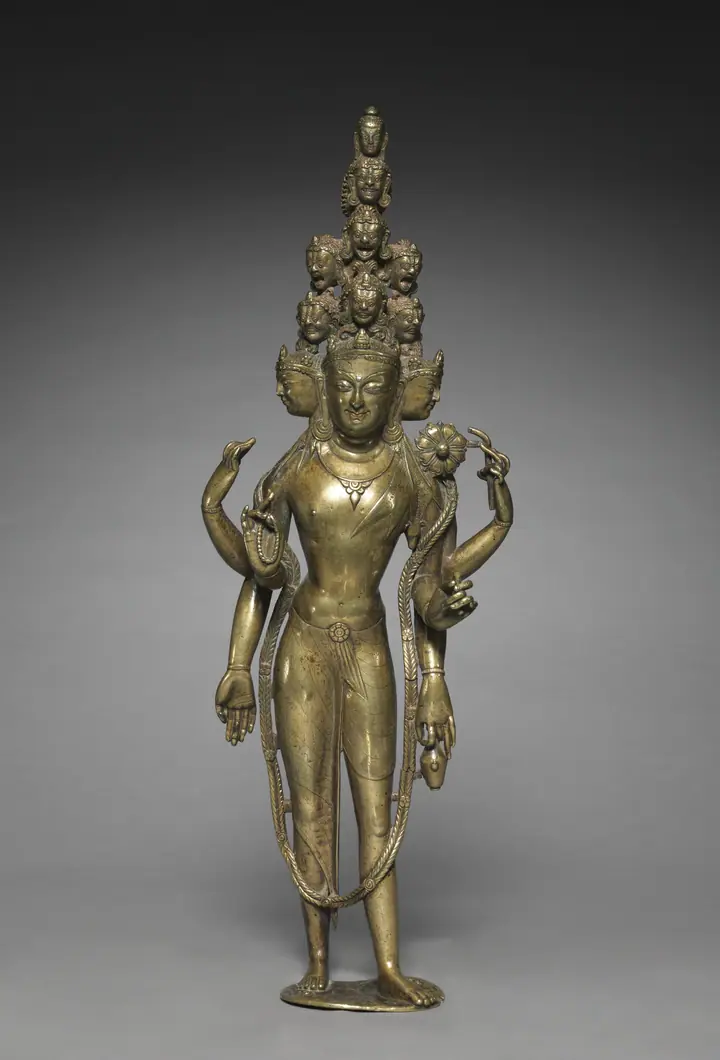
Eleven-Headed Bodhisattva of Compassion (Avalokiteshvara)
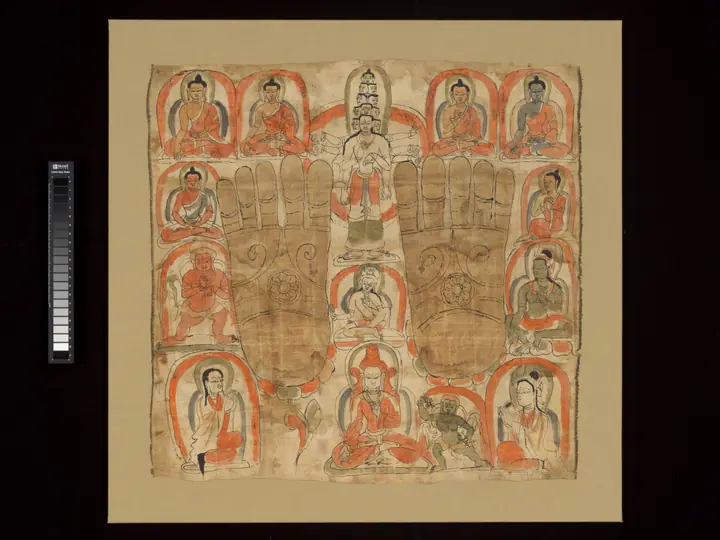
King Songten Gampo as the incarnate Avalokiteshvara
The Bodhisattva Avalokiteshvara in the Form of Padmapani, the Lotus Bearer
Seated Avalokiteshvara, the Buddha of Infinite Compassion
Bodhisattva Avalokitesvara